

Javanese culture is renowned for its deep philosophical values and rich traditions that continue to thrive amidst modern life. Beyond ceremonial rituals, these traditions reflect the Javanese way of life, intertwining spirituality, community, and harmony. From communal feasts and sacred ceremonies to royal customs and spiritual cleansing, each practice tells a story deeply rooted in history. What’s more, many of these traditions are still practiced today and remain accessible to visitors. Curious to learn more? Here are five timeless Javanese traditions you should know about.
Table of Contents
1. Kenduri
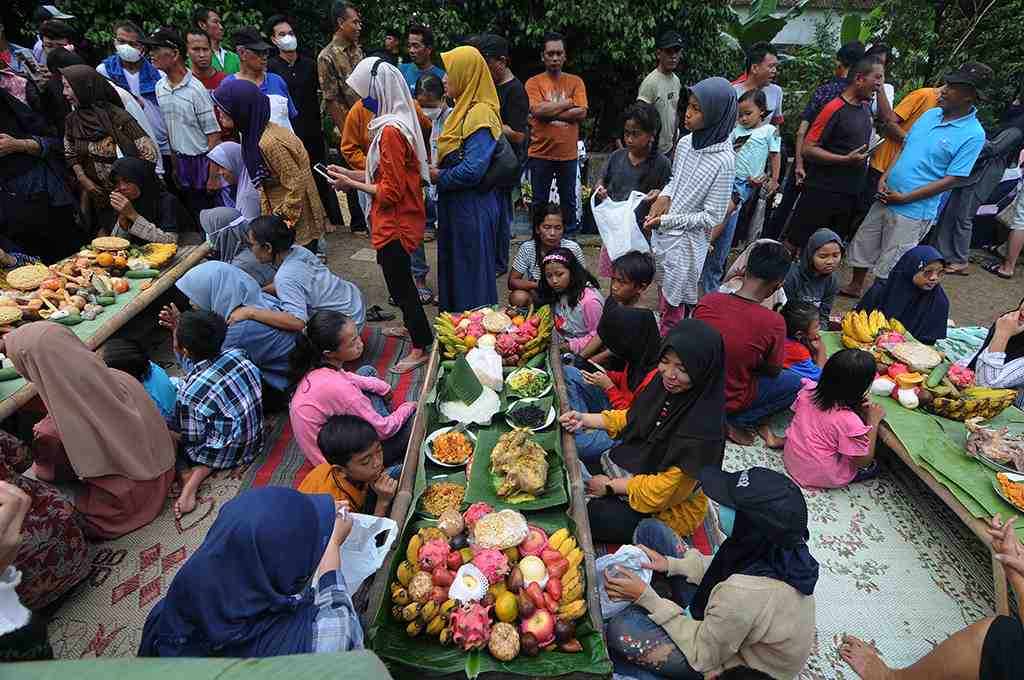
Kenduri, also known as Selametan, is a communal meal that expresses gratitude to God while also serving as a prayer for the well-being of one’s family and community. It is typically held during important life events, births, circumcisions, weddings, harvests, or funerals. More than just a religious gathering, kenduri symbolizes the balance between spiritual and social life.
The ceremony is usually led by a respected religious or community elder. Men sit in a circle to recite prayers, while women prepare symbolic dishes, such as nasi tumpeng (cone-shaped rice) that represents prosperity, along with other foods symbolizing specific hopes and intentions. After the prayers, the food is shared equally to be enjoyed together or taken home.
Kenduri is a powerful expression of togetherness. It brings neighbors and families closer, nurturing a sense of unity and mutual care. Even as lifestyles modernize, kenduri continues to be practiced as a form of local wisdom, embodying the Javanese spirit of harmony and collective support.
2. Patehan
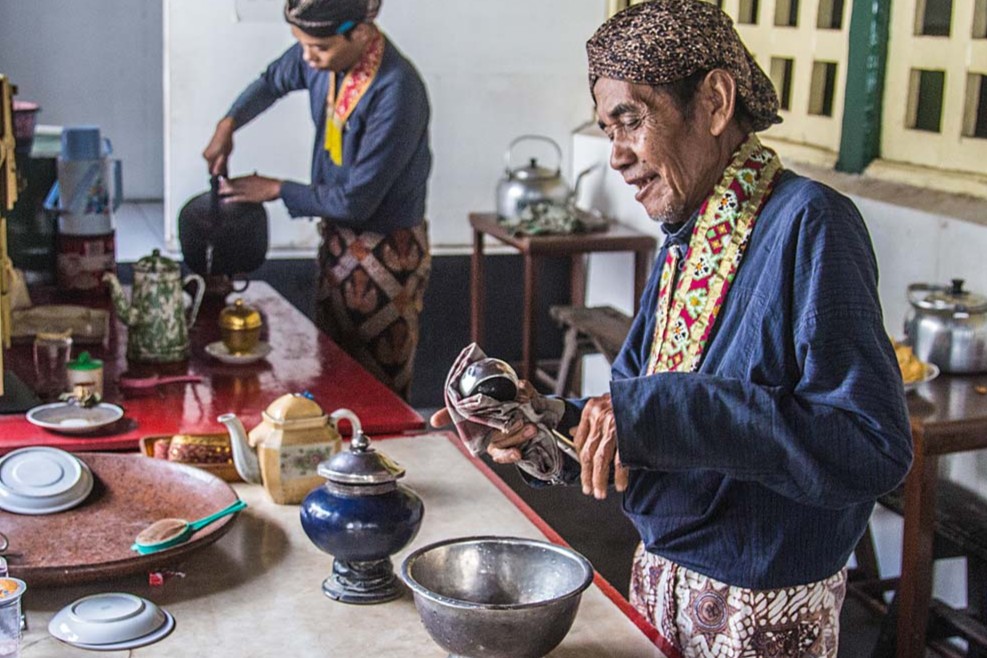
From village gatherings, we move into the royal palace with Patehan, a traditional tea-serving ceremony held at the Yogyakarta Palace. This ritual goes far beyond serving drinks; it is a performance of etiquette, grace, and respect embedded in palace culture. Patehan symbolizes hospitality and honor, usually performed for the Sultan, his family, and esteemed guests.
Ten palace servants (Abdi Dalem), five men and five women, dress in full traditional attire and perform the tea ceremony with poised, gentle movements. Everything follows a sacred rhythm, passed down through generations. It’s not just about tea; it’s a living portrait of courtesy and harmony in the Javanese noble setting.
Patehan reflects the refined values of patience, mindfulness, and reverence. Every gesture during the ceremony communicates calm and humility, showing that tea, in Javanese culture, is not simply a beverage, it’s a vessel for connection and philosophy. Today, Patehan remains an enduring expression of Yogyakarta’s cultural identity.
3. Ruwatan
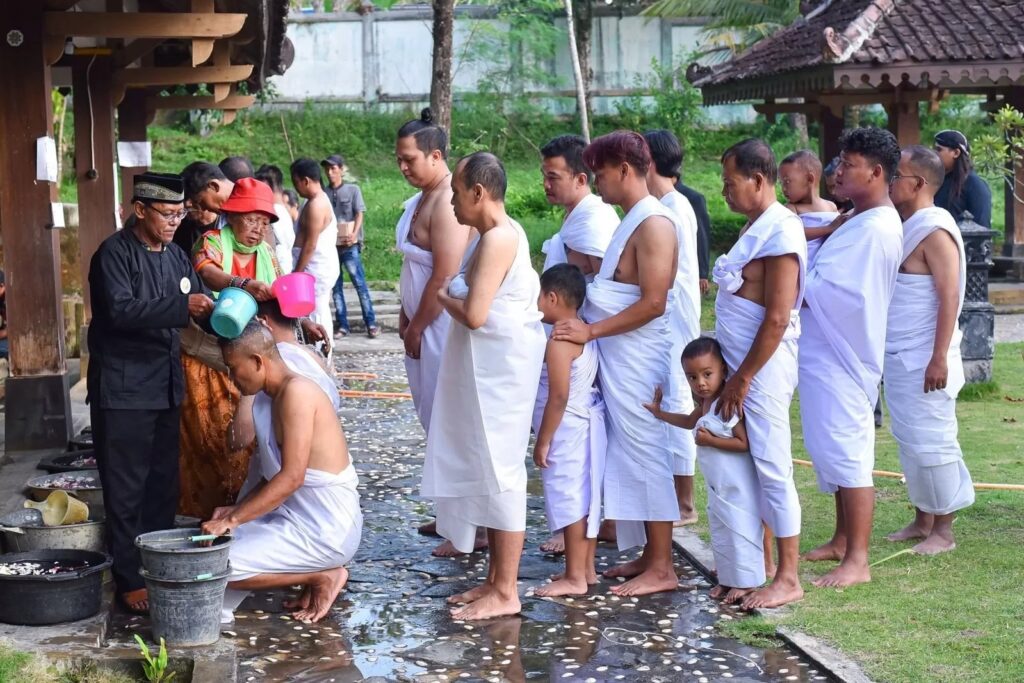
While Patehan emphasizes composure, Ruwatan is about spiritual release. This ancient ritual is performed to cleanse individuals from bad luck, negative energy, or spiritual burdens. The term “Ruwat” means to release or free, and the ceremony aims to restore balance between a person and the universe.
Ruwatan is usually conducted for those believed to have a cursed fate, such as only children (Ontang-Anting), twins, or those suffering recurring misfortune. The ritual may be personal or held communally, often featuring a Wayang Kulit (Shadow Puppet) performance with the classic tale of Murwakala. The performance is not for entertainment, it’s an integral part of the soul-cleansing process.
Beyond the mystical elements, Ruwatan reflects a cultural understanding of fate and harmony. People believe that by undergoing the ritual, they can shed bad karma and begin anew. Still practiced in regions like Yogyakarta and Surakarta, Ruwatan continues to offer insight into Javanese wisdom about life, destiny, and the unseen world.
4. Jemparingan
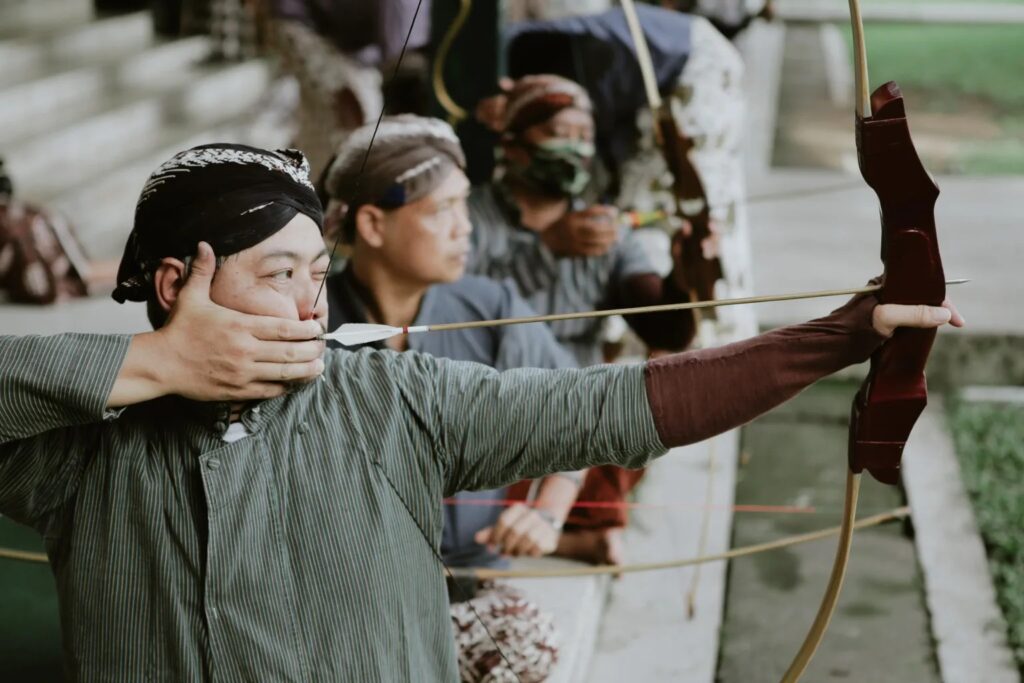
Next is Jemparingan, a traditional Javanese archery style practiced while sitting cross-legged. Unlike conventional archery, this style uses a horizontal grip, emphasizing inner calm and mental focus over physical strength. It’s not just a test of precision, but also a discipline of humility and emotional control.
Originating in the Mataram royal court, Jemparingan was introduced by Sultan Hamengkubuwono I as a means to shape character. It was part of the royal education system, teaching young nobles the values of patience, discipline, and self-mastery.
Today, Jemparingan is still performed regularly in places like Pakualaman Palace, where public competitions are held every 35 days, following the Javanese calendar cycle. Participants wear full traditional attire, adding to the sacred atmosphere. More than a sport, Jemparingan is a cultural emblem, blending art, spirit, and character-building.
5. Grebeg Sekaten
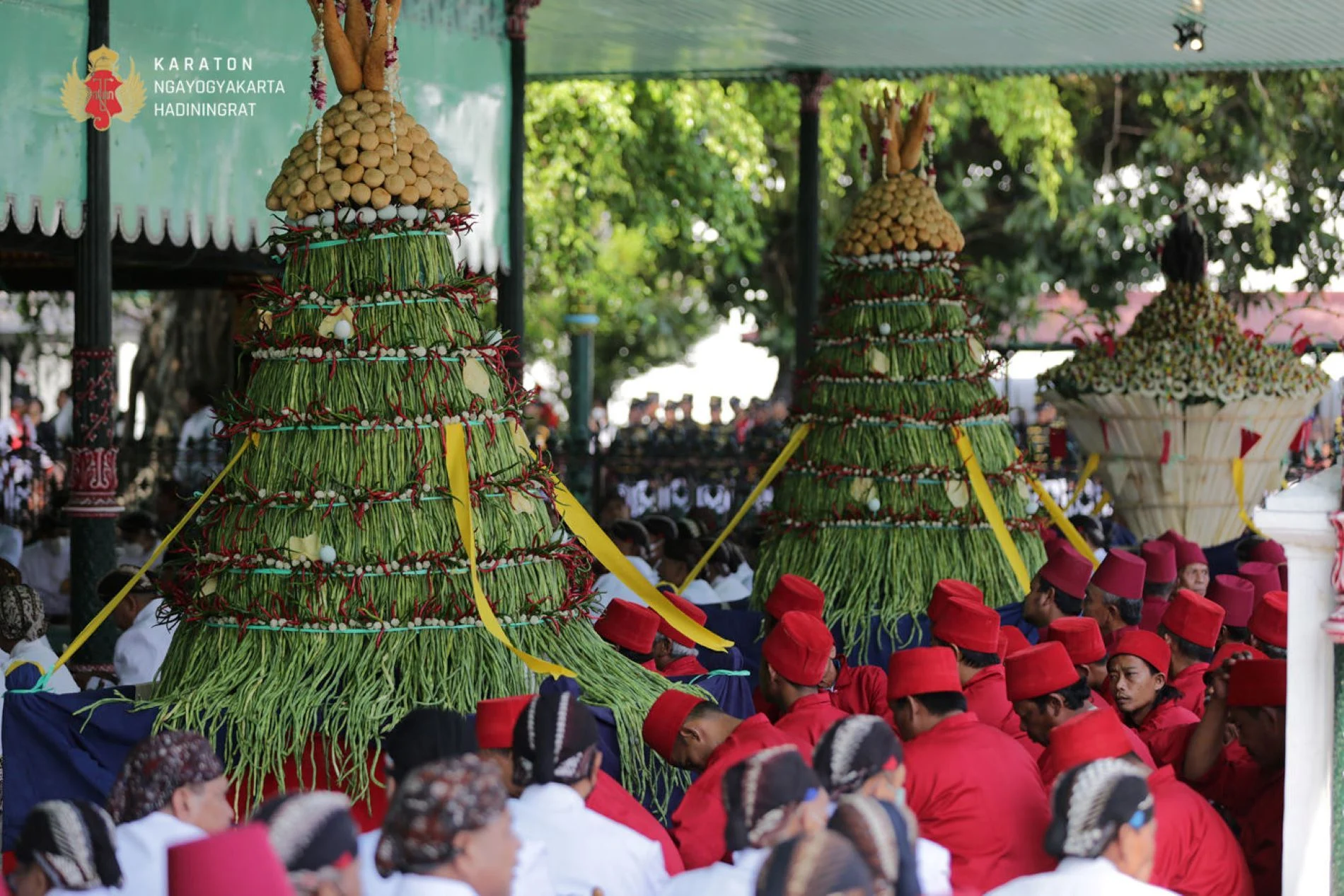
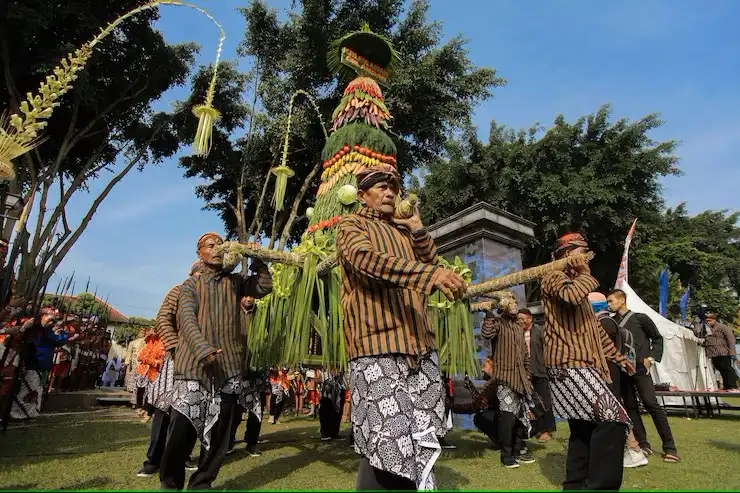
Last but not least, Grebeg Sekaten is one of the grandest Javanese celebrations, held to commemorate the birth of the Prophet Muhammad. Dating back to the reign of Sultan Hamengkubuwono I, it merges Islamic devotion with local cultural expressions. The festival begins on the 5th day of the Javanese month Mulud and lasts for a full week, with gamelan music echoing throughout the palace grounds.
The climax is the gunungan parade, where a massive mountain-shaped offering made from food and crops is carried from the palace to the Grand Mosque (Masjid Gedhe Kauman). Palace guards in full regalia escort the procession. Once it arrives, the crowd eagerly scrambles to take parts of the offering, believed to bring blessings and prosperity.
Grebeg Sekaten is more than a cultural spectacle, it is a symbol of harmony between the royal institution, the people, and religious values. Drawing thousands of visitors each year, the event showcases the beauty of cultural integration and spiritual celebration that continues to thrive in modern-day Java.
These five traditions are not merely cultural relics, but living philosophies that continue to shape the lives of the Javanese people. From the communal spirit of kenduri to the spiritual cleansing of ruwatan, each ritual teaches gratitude, balance, and respect. Through these age-old customs, the richness of Javanese identity remains vibrant, an enduring legacy that invites us all to learn, appreciate, and be inspired.