
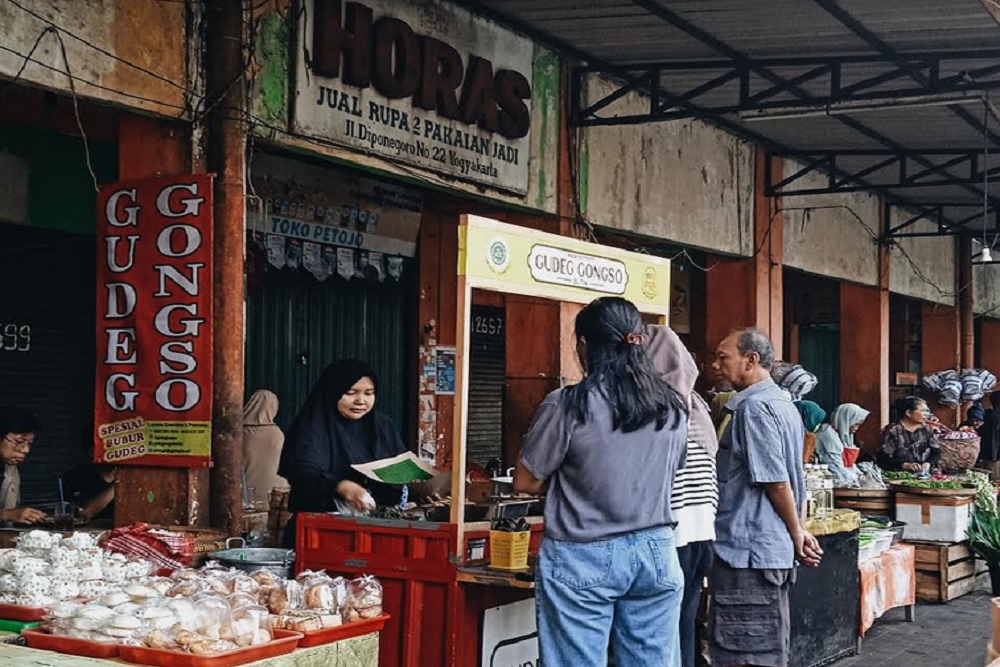
Pasar Kranggan is a traditional market near Tugu Yogyakarta where locals shop for fresh produce, daily essentials, traditional snacks, and ready-to-eat meals. The market sits in the heart of Yogyakarta, just across from Tugu Paal Putih, and is only a 10-minute walk from Malioboro. The lively neighborhood around the market is full of cafes, hotels, and legendary local delicacies. This area is very convenient, with easy access to public transport, walking paths, and ride-hailing services.
Table of Contents
Pasar Kranggan covers more than 7,400 square meters and has two levels. The first floor offers local goods, including vegetables, meat, and other necessities. On the second floor, you can find many food stalls serving a variety of dishes.
The first floor is open daily from 4 AM to 1 PM, while the second floor is open from around 10 AM to 9 PM. Pasar Kranggan has a long history that you can still see today. Although it is a traditional market, it offers both a modern and historic atmosphere. Come and explore this iconic place with us!
History of Pasar Kranggan
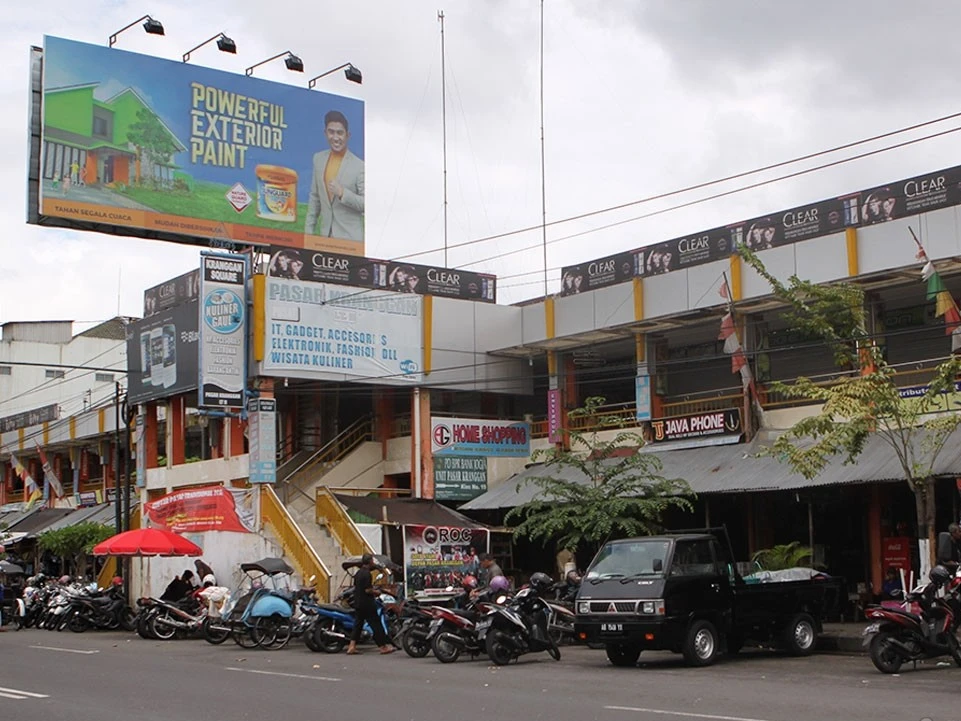
‘Kranggan’ is derived from “Ka-Rangga-an,” taken from the noble title of Raden Tumenggung Rangga Prawirasantika, one of the Kasultanan Yogyakarta dignitaries. Raden Tumenggung Rangga is known for his pivotal role in establishing the market.
Pasar Kranggan was founded in the early 19th century during the Dutch colonial era. At that time, Pasar Kranggan became one of the biggest Chinese neighborhoods in Yogyakarta. Under colonial city planning (via a regulation called Wijkensteelsel), several urban zones were divided by ethnic groups, including Chinese neighborhoods. In that system, Chinese settlers were placed near Tugu Paal Putih & Malioboro area, which is why Kampung Ketandan and Poncowinatan are located side by side.
Pasar Kranggan is more than a place for trade in agricultural goods, local produce, foodstuffs, and craft items. As time went by, it expanded with more stalls and sections and became central to daily life in that part of Yogyakarta.
Pasar Kranggan embodies Yogyakarta’s spirit of community. Over time, the market has been renovated, expanded, and adapted to modern needs while retaining its traditional roots.
As a vital part of daily life, the Kranggan Traditional Market in Yogyakarta becomes the busiest spot in the morning. People come to buy groceries, sell goods, and look for breakfast. Kranggan portrays how most Asian markets operate; they are filled with humility. It is a home for local goods and the heart of social dynamics in Yogyakarta.
Pasar Kranggan Present Day
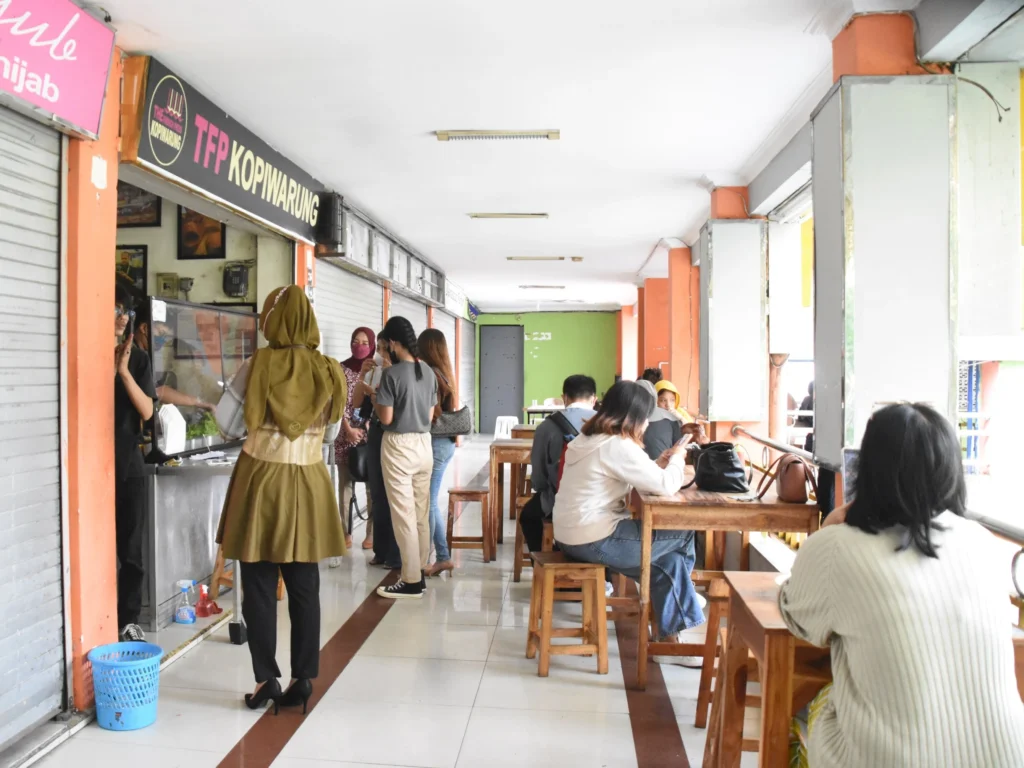
Nowadays, Pasar Kranggan remains lively from predawn until late at night, operating from 4:00 AM to 1:00 PM daily. However, during special festive events such as Eid al-Fitr and Eid al-Adha, the market usually closes for at least three days. Its location is highly strategic, situated next to Tugu Pal Putih on Jl. Poncowinatan, Gowongan, Jetis, Yogyakarta.
Kranggan has two floors for you to explore. On the first floor, you’ll find plenty of fresh produce, vegetables, fruits, meat, fish, and local ingredients. On the front side, along Diponegoro Street, you can find many traditional snacks, flower vendors, small shops, and jewelry shops.
On the second floor, you’ll find numerous modern and street-food stalls, including Japanese, Korean, and udon options. Hundreds of merchants operate the market, with dozens of stalls locally called kios, lapak, or los.
Where to Go in Pasar Kranggan
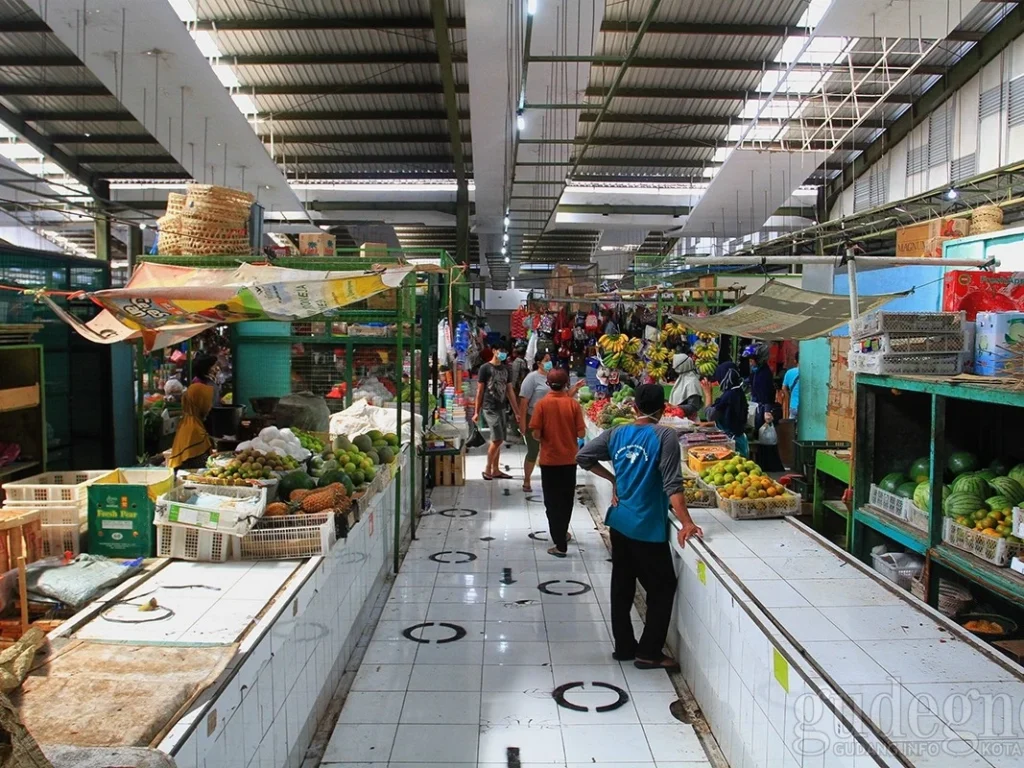
This is the most exciting part of Pasar Kranggan. We’d love to share several recommendations about what you need to try. Here’s where to start!
1. Sop Sapi Minarwati
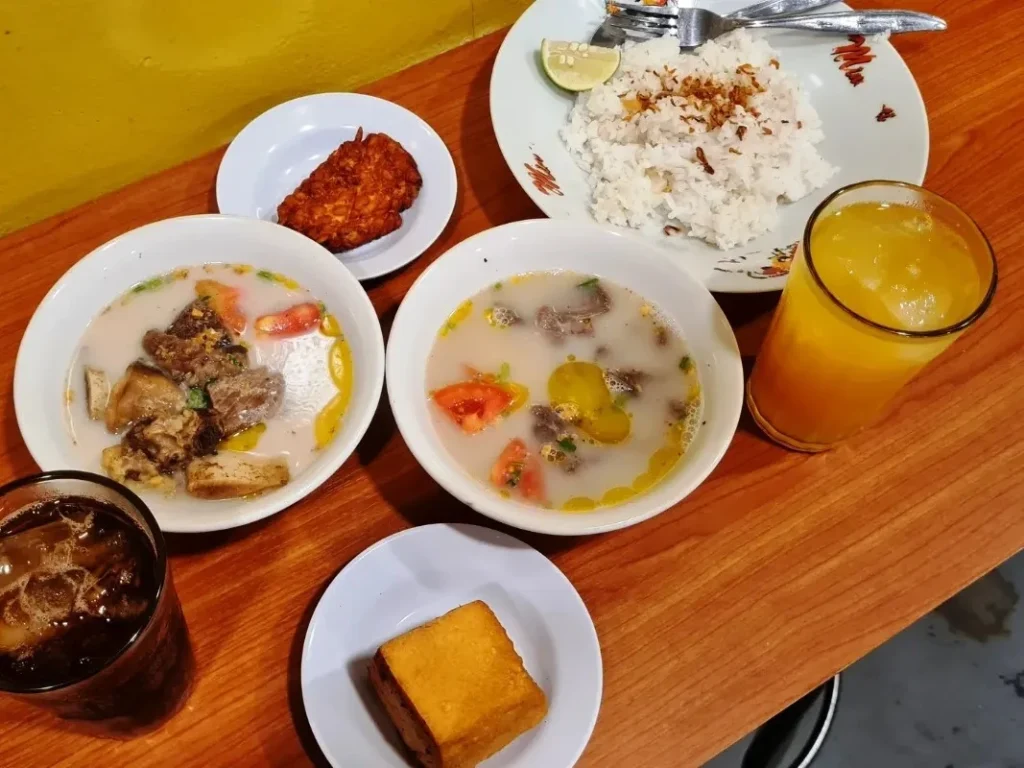
Sop Sapi Minarwati is well-known for its appetizing beef soup. The top choice is the Sop Komplit (or Sop Daging): a bowl of tender beef that is slow-cooked for 12 hours, drenched in a rich broth, and served with rice. It is a dish that everyone raves about. People usually queue in the morning to get breakfast at Sop Sapi Minarwati, but it doesn’t take long to get your bowl because they are known for their efficient service.
- Operating Hours: 8 AM – around 9 PM
- Location: Pasar Kranggan, Jl. Pangeran Diponegoro 2nd Floor, Bumijo, Jetis, Yogyakarta
- Instagram: @warungminarwati
2. Yammie Kranggan
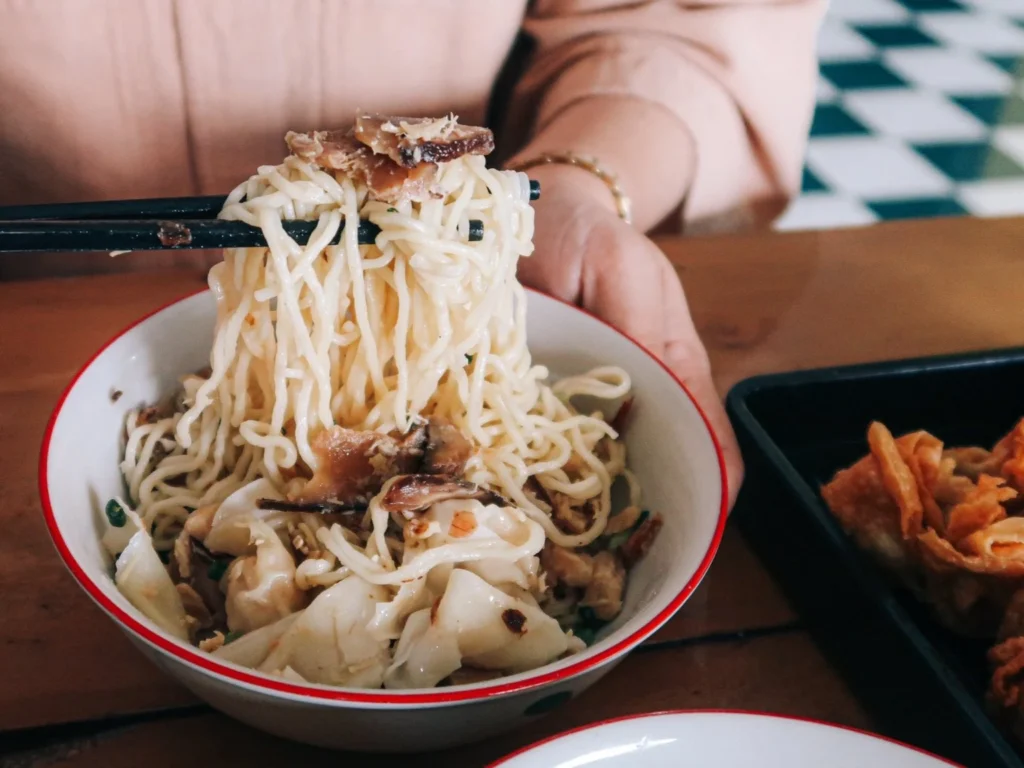
In Yogyakarta or maybe several cities in Indonesia, its a common-sense that every traditional market had their iconic & authentic noodle spot stalls. That’s what we thought about “Yammie Kranggan”. Yamie Kranggan is chinese noodle bar that was established in 2024, offering a fusion‐style noodle spot.
Yamie Kranggan is known for its savoury yet light noodles that are rich in spices. Their noodles have a chewy texture, and they are equally famous for their boiled dumplings. This yamie has become a go-to comfort food for many because of its delicate taste. It’s perfect for any time of day. To top it off, they also serve some of the best fried meatballs (locally known as Bakso Goreng).
- Operating Hours: 9 AM – around 9 PM
- Location: Jl. Kranggan No.29, Cokrodiningratan, Jetis, Yogyakarta
- Instagram: @yammie_kranggan
Explore the Cultural Site Around Pasar Kranggan
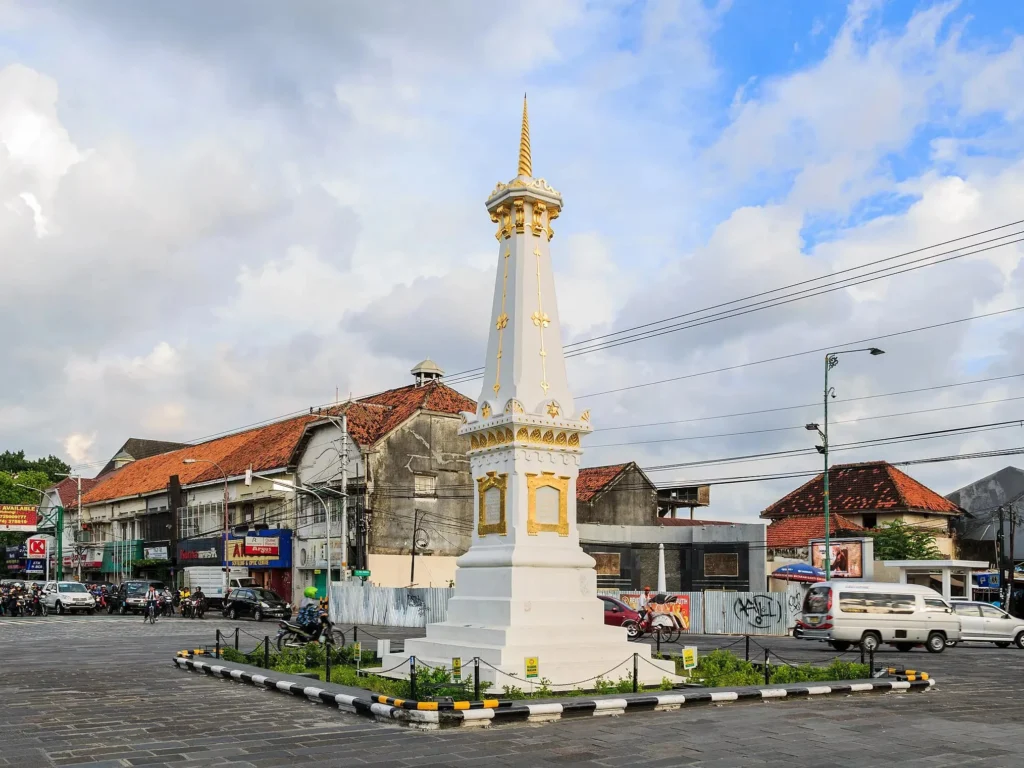
Walking around the market, you’ll feel layers of history: how colonial plans, Chinese communities, and Javanese cosmology shaped this area through these sites.
1. Klenteng Poncowinatan
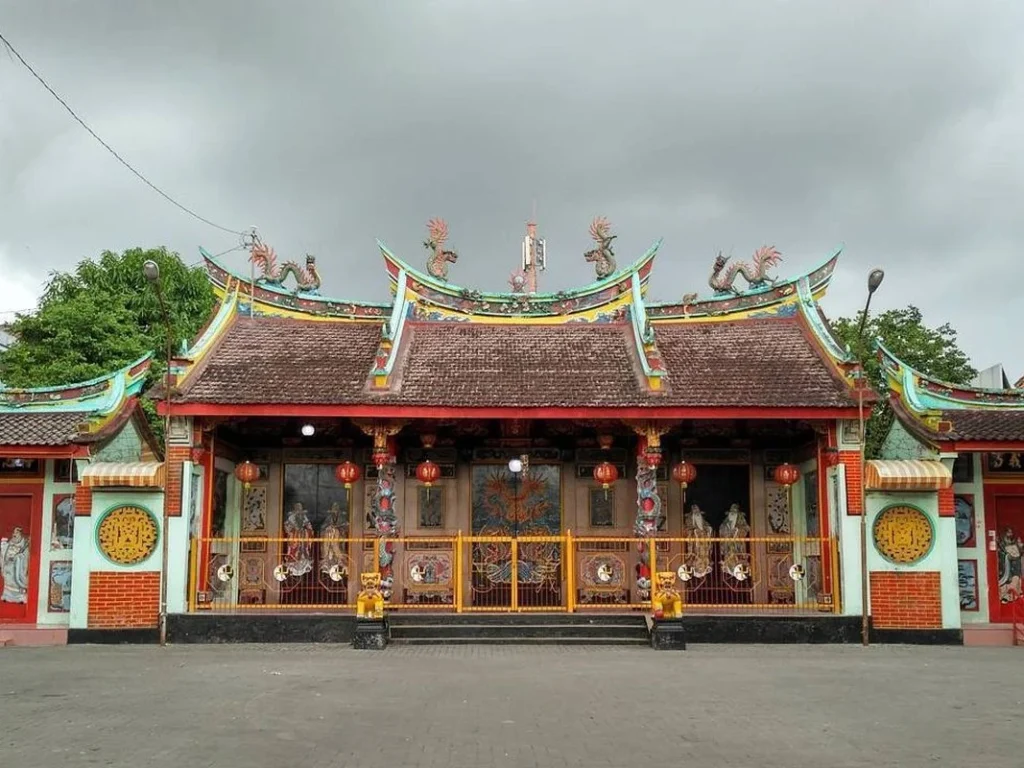
Near Pasar Kranggan lies Klenteng Poncowinatan, a Chinese temple. It’s located in Jl. Poncowinatan No.12-18, Gowongan, Jetis, Yogyakarta. Since the Kranggan area was historically tied to Chinese communities (due to colonial zoning), this klenteng is part of the living heritage of that cultural link. Visitors often stop by to observe architecture, lanterns, and local worship practices.
2. Tugu Jogja
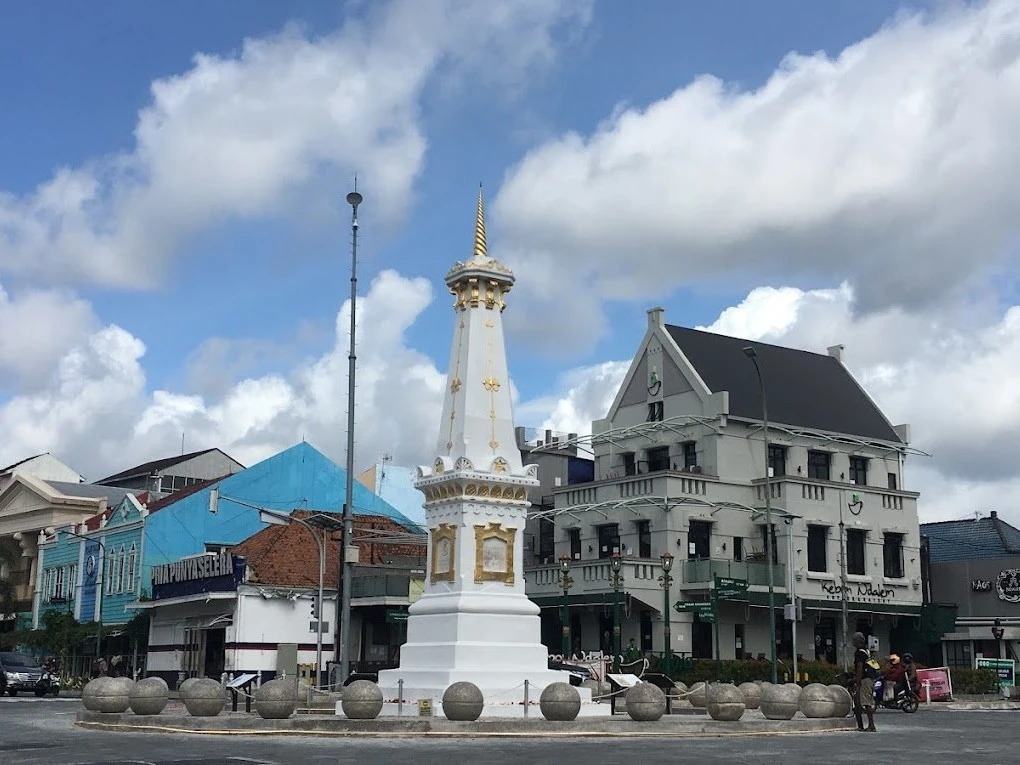
Next to Pasar Kranggan, there is Tugu Jogja. This is a central icon and landmark of Yogyakarta. It is symbolic and marks the axis between Kraton (palace) and Gunung Merapi. A stroll from Pasar Kranggan to Tugu gives you a sense of urban layout, historical pathways, and a visual anchor, especially beautiful at sunrise or sunset.
Visiting Pasar Kranggan is like stepping into a living story. From its origin as a market initiated by Raden Tumenggung Rangga to its current two-floor blend of traditional and modern stalls, it remains a centre of trade, social life, and cultural memory.