

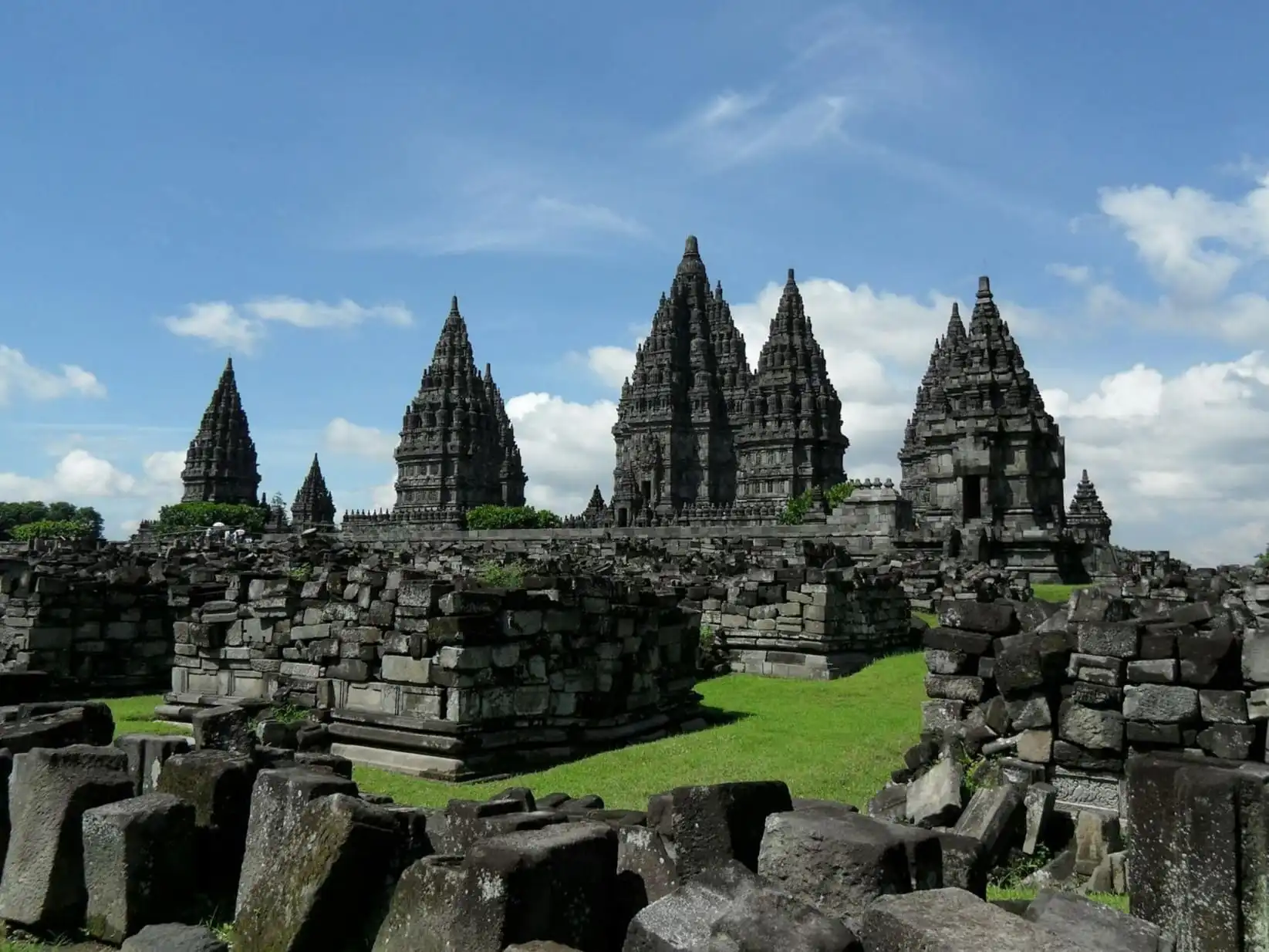
Prambanan Temple is a living symbol of Indonesia’s cultural depth and spiritual legacy. Located in Yogyakarta, this majestic Hindu temple complex holds the title of the largest in Southeast Asia.
Table of Contents
Prambanan reflects centuries of devotion, artistry, and rich storytelling that continue to captivate locals and travelers alike. As one of the top historical destinations in Java, Prambanan Temple offers breathtaking views and a chance to connect with the past in a way that feels truly alive.
History of Prambanan Temple
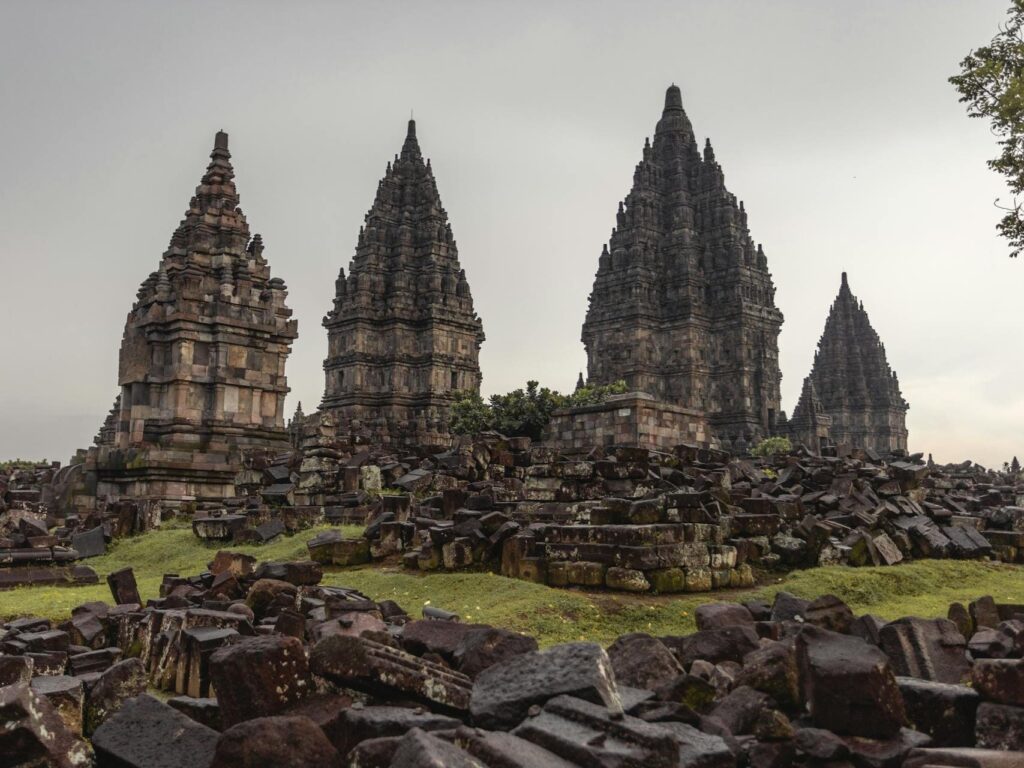
The story of Prambanan Temple begins in the 9th century, during the reign of the Sanjaya Dynasty. This temple was constructed as a tribute to the Hindu deity Shiva, known as the Destroyer in Hindu beliefs. It was built shortly after the completion of Borobudur, the famous Buddhist temple nearby, showing the dynamic cultural and religious interactions in ancient Java.
Prambanan was likely meant to affirm the return of Hindu power in Central Java after a period of Buddhist influence. Over time, the temple complex grew into a massive spiritual center, housing more than 200 temples, though many are now in ruins.
Unfortunately, the temple complex was abandoned after a series of earthquakes and power shifts in Java. For centuries, it lay in ruins until restoration efforts began in the 20th century. In 1991, UNESCO officially recognized it as a World Heritage Site, preserving its legacy for future generations.
Architecture of Prambanan Temple
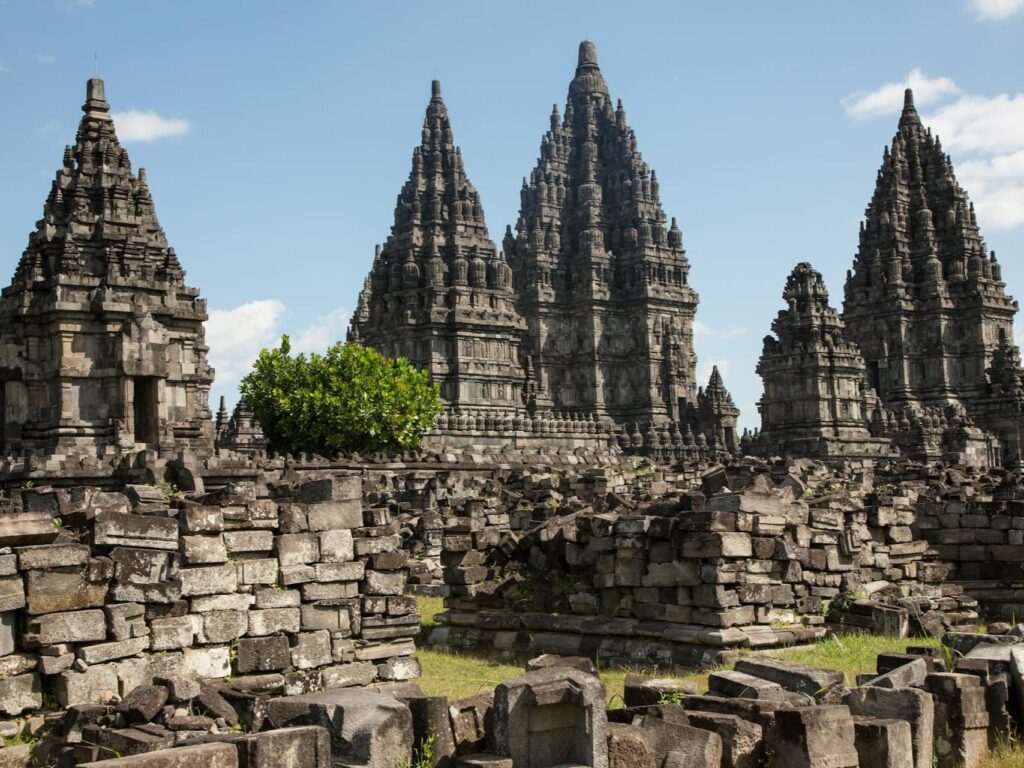
The architecture of Prambanan Temple is a masterpiece of Hindu design. The entire complex follows a traditional Hindu mandala layout, symbolizing the universe. The main temple rises 47 meters high and is dedicated to Shiva, placed in the central zone, signifying the heart of creation.
Two slightly smaller temples beside it honor Vishnu and Brahma, completing the holy trinity (Trimurti). Surrounding these are temples for each god’s vehicle: Nandi the bull for Shiva, Garuda the bird for Vishnu, and Hamsa the swan for Brahma. Stone reliefs carved along the walls illustrate epic stories from the Ramayana, depicting battles, divine journeys, and heroic tales in detailed narrative panels.
What’s truly striking is the temple’s vertical structure, designed to lead one’s eyes and spirit towards the sky. Every stone was carved with purpose, reflecting not just artistic skill but deep spiritual meaning. The temples were built using interlocking volcanic stones, held together without any cement, an ancient technique still admired by engineers today.
Activity to Try at Prambanan Temple
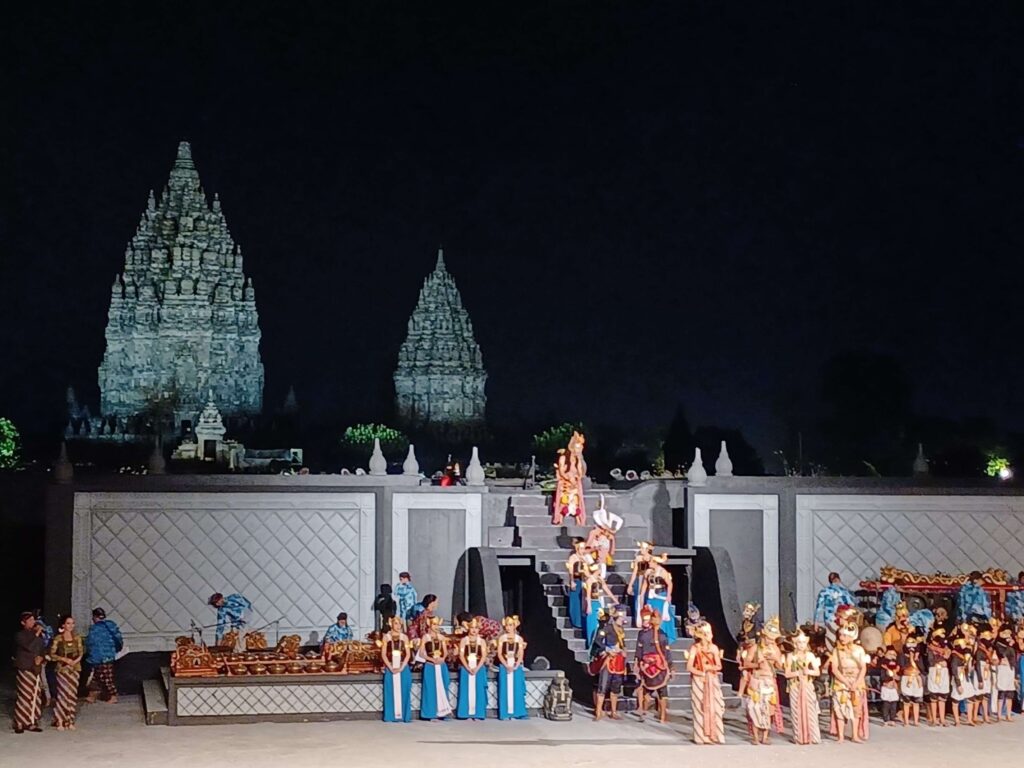
Whenever you visit Prambanan Temple, you’ll get the full cultural experience. One of the best activities you can try is watching the Ramayana Ballet, performed on an open-air stage with the temple as the background. This enchanting show blends traditional Javanese dance, gamelan music, and dramatic lighting to bring ancient stories to life.
You can also explore the temple grounds on foot or by bicycle during the day. Many guided tours are available to explain the myths, symbolism, and history simply and engagingly. Early morning or late afternoon visits are perfect for catching golden light on the temple’s spires, ideal for photography lovers.
Don’t forget to stop by the nearby Prambanan Museum, where you can see artifacts and restoration photos to understand how the temple evolved. Educational trips, cultural events, and international art performances now happen regularly here, blending the old and new harmoniously.