editorial
event
contribute
- guidelines
- submissions
Get the latest update for your leisure destinations.

editorial
event
contribute
- guidelines
- submissions
Get the latest update for your leisure destinations.

Sewu Temple
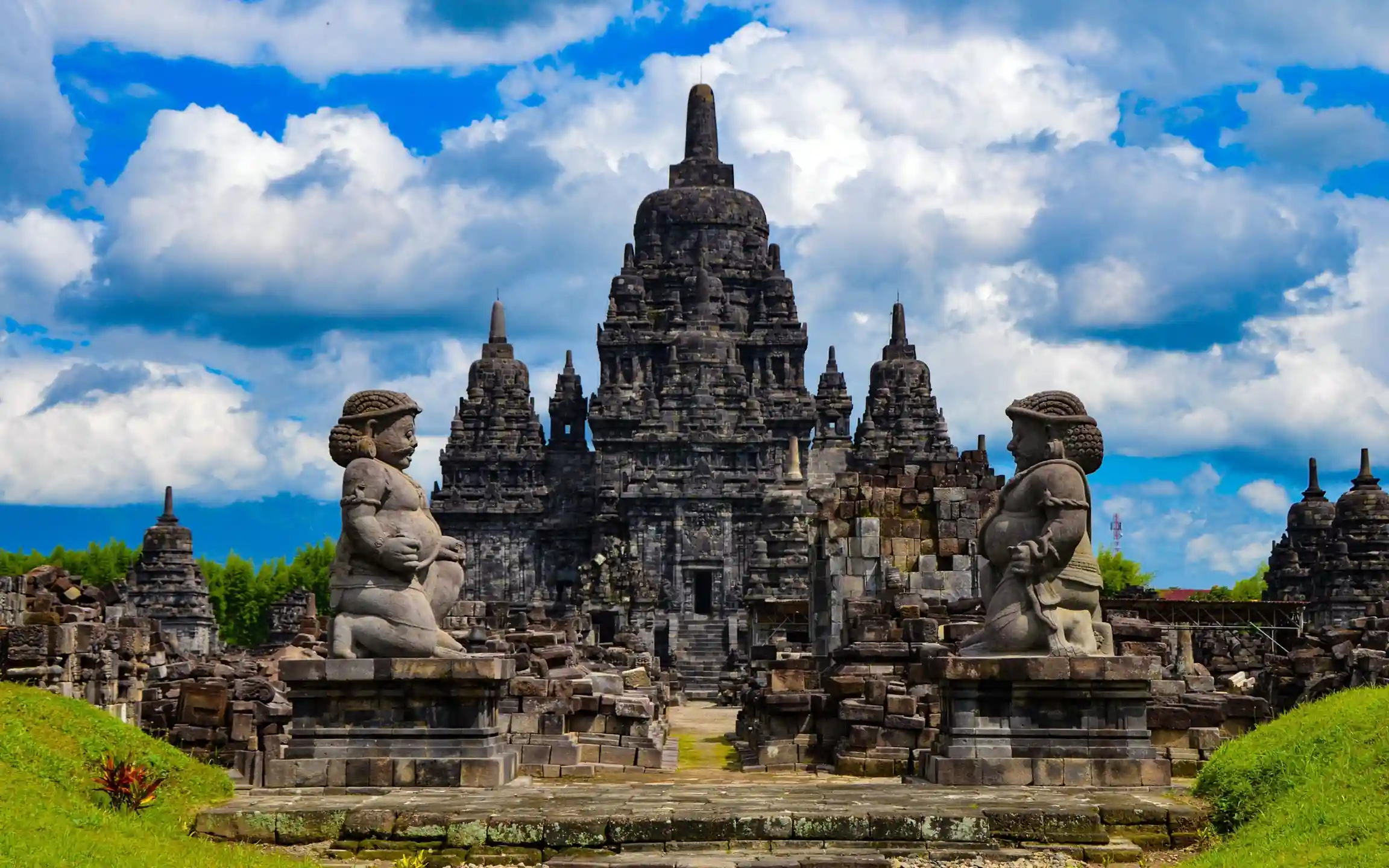
Sewu Temple is one of Indonesia’s most important Buddhist archaeological sites and is the second-largest Buddhist temple complex after Borobudur. It sits about 800 meters north of Prambanan Temple in Sleman Regency. Built in the 8th century during the Ancient Mataram Kingdom, Sewu Temple’s name means “one thousand temples” in Javanese, but the complex never actually had that many. The name comes from local folklore, especially the legend of Roro Jonggrang. Today, Sewu Temple is a powerful reminder of how Buddhist and Hindu traditions once coexisted in the Prambanan area.
Entrance Fee
You can visit Sewu Temple with your Prambanan Temple Complex ticket, so there’s no need to buy another ticket. You can explore both Prambanan and Sewu Temple in one trip. Sewu Temple is inside the Prambanan Archaeological Park at Jl. Raya Solo–Yogyakarta No.16, Prambanan, Sleman Regency, Special Region of Yogyakarta. It takes about 30 to 40 minutes to reach from Yogyakarta city center. You can get there by private car, taxi, ride-hailing app, or by taking a Trans Jogja bus on the Prambanan route.
What to See
The temple complex features a magnificent main temple rising about 30 meters high. It is surrounded by eight Apit temples and 240 Perwara (guardian) temples arranged in a symmetrical mandala-like layout.
Visitors are greeted by two enormous Dwarapala statues guarding the entrance. These giant stone guardians, among the largest in Indonesia, are one of the temple’s most iconic features. Walking through the restored structures offers insight into the scale and sophistication of Buddhist architecture during the Ancient Mataram period.
Historical Background
Rakai Panangkaran of the Sailendra Dynasty ordered the construction of Sewu Temple in the late 8th century. Its original Sanskrit name was Manjusrigrha, which means “The House of Manjusri,” the Buddhist Bodhisattva of Wisdom.
Sewu Temple stands next to the Hindu Prambanan Temple complex, showing the religious harmony between Buddhist and Hindu communities during the Ancient Mataram Kingdom. Because these two important sites are so close together, the Prambanan area is one of the most significant cultural landscapes in Southeast Asia.
Jl. Candi Sewu No.16, Bugisan, Kec. Prambanan, Kabupaten Sleman, Daerah Istimewa Yogyakarta 57454
- -
- -
- -