

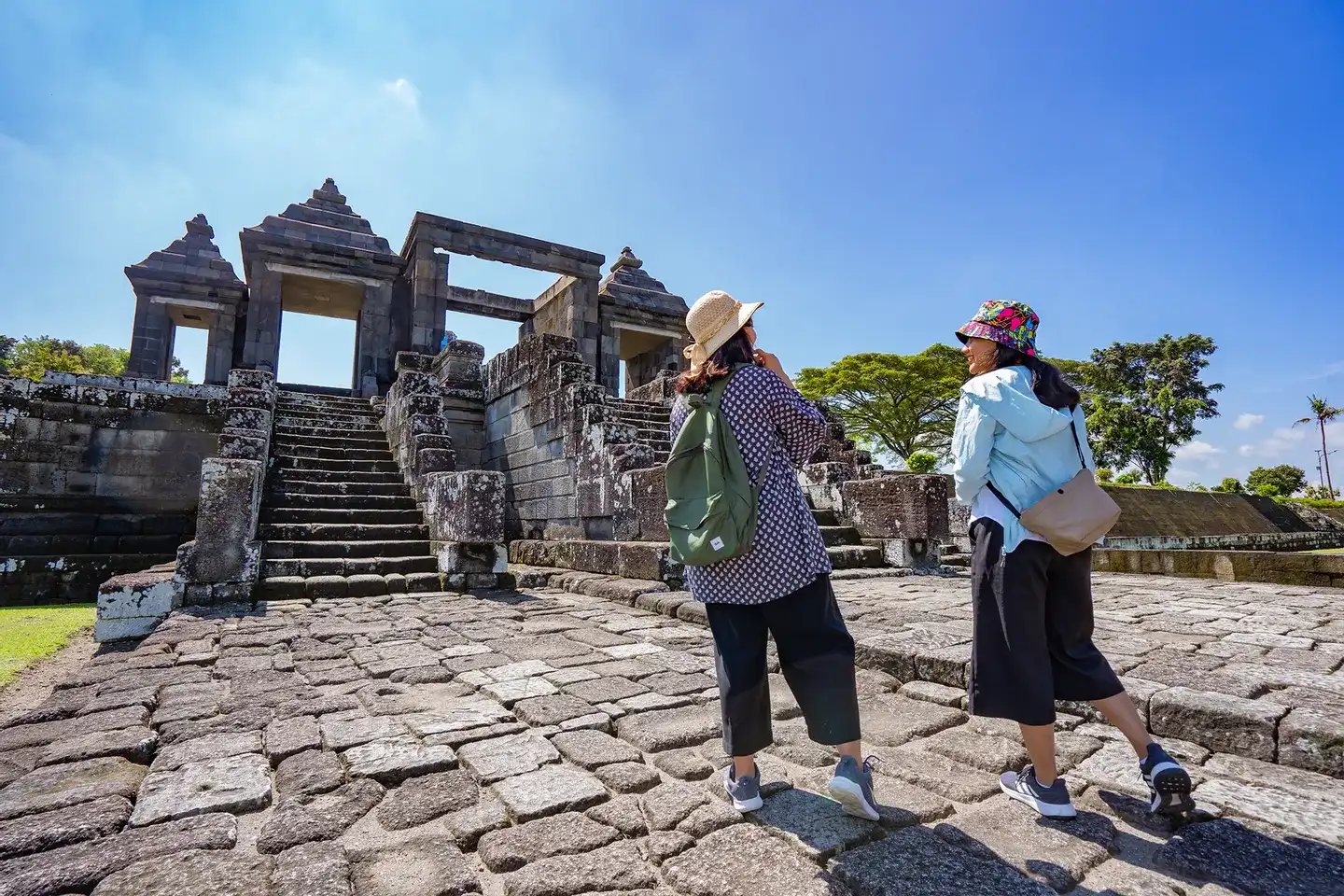
Besides Prambanan, consider visiting Keraton Ratu Boko, another enchanting Hindu temple site in Eastern Yogyakarta. This place could become one of your favorite memories in town. Imagine there is a royal palace on a hill, 196 meters above sea level, built in the 8th century. The atmosphere feels magical. Ratu Boko was founded in 1790 by Van Boeckholzt while exploring the Sewu Hills. The site covers 25 hectares, offering plenty to see and do.
Table of Contents
We’ve put together a short summary and some details about this site to help you have a better experience:
- Keraton Ratu Boko is close to Prambanan Temple, just a 10- to 15-minute drive away.
- Van Boeckholz first discovered the Ratu Boko Complex in 1790.
- Keraton Ratu Boko is not a temple. It was once a palace where the Shailendra dynasty ruled in the 8th century AD.
- Keraton Ratu Boko displays both Buddhist and Hindu relics.
- Tickets to visit Ratu Boko Palace range from IDR 40,000 to IDR 275,000 per person. At Ratu Boko, you can explore the grounds, have a picnic in the garden, take photos, enjoy a meal with city views, or watch a beautiful sunset.
Now is the perfect time to come and enjoy the charm of Keraton Ratu Boko for yourself. Are you ready to explore?
General Information of Keraton Ratu Boko
Keraton Ratu Boko, also known as Ratu Boko Palace, is a historic site in Yogyakarta about 19 kilometres from the city centre. Built on a hill, it dates back to the 8th-century Medang Kingdom and was once the largest settlement in Central Java during the classical era.
Inside the complex, visitors can see ceramics, porcelain, inscriptions, small temples, a pendopo, and other ancient objects. The site is considered sacred and is known for its unique discoveries and preserved local traditions.
The Ratu Boko complex attracts visitors from Indonesia and around the world. Before learning more about Ratu Boko, here is the latest information on its location, entrance fees, and available facilities:
| Entrance Ticket | Weekday (Domestic Tourist): IDR40.000 Weekend (Domestic Tourist): IDR60.000 Foreign Tourist: IDR275.000 |
| Location | Bokoharjo, Sleman Regency, Special Region of Yogyakarta |
| Opening Hour | 7 AM – 5 PM |
| Facilities | RestaurantGazeboSouvenir ShopToiletPraying Area |
History of Keraton Ratu Boko
Ratu Boko Palace has a rich and interesting past. It began as a Buddhist monastery and garden built by the Shailendra dynasty in the 8th century AD. In 1790, Van Boeckholtz first reported seeing the ruins on a hill. Word of his discovery spread in Yogyakarta, and years later, Thomas Stamford Raffles, then Governor of the Dutch East Indies, sent his surveyor, Colin Mackenzie, to investigate Van Boeckholtz’s findings between 1811 and 1812.
Research did not continue immediately. Almost a hundred years later, in 1890, Frederik David Kan Bosch, a scientist and professor of Indology in Indonesia, started his archaeological work on the remains south of Prambanan Temple. He shared his findings in a report called Kraton Van Ratoe Boko.
FDK Bosch also discovered an inscription from Rakai Panangkaran (746-784 AD) that said the Ratu Boko complex was once an Abhayagiri Vihara, a Buddhist monastery on a hilltop. This monastery offered monks a quiet place to live and focus on their spiritual practice. Later, in 856 AD, Rakai Walaing Pu Khumbayoni, also known as Hindus, turned the complex into a royal palace called Keraton Walaing.
Keraton Ratu Boko has both Buddhist and Hindu relics. While it was started by a Buddhist, the site mixes features from both religions. Some buildings resemble those in Buddhist temples, and three small temples exhibit Hindu influences.
Interesting Facts about Ratu Boko Heritage Complex
The Ratu Boko Complex has many fascinating facts that are not widely known. Here are a few you might enjoy:
- Keraton Ratu Boko is actually older than Prambanan Temple. Ratu Boko was built in the 8th century AD during the Shailendra Dynasty, while Prambanan Temple was built later, in the mid-9th century AD by Rakai Pikatan.
- In Indonesia, the word “Ratu” usually means queen and refers to a woman. However, in this case, Keraton Ratu Boko was led by a king named Prabu Boko. According to an urban legend in Yogyakarta, Prabu Boko was Roro Jonggrang’s father.
- The Ratu Boko Complex was inscribed on the UNESCO World Heritage List on October 19, 1955.
5 Things to Do in Keraton Ratu Boko
Here we are at the most exciting part of the Ratu Boko complex. Beyond its historical and heritage charm, there are plenty of things to do for those who enjoy exploring every corner of the site. Let us guide you on where to start:
1. Exploring Whole Sites

Discover the fascinating stories and details of the Ratu Boko complex on a guided tour. Since the site is located on a hill, we recommend wearing comfortable clothing for your visit. Your guide will share the history of Ratu Boko and highlight the unique features of each area, helping to preserve its heritage.
2. Picnic

Ratu Boko spans 25 hectares, so there’s plenty of space to enjoy a picnic and explore the whole area. If you’re nearby, it’s a great way to spend your time. You can bring your own picnic mat or use one of the benches or gazebos to relax, have a meal, or read a book. The place feels peaceful and calm.
Because Ratu Boko is on a hilltop, the sunset views are especially beautiful. If you prefer, you can also get a picnic package from management, starting at IDR 150,000 per person. Having a picnic here lets you enjoy the scenery at your own pace.
3. Photo Hunting
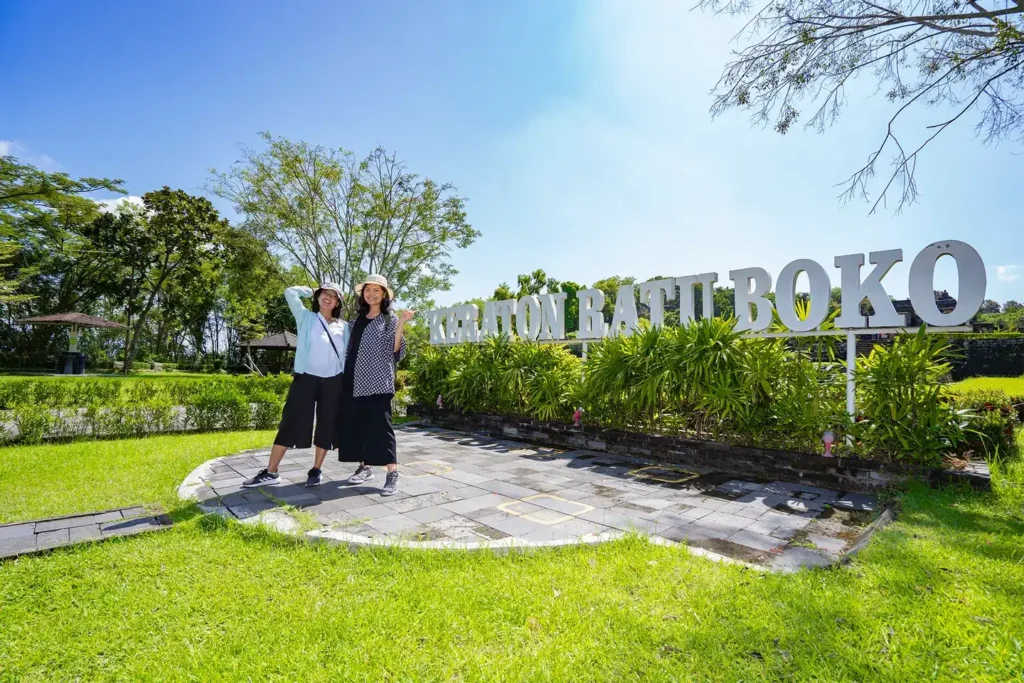
You’ll find great photo spots everywhere you look here. The mix of green plants and ancient ruins gives the place a magical charm. Most people head to the main gate by the stone stairs for pictures. If you come at the right time, you might see a beautiful sunset behind you, making your visit even more memorable. The garden is another nice place for photos, with tall trees lined up together. On a sunny day, the view is so striking it hardly seems real.
4. Elevated Dinner Experience

Another fun activity at Keraton Ratu Boko is having dinner on the hilltop while enjoying the beautiful city lights. The site also has a restaurant called Andrawina Resto, where you can try a variety of Indonesian dishes, gelato, coffee, and more.
5. Catching Sunset

Keraton Ratu Boko is a favorite spot for watching the sunset in Yogyakarta. From the top, you can see the whole area and share the moment with friends or family. Be sure to take some photos to remember your visit. The best time to enjoy the view is between 4 and 5 PM, but remember that the site closes at 5 PM.
After all, Keraton Ratu Boko is truly worth visiting. Here, you can enjoy an all-in-one heritage-and-nature experience while discovering the quieter, less-touristy side of Yogyakarta. We’d love to invite you to dive deeper into Yogyakarta’s natural charm, which deserves more global recognition.