

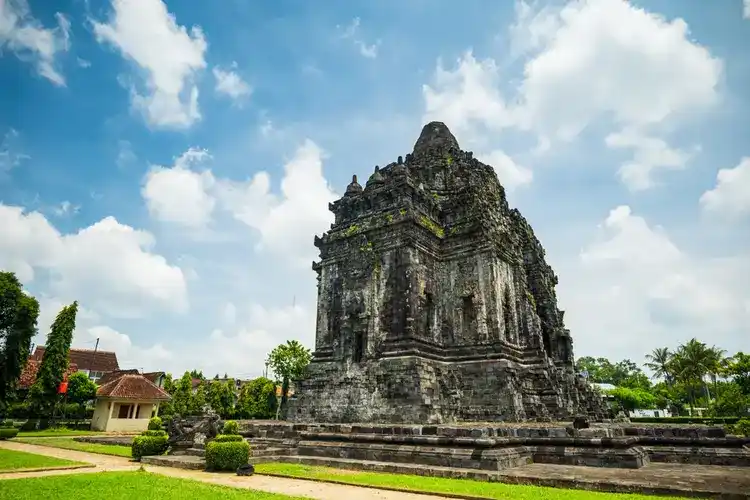
Standing gracefully through the test of time, Kalasan Temple is undeniably a must-visit when in Yogyakarta. Located on the southern side of Yogyakarta–Solo road, it is best known as the oldest Buddhist temple in Central Java and Yogyakarta. Remarkably, this cultural site predates the majestic Borobudur Temple, dating back to the 8th century.
Table of Contents
History of Kalasan Temple
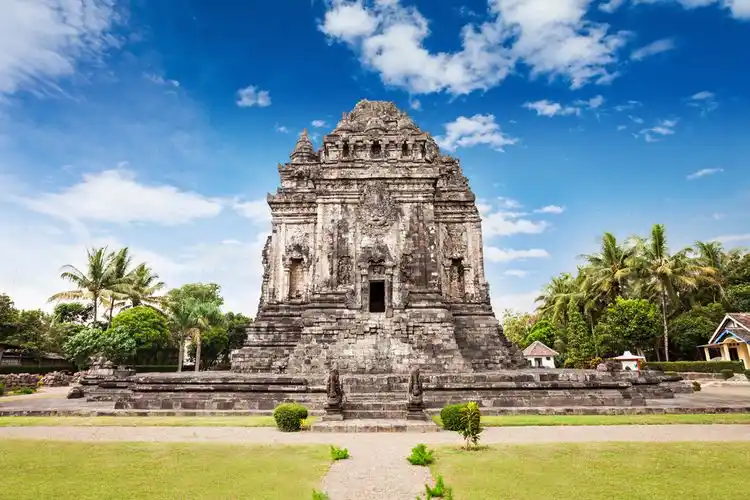
The story of Kalasan Temple begins in the 8th century during the reign of the Syailendra Dynasty. The figure behind its construction was King Rakai Panangkaran, the same ruler associated with Borobudur, who commissioned the temple to honor Tara, a deity in Mahayana Buddhism.
In line with its status as Central Java’s oldest Buddhist temple, Kalasan Temple holds a strong religious significance in Buddhism. Its cultural and spiritual values remain well preserved, with visitors and pilgrims alike coming to appreciate and experience its enduring legacy.
Located precisely in the area of Kalibening, Kalasan Temple is also known as Bening Temple.
Architectural Features of Kalasan Temple
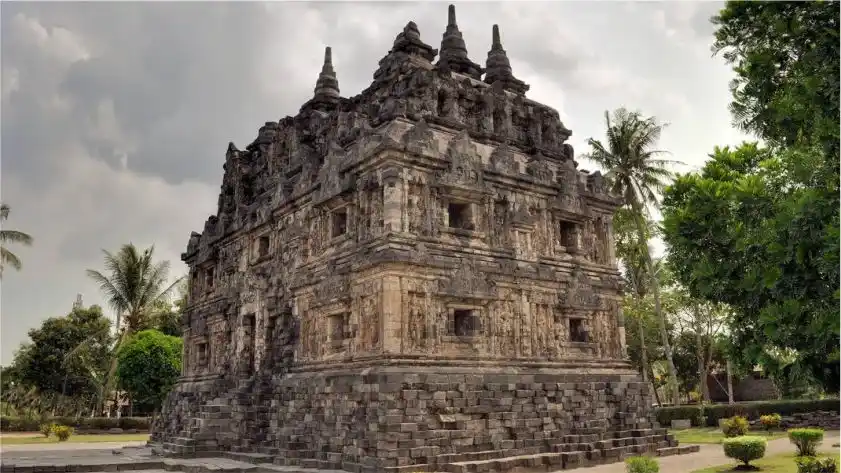
The architectural features of Kalasan Temple are nothing short of unique. Standing on a 45×45 meter rectangular base, the temple rises with a total of 52 stupas and three distinct parts crown, body, and foot.
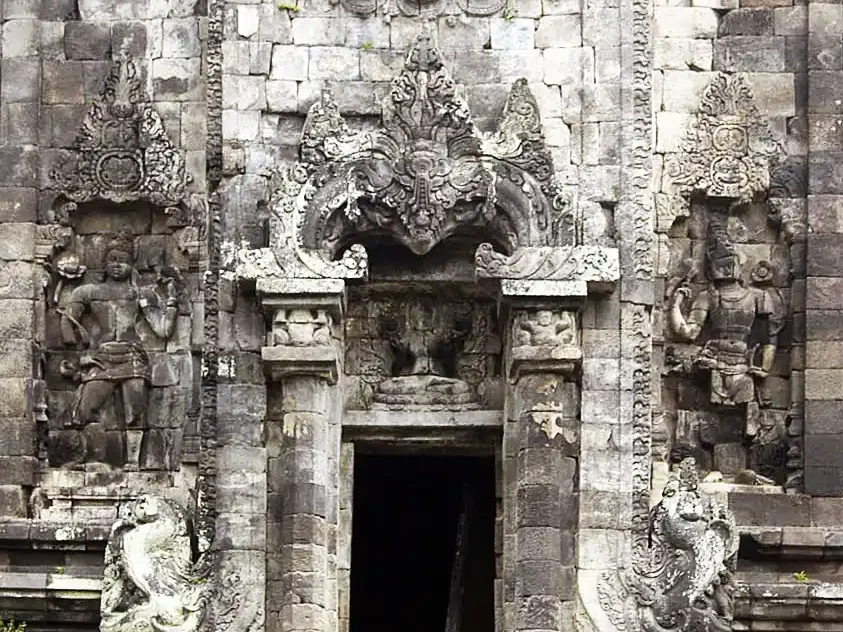
Kalasan Temple is richly decorated with Buddhist figures such as the Bodhisattva and Gana. Its entrance door is famously framed by a Kala ornament, a protruding giant-head motif believed to ward off evil spirits.
What truly sets Kalasan Temple apart from others is its use of vajralepa instead of conventional adhesive. Known as an ancient plaster layer designed to protect the walls from the elements, vajralepa stands as a remarkable testament to the architectural ingenuity of its time.
Adding to its distinctiveness, the temple features an octagonal roof carved with images of the Tathagatas facing the four cardinal points.
Visitor Information for Kalasan Temple
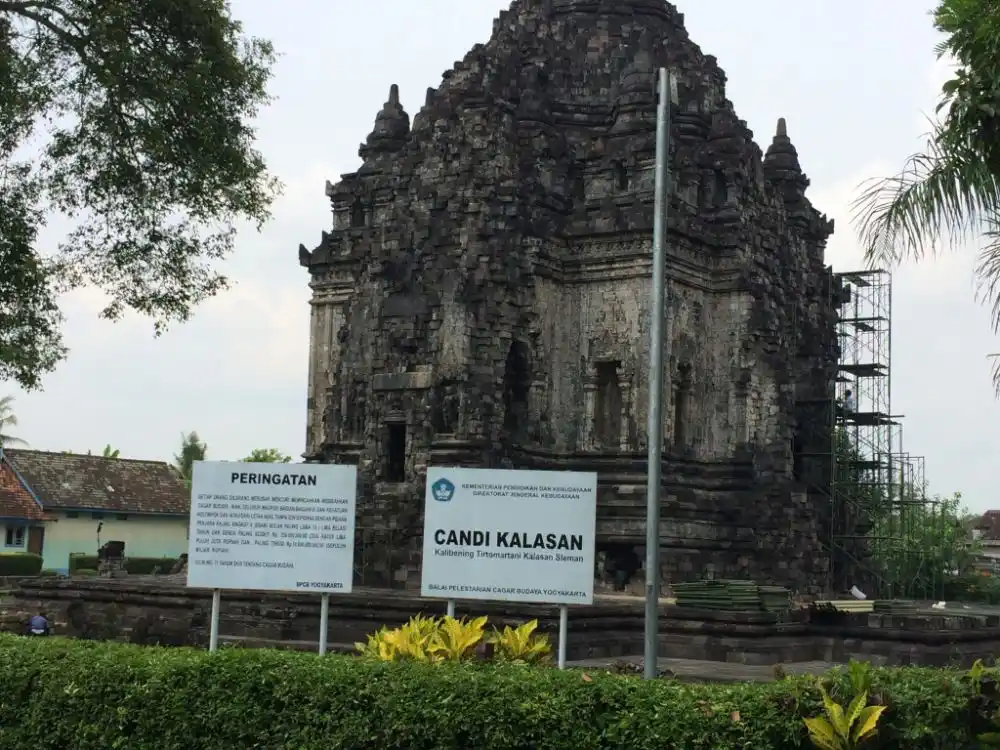
- Location: Kalibening, Tirtomartani, Kalasan, Sleman, Yogyakarta.
- Operating Hours: 6 AM – 6 PM
- Entrance Fee: IDR5,000
The journey takes around 20–30 minutes by private vehicle, ride-hailing, or taxi, and approximately 1 hour by Trans Jogja.
From TJ Mangkubumi 1, take Route 8 (Jombor Terminal → Ngabean) toward Krisdono. Transfer to Route 1A (Prambanan Terminal → Malioboro) and alight at TBP Rs. Bhayangkara (16 stops). The temple is a 5-minute walk from there.
Getting There:
- Private vehicle – car or motorcycle (rental or your own)
- Ride-hailing – Gojek or Grab
- Taxi
- Public bus (Trans Jogja)
Recommended Itinerary for Visiting Kalasan Temple
If you’re already making the trip to Kalasan Temple, adding Sari Temple to your itinerary is a no-brainer. Just a five-minute ride from Kalasan, Sari Temple is one of the few surviving examples of a Buddhist monastery from the ancient Mataram Kingdom.
Should you have more time, a one-day heritage trail through four temples near Kalasan makes the trip even more worthwhile. In that case, staying overnight makes an ideal option, especially with plenty of excellent hotels in Prambanan.