

Java will always be a great discovery. Besides the diversity of popular traditions, Java presents lots of traditional games as a space for unique experiences or connections with culture.
Table of Contents
The Javanese have always created traditions and practices built on deep and philosophical meaning, which is why they embrace life as a whole, even through their traditional games. Not only do they create the condition of creativity, but these games also inform us about culture and life stories.
1. Congklak

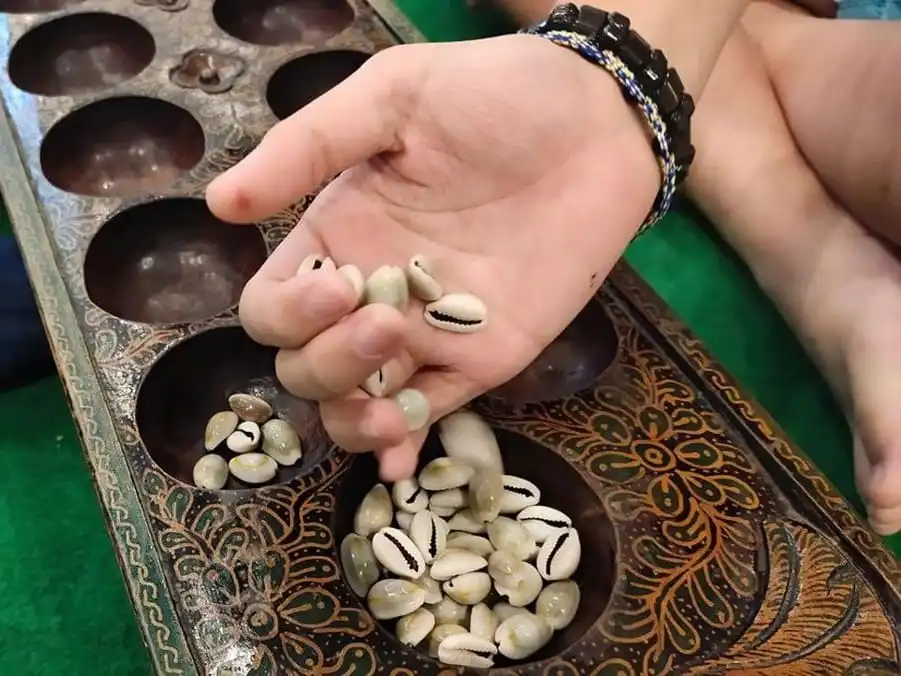
Congklak is a classic Javanese board game, a true must-play if you want to understand the strategic and thoughtful side of Javanese culture. To play, you simply need a wooden board with 14 small holes and two larger “home” holes, along with 98 small cowrie shells or seeds.
The game is all about distributing and collecting the shells, requiring a bit of counting and forward-thinking. It’s a calm, engaging game perfect for a relaxed afternoon. It’s a great way to interact with locals and learn a few Indonesian phrases while you play.
2. Cublak-cublak Suweng

Cublak-cublak Suweng isn’t just a game, it’s a beautiful, melodic experience deeply rooted in Javanese folklore, making it a must-try for those who love cultural immersion. This traditional children’s game is usually played in a group and involves a catchy song and a hidden object.
To participate, you’ll need a few friends. Players sit in a circle, one person lies face down in the middle, and the others put their hands in the center. A small object (often a pebble) is passed around secretly while everyone sings the “Cublak-cublak Suweng” song. The person in the middle then tries to guess who holds the object.
3. Gasing

Playing with a Gasing, or traditional spinning top, is an absolute blast and a must-experience for anyone wanting to witness the simple yet thrilling pastimes of Java. These tops are usually made from wood and spun using a string.
You’ll often find groups of kids and even adults gathering in open fields or village squares, competing to see whose gasing can spin the longest or knock another’s out of a designated area. The atmosphere around a gasing competition is always lively and full of friendly rivalry, making it a super fun and engaging activity.
4. Egrang

Egrang is an incredibly exciting and somewhat challenging traditional game that you have to try if you’re looking for a unique physical and cultural experience in Java. It involves walking on stilts, usually made from long bamboo poles with footrests.
While it might look a bit intimidating at first, with a little practice and some guidance from locals, you’ll be surprised how quickly you can get the hang of it. You’ll often see Egrang performances or races during local festivals and celebrations, showcasing the agility and balance of the participants.
5. Dhelik-dhelikan

Dhelik-dhelikan, the Javanese version of hide-and-seek, is a timeless and joyful game that is a must-play for anyone wanting to experience a universal childhood delight with a distinct Javanese flavor. This game needs no special equipment, just a few players and a good hiding spot.
This game is played just like hide-and-seek, with one person counting while others find places to hide, then the “seeker” tries to find everyone. You can play this anywhere from a village courtyard to a local park, and it’s a fantastic way to bond with local children and experience their playful energy. So go ahead, step outside your comfort zone, and embrace the playful side of Javanese culture.