

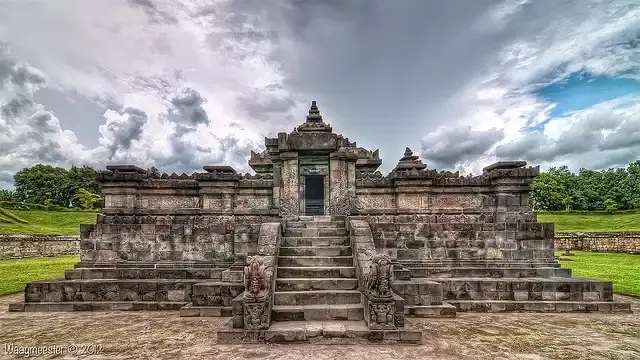
A visit to Sambisari Temple reveals a rather one-of-a-kind, almost surreal experience of Yogyakarta’s cultural heritage. Sambisari Temple is a 9th-century Hindu temple, which is best known for its underground design, believed to have been buried beneath volcanic ash for centuries.
Table of Contents
Its quiet, unhurried charm makes it genuinely extraordinary. While it remains one of Yogyakarta’s most underrated travel destinations, we’re excited to share the wonder of Sambisari Temple with you.
The Story of Sambisari Temple
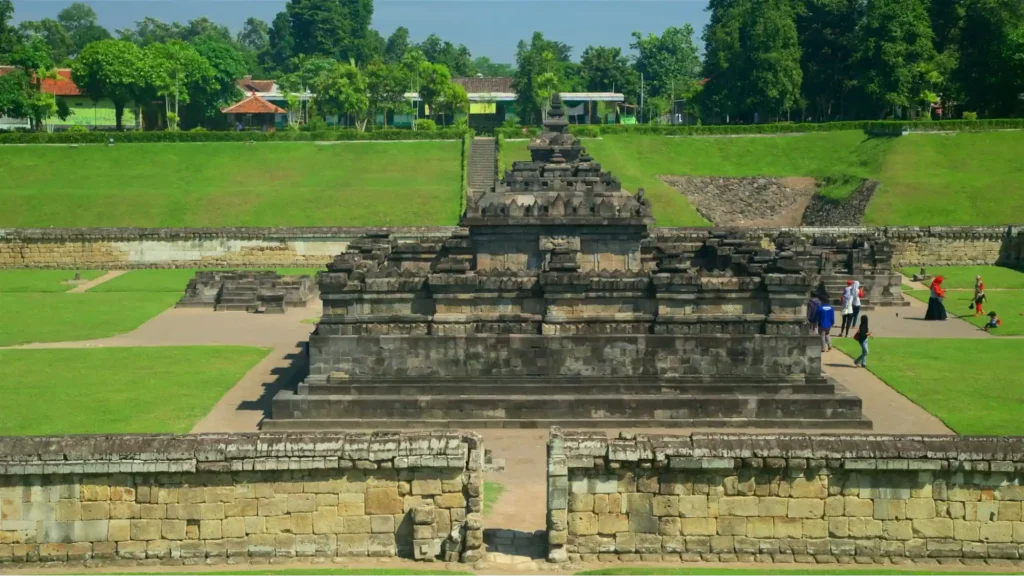
Sambisari Temple is a 9th-century Hindu shrine, built around 812 AD under the patronage of the Mataram Kingdom. Dedicated to the God Shiva, evidence of this devotion lies in the presence of a yoni and lingga found within the temple, sacred symbols representing Shiva’s power and divine energy.
For centuries, the temple lay completely buried beneath layers of volcanic ash from Mount Merapi, lying approximately 6.5 meters underground. It wasn’t until 1966 that a local farmer’s hoe struck stone and triggered the excavations that would slowly bring the temple back to light over the following decades. Since then, Sambisari Temple has become one of Yogyakarta’s most unique archeological finds.
Understanding Sambisari Temple’s Underground Architecture
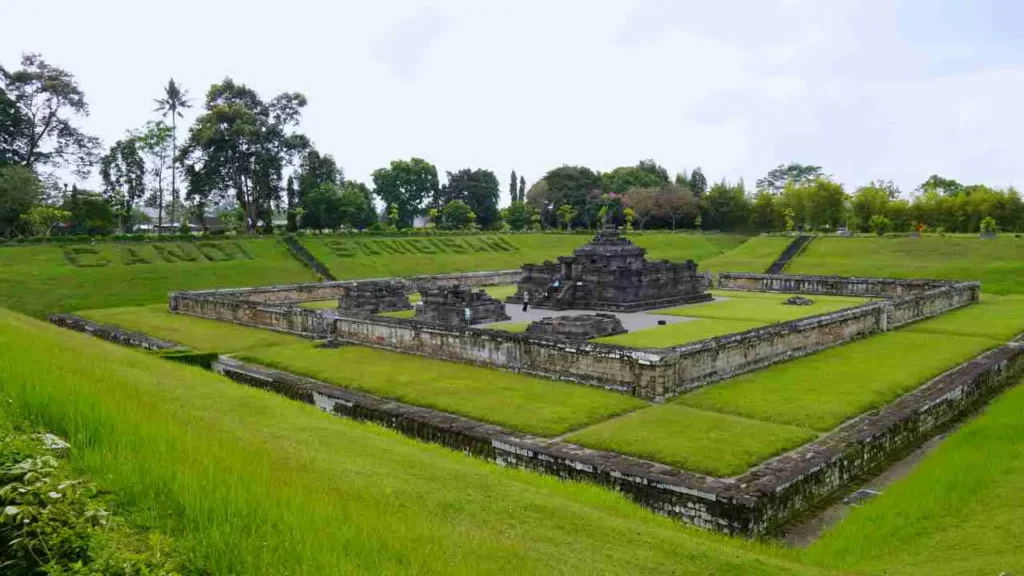
When visiting Sambisari Temple, visitors must first descend a series of staircases to reach the temple floor. Sitting in a rectangular pit, the temple complex’s main yard is marked by eight small lingga, four positioned at the cardinal points and four at the corners, framing the entire compound.
The complex consists of one main temple and three subsidiary shrines, all constructed from andesite volcanic stone. Three-tiered courtyards surround the structures, each enclosed by its own perimeter wall. The main temple faces west, measuring 13.65 m × 13.65 m at its base and standing 7.5 m tall.
Hindu Symbols and Reliefs at Sambisari Temple
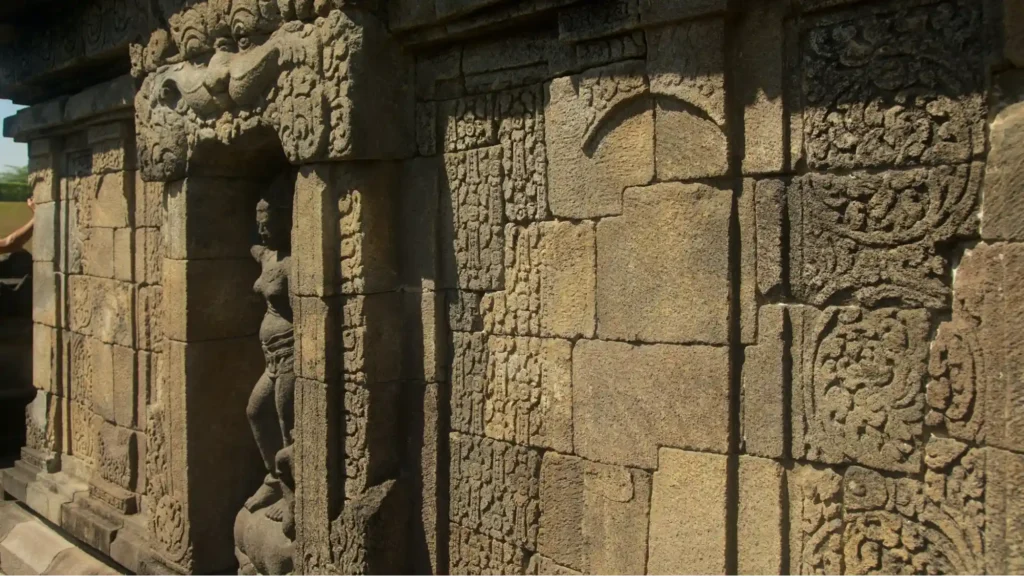
Sambisari Temple tells a rich story in an unspoken language. As visitors ascend the stairs, they will notice the entrance decorated with makara carvings supported by dwarf-like figures known as gana.
Inside the main chamber, the walls contain niches with Hindu deities Durga in the north, Ganesha in the east, Agastya in the south, and guardian figures Mahakala and Nandisvara at the western entrance. At the center lies a yoni and lingga, one of Hinduism’s most important symbols representing energy and fertility.
Despite its modest size, Candi Sambisari is rich in intricate carvings, reliefs, symbols, and statues of Hindu deities. These details further emphasize its spiritual and cultural significance in ancient Javanese civilization.
Visitor Information for Sambisari Temple
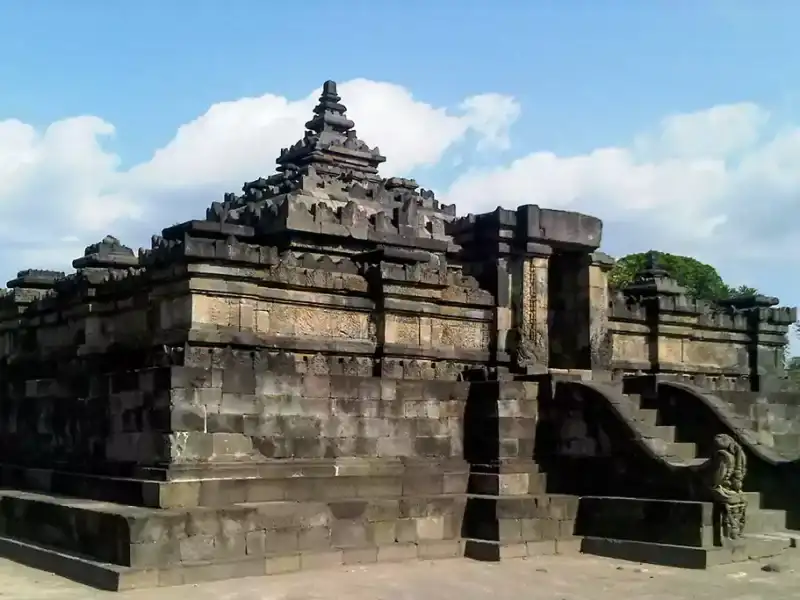
Sambisari Temple is located in the village of Sambisari, Purwomartani, Kalasan District, Sleman Regency, about 12 kilometers northeast of central Yogyakarta and very close to Adisutjipto Airport. The easiest way to reach Sambisari is to rent a motorcycle or car, which takes around 25 to 30 minutes from the city center.
The temple is open daily from 8 AM to 5 PM, with entrance fees of IDR 5,000 for local visitors and IDR 15,000 for foreign tourists.
While you’re in the area, consider extending the experience by visiting other temples near Kalasan, such as Kalasan Temple, Sari Temple, and Kedulan Temple for a more enriching journey.