

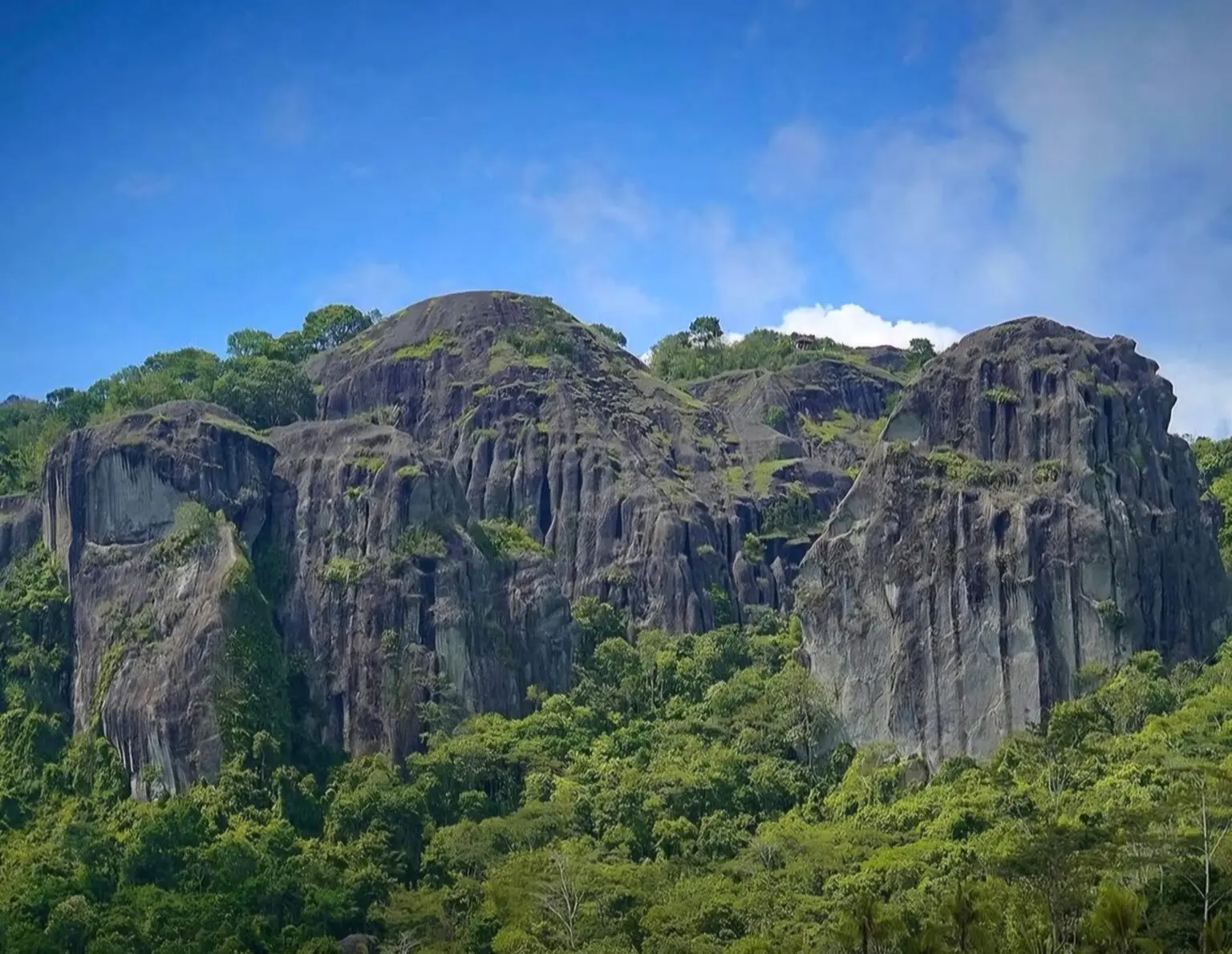
Gunung Sewu Geopark is one of Indonesia’s most important UNESCO Global Geoparks, stretching across Yogyakarta, Central Java, and East Java. Known for its thousands of limestone hills, caves, underground rivers, and dramatic beaches, the region offers a unique combination of geology, nature, and culture.
Table of Contents
To discover its beauty is to be treated to spectacular landscapes and immersive nature adventures. Whether you’re a first-timer or a returning explorer, this guide will take you through everything Gunung Sewu has to offer, ensuring you’ll be captivated by its wonders.
What is Gunung Sewu Geopark?
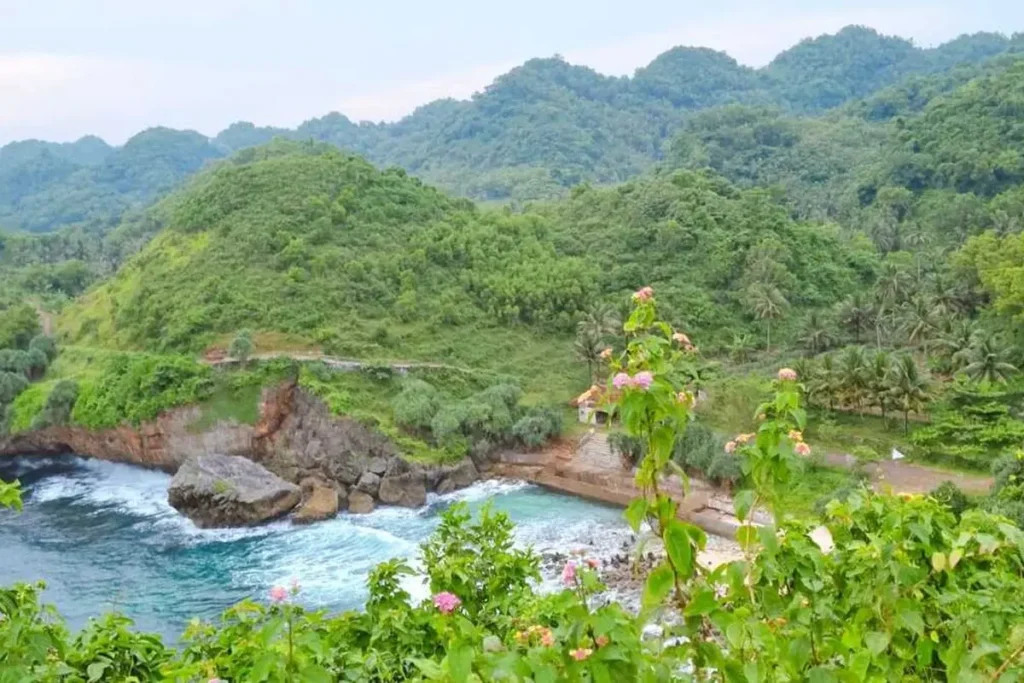
Gunung Sewu Geopark is a vast karst landscape stretching across three regencies in Java: Gunungkidul in Yogyakarta, Wonogiri in Central Java, and Pacitan in East Java. Known for its thousands of limestone hills, caves, and underground rivers, the area was officially designated as a UNESCO Global Geopark in 2015 due to its exceptional geological, ecological, and cultural significance.
The Geology Behind the Landscape
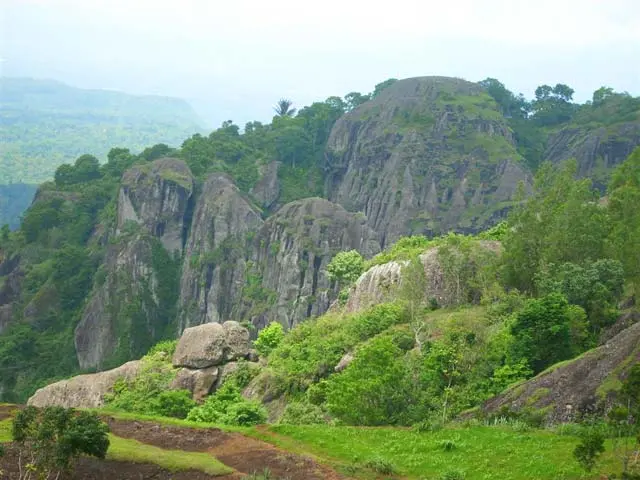
The landscape of Gunung Sewu was formed from ancient limestone deposits originating from prehistoric coral reefs beneath the sea millions of years ago. Over time, tectonic uplift gradually raised these limestone formations above sea level.
Rainwater then slowly dissolved the porous limestone through a process known as karstification, creating the region’s distinctive topography. This process formed countless geological features, including caves, underground rivers, sinkholes (dolina), and cone-shaped limestone hills.
Why Gunung Sewu is a UNESCO Site
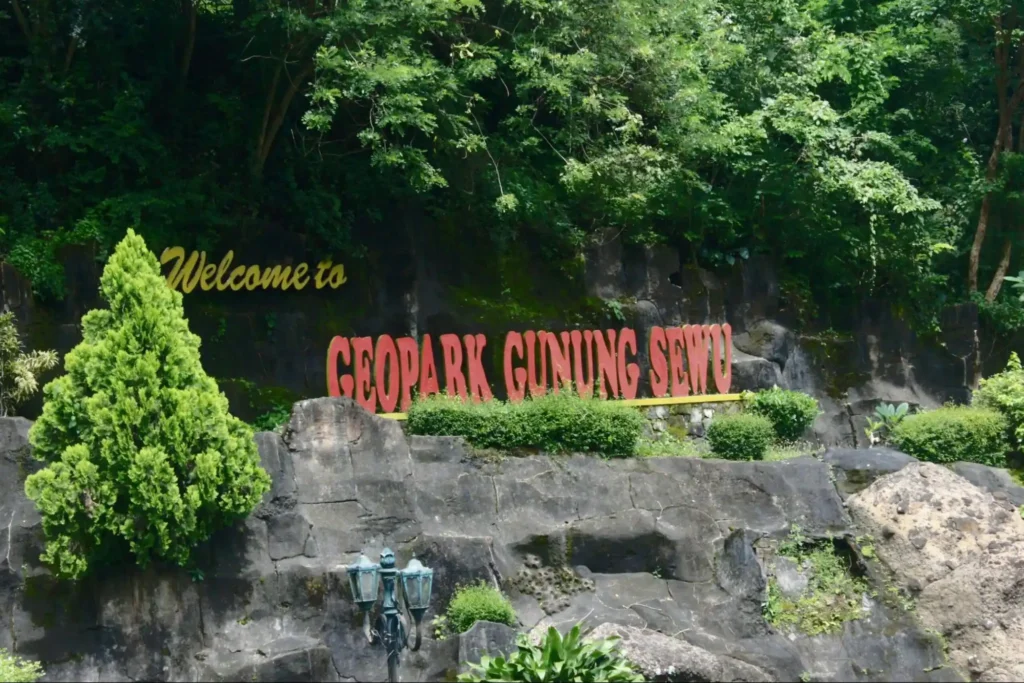
Gunung Sewu Geopark deserves every bit of its UNESCO recognition. Its outstanding geological value lies primarily in its extensive karst formations, which provide globally important insight into tropical karst formation processes. Across the region, both exokarst and endokarst ecosystems also support remarkably rich biodiversity.
Equally important is its cultural and archaeological significance. Sites such as Song Terus Cave contain evidence of prehistoric human habitation and ancient stone artifacts, helping researchers better understand early human life in Java.
Top Geosite Attractions
1. Caves — Gua Pindul & Jomblang
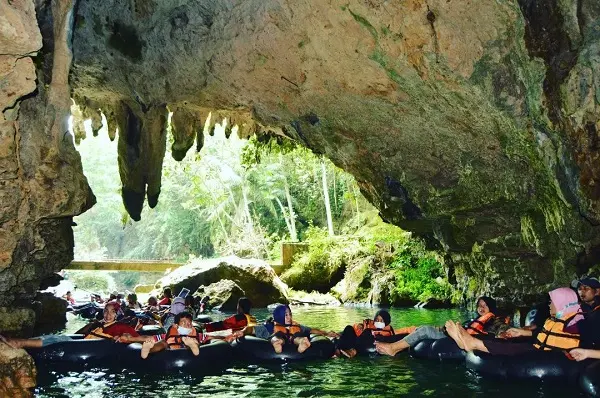
Gunung Sewu’s cave systems are a conversation on its own. Pindul Cave offers one of the region’s most accessible adventures through cave tubing. Visitors float along calm underground rivers using inflatable tubes as they observe stalactites and cave formations above.
Meanwhile, Jomblang Cave presents a more dramatic experience through vertical caving. Visitors descend deep into a giant sinkhole before trekking through muddy cave passages toward the famous “light of heaven,” where sunlight pierces through the cave opening in spectacular fashion.
2. Underground River — Kali Suci & River Cave Tubing
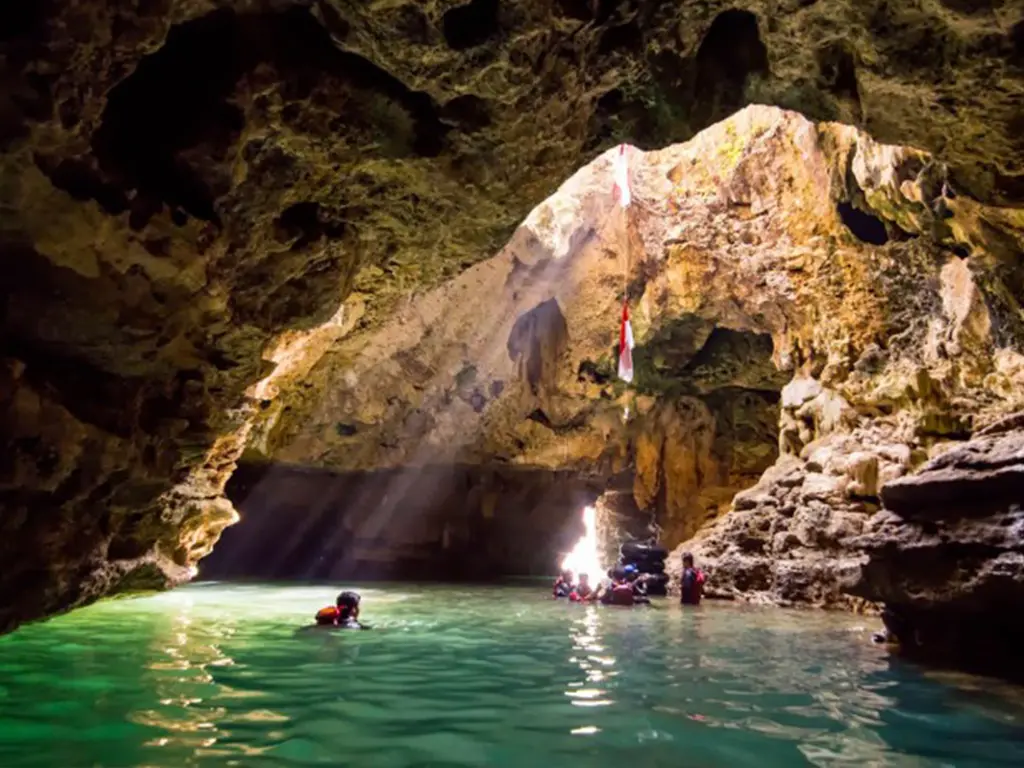
For travelers seeking more adrenaline-filled experiences, Kali Suci offers underground river exploration combined with body rafting and cave tubing. Participants float, swim, and navigate through 750-meter-long narrow cave passages surrounded by towering limestone walls.
The minimum age requirement is six years old. with price starting at IDR120,000.
3. Coastal Karst — Pantai Siung, Wediombo, Timang
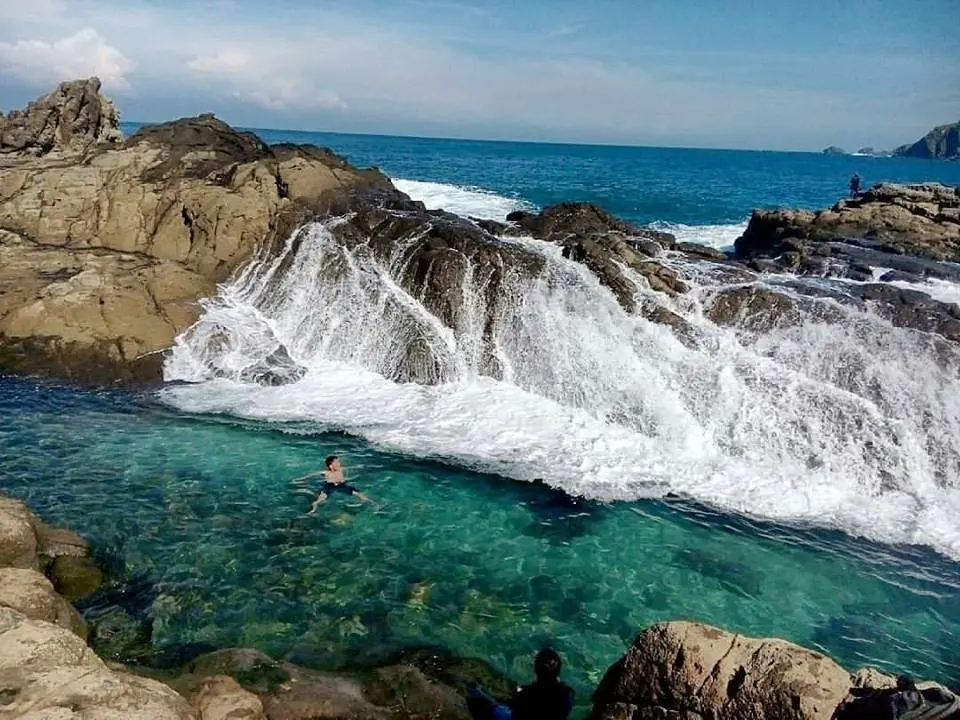
Gunung Sewu presents a spectacular meeting point between karst cliffs and the Indian Ocean coastline. Siung Beach is especially popular among rock climbers thanks to its towering limestone walls. On the other hand, Wediombo Beach is celebrated for its natural tidal pools, while Timang Beach stands out for its dramatic gondola ride suspended above crashing waves.
4. Prehistoric Site — Song Terus Cave (Pacitan side)
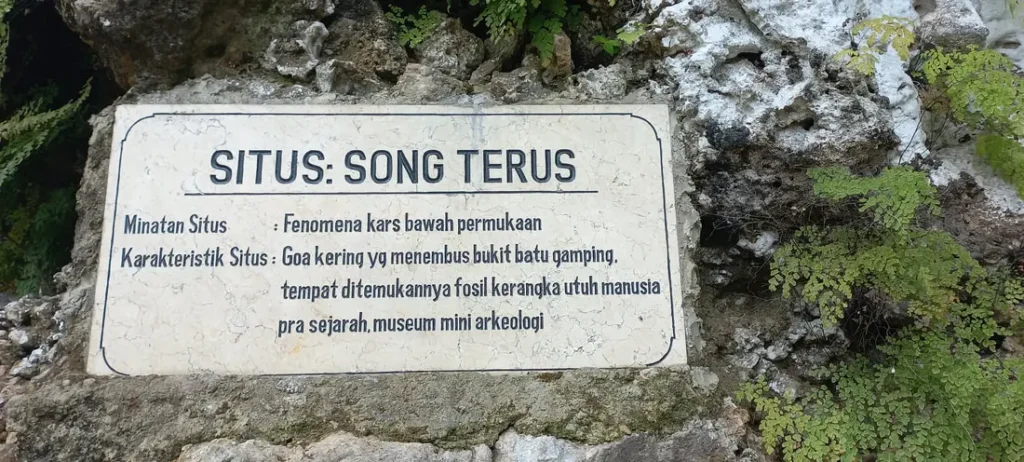
Located on the Pacitan side of the geopark, Song Terus Cave holds major archaeological importance. Researchers discovered prehistoric human remains, tools, and stone artifacts within the cave, confirming a complex prehistoric life.
Gunung Sewu vs Other Geoparks in Indonesia
Compared to other Indonesian geoparks such as Batur Geopark or Ciletuh Geopark, Gunung Sewu Geopark stands out primarily because of its extensive tropical karst ecosystem.
While Batur is dominated by volcanic landscapes and Ciletuh by ancient rock formations and waterfalls, Gunung Sewu is defined by interconnected limestone hills, cave systems, underground rivers, and coastal karst formations stretching across multiple provinces.
How to Visit Gunung Sewu from Yogyakarta
Zone Gunungkidul
The Gunungkidul section of Gunung Sewu Geopark is the easiest to access from Yogyakarta City, typically requiring around 1.5–2.5 hours by road depending on destination and traffic conditions. Most popular attractions, including caves and beaches, are also located within this zone.
Day Trip and Overnight Itinerary
A day trip works well for visitors focusing on one or two destinations such as cave tubing and nearby beaches. However, travelers wanting to explore multiple caves, beaches, and remote karst areas more comfortably may benefit from staying overnight in Gunungkidul or Pacitan.
Guided Tour vs Self-Drive
Guided tours are often the easiest option for first-time visitors due to the geopark’s wide area and varying terrain conditions. This option typically features guides who help coordinate cave activities requiring safety equipment and permits. For more flexibility, self-driving is the go-to. Though, some routes toward caves and coastal areas involve steep limestone roads and limited signage.
To satisfy curiosity in the most adventurous way, Gunung Sewu Geopark truly delivers. It’s a landscape that reveals how geology, nature, and human civilization have shaped one another over millions of years, creating the kind of destination that appeals to every type of traveler.
For more discoveries beyond the geopark, continue your journey through Kulonprogo or dive deeper into Javanese culture through Wayang Kulit.