

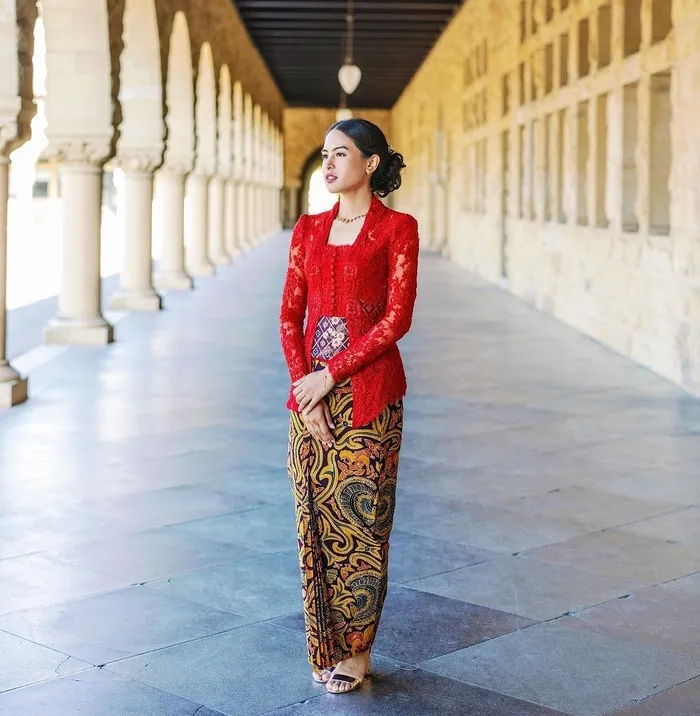
In Javanese culture, what you wear is rarely just about appearance. It also communicates refinement, respect, and social awareness. Among the archipelago’s many clothing traditions, few garments carry that meaning more deliberately than the Javanese kebaya.
Table of Contents
Worn across generations, from royal courts to village ceremonies, to university graduation halls, the Javanese kebaya has remained a constant in a culture that values continuity without rejecting change.
What Is Javanese Kebaya?
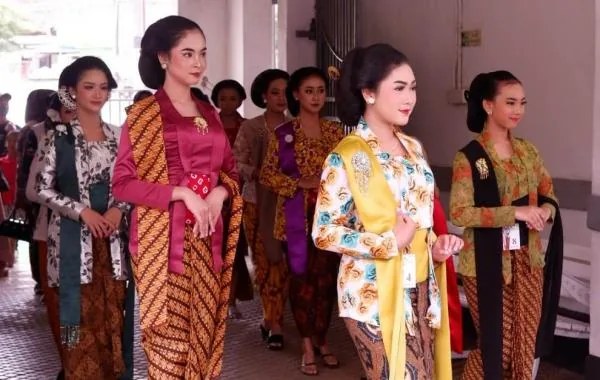
The Javanese kebaya is a traditional fitted blouse, typically made from sheer or semi-sheer fabrics such as voile, lace, or silk. It is most often paired with a kain, or a length of batik cloth, wrapped around the lower body.
Compared with other regional variations, the Javanese kebaya tends to have a more modest, structured silhouette. It reflects values of elegance, restraint, and appropriate public presentation. Today, kebaya is still worn in many contexts, from weddings and formal ceremonies to cultural events and even everyday occasions.
Why Kebaya Matters in Javanese Culture
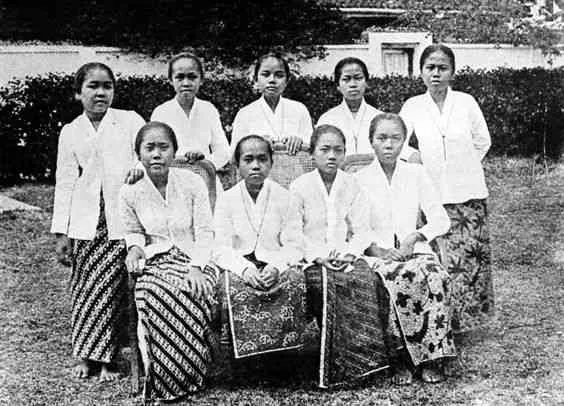
In Javanese culture, kebaya is more than just traditional clothing. It’s a cultural symbol that reflects identity, history, and social values passed down for centuries.
Javanese kebaya is widely believed to represent social meaning in Javanese society. Worn especially by women, the kebaya symbolizes femininity, refinement, and social presence, serving as an important means of expressing identity through dress. Thus, wearing it means being part of a living cultural practice.
How Javanese Kebaya Is Usually Worn
A complete Javanese kebaya ensemble involves several components, each with its own function and significance.
Kebaya Blouse
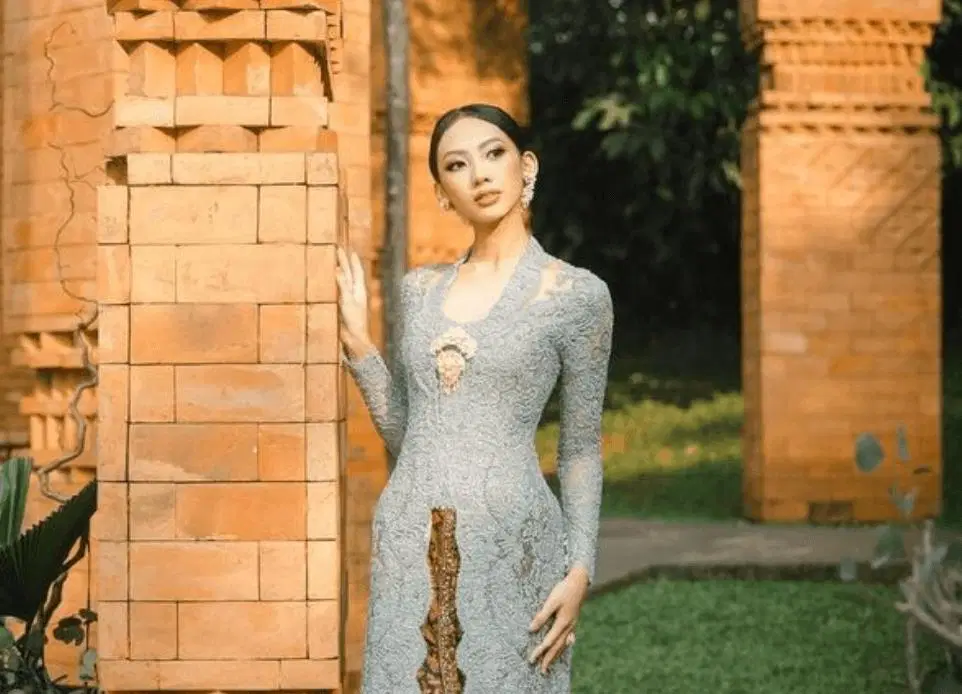
A kebaya blouse is a fitted upper garment, often made from sheer fabric with lace or embroidery details. In Javanese tradition, it usually features a modest neckline and long sleeves, creating an elegant yet understated silhouette.
Kain Batik or Jarik
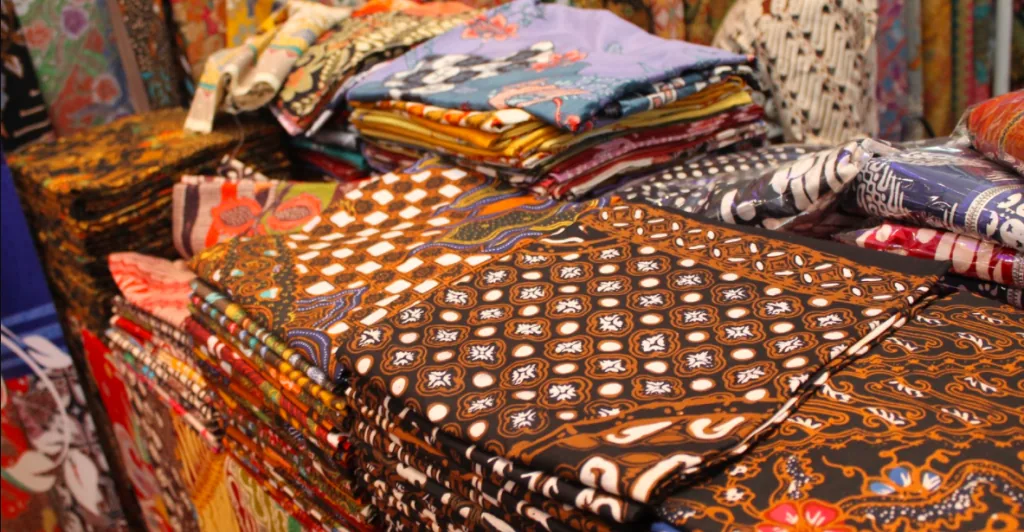
The lower garment is a length of batik cloth, called jarik, wrapped around the waist and hips to form a long, fitted skirt. Both the wrapping style and the batik motif carry cultural meaning beyond their functional role.
Stagen or Waist Support
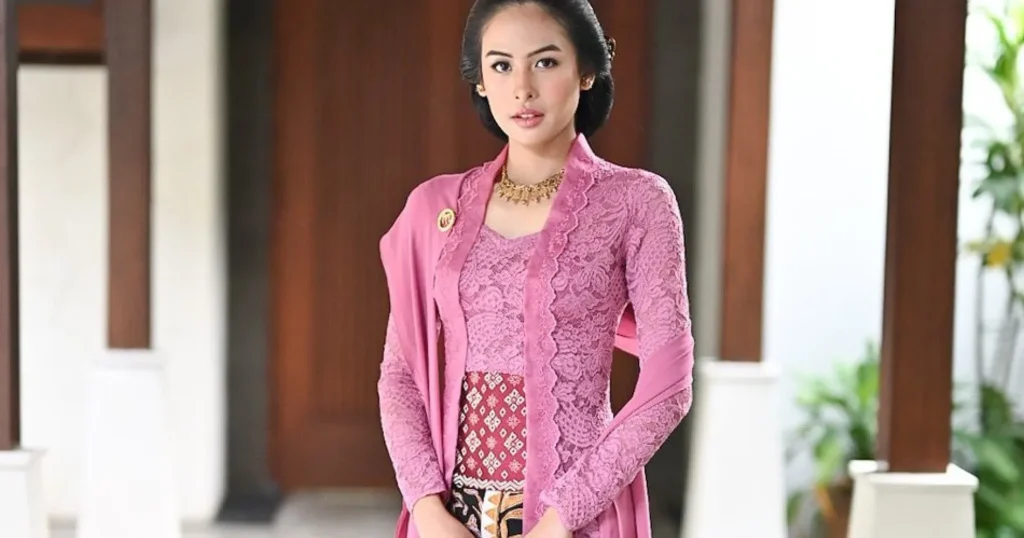
The stagen is a long fabric band wrapped tightly around the waist before the jarik is worn. It helps support posture, secures the fabric, and maintains the structured silhouette of the traditional blouse.
Hair, Accessories, and Overall Presentation
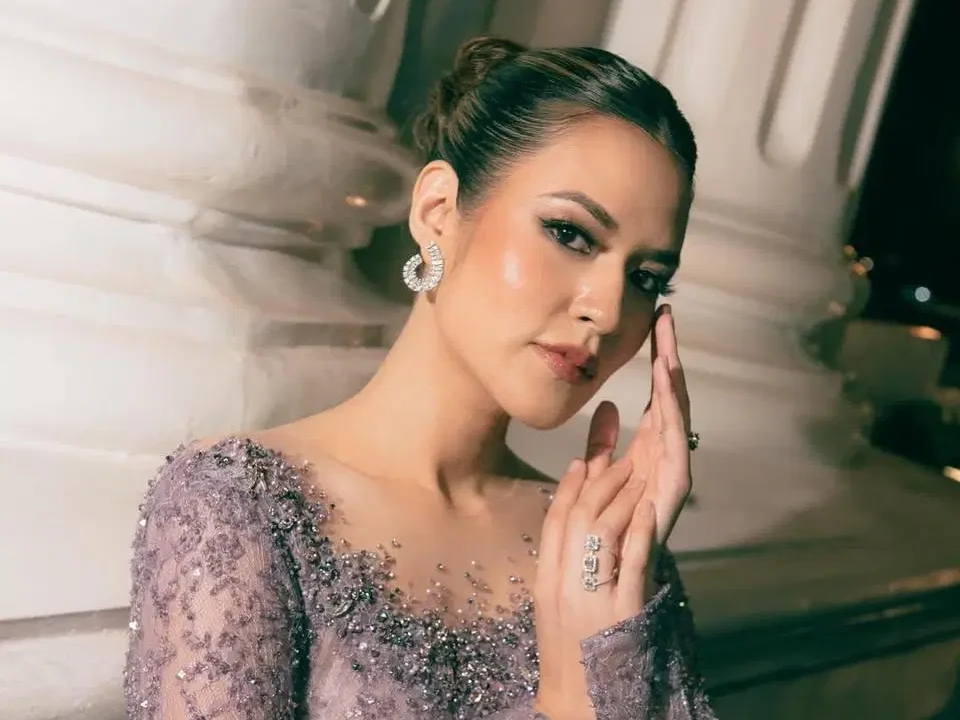
Hair is typically styled into a low or up bun and adorned with simple floral or traditional ornaments. Accessories are kept minimal, such as small earrings or a brooch, to maintain a balanced and refined appearance.
Kebaya and Batik: A Cultural Pairing
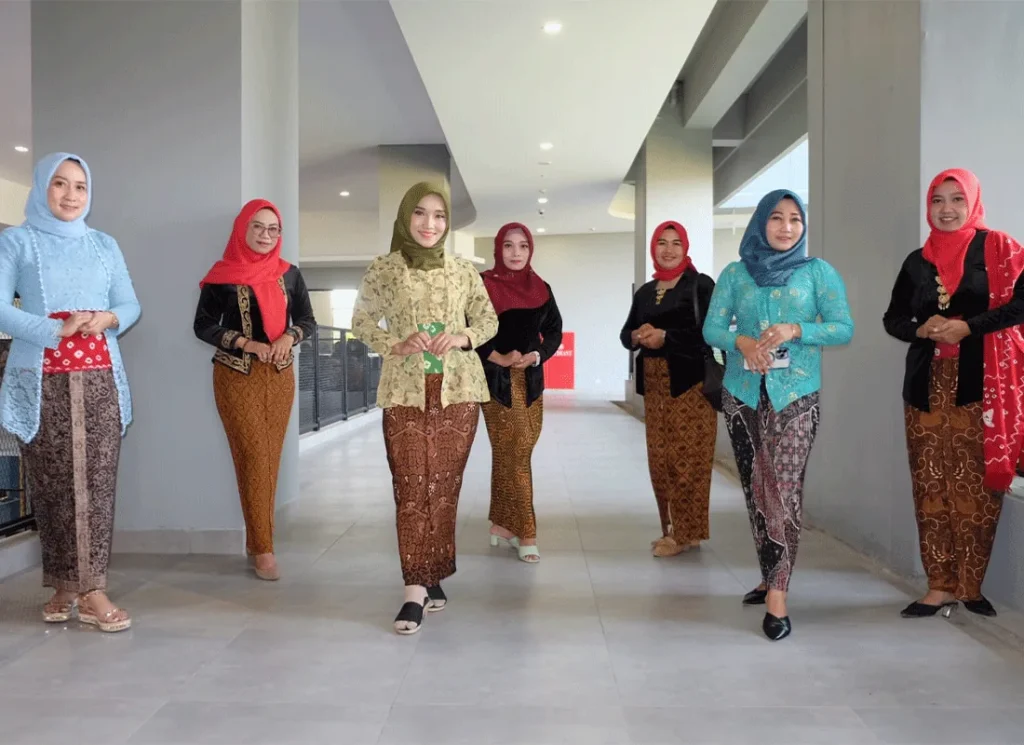
The pairing of kebaya and batik shapes the meaning of the entire ensemble. Certain batik motifs are reserved for specific occasions, life stages, or social contexts, and choosing the wrong one can signal a lack of cultural awareness.
For example, Parang motifs, with their bold diagonal patterns, are associated with strength and authority and are often worn for formal or business occasions. Meanwhile, Sido motifs frequently appear in weddings, symbolizing hopes for prosperity and happiness.
While there are no strict rules for combining kebaya and batik, it’s clear that the selection is a thoughtful cultural decision rather than an arbitrary one.
Kebaya in Javanese Ceremonies
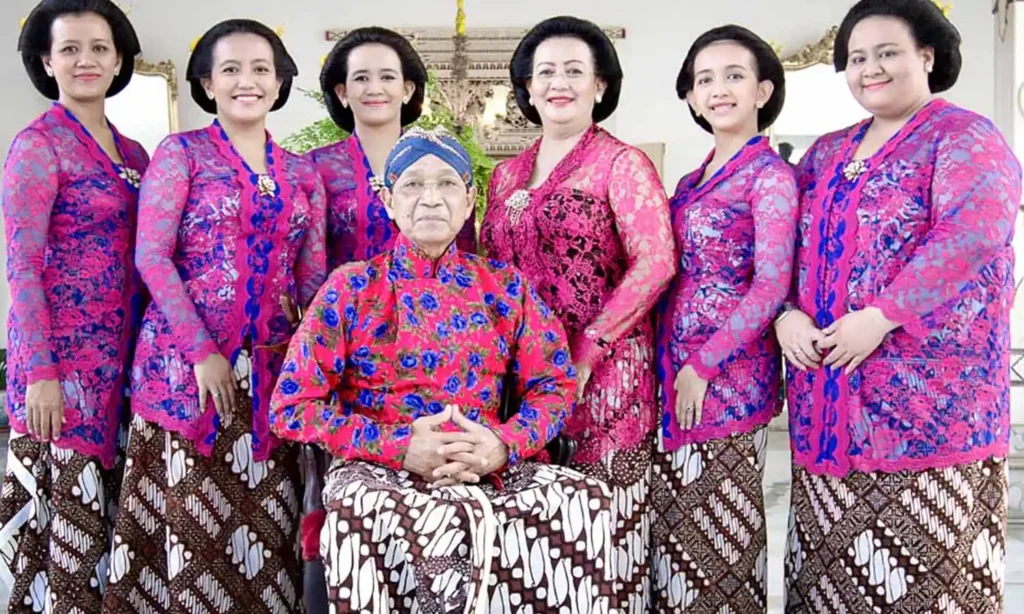
Kebaya is one of the most commonly worn outfits during important moments in Javanese life. Rather than being treated as a costume, it functions as meaningful attire that becomes part of a lived cultural experience.
Javanese kebaya is most visible in weddings, palace ceremonies in Yogyakarta, graduations, formal events, and cultural celebrations such as Kartini Day. In each context, the traditional blouse is worn according to established customs and expectations.
Kebaya Today: Between Heritage and Modern Fashion
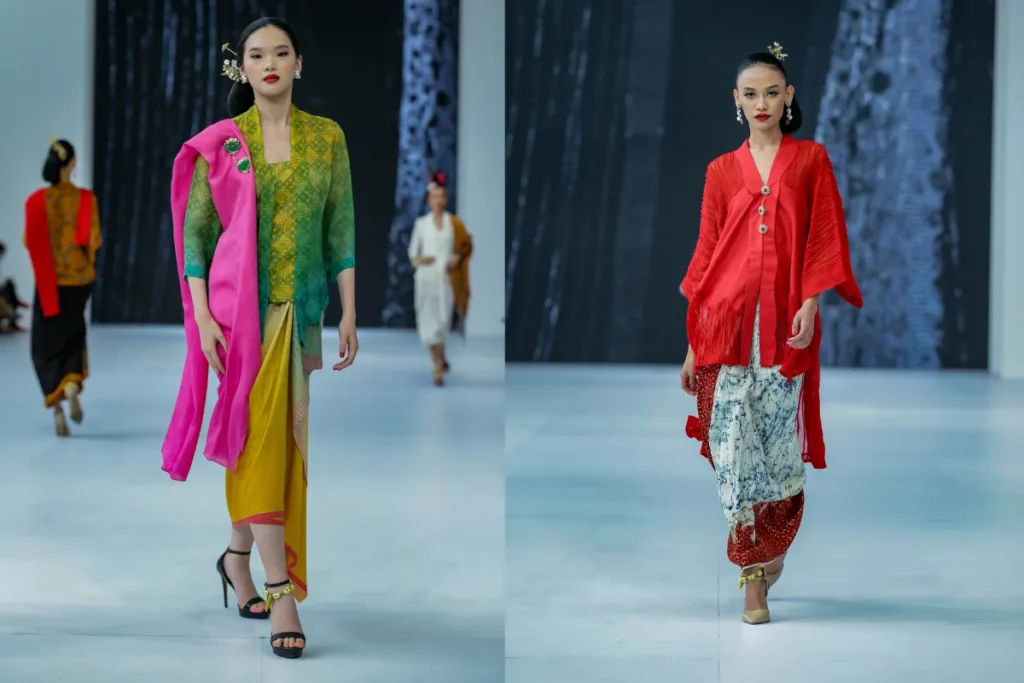
Kebaya continues to evolve in contemporary Indonesia, especially through younger designers and wearers who reinterpret it with lighter fabrics, varied cuts, and more modern silhouettes. Today, it appears not only in traditional settings but also on fashion runways, in editorial shoots, and in everyday style expressions that blend cultural heritage with modern aesthetics.
This evolution helps keep kebaya relevant for new generations, but it also raises an important concern: when worn only for its visual appeal, its cultural meaning can be diluted. At its core, kebaya is more than fashion. It carries history, identity, and tradition, and is best worn with an understanding of its cultural significance.
FAQ About Javanese Kebaya
When do people wear Javanese kebaya?
Javanese kebaya is commonly worn during formal and cultural occasions. These include weddings, traditional ceremonies, religious celebrations, and official events such as graduations.
What batik motifs are commonly paired with kebaya?
Kebaya is traditionally paired with jarik batik. Some of the most common motifs worn with kebaya are Parang, Sido Mukti, and Kawung, each carrying its own meaning and symbolism.
Is kebaya recognized by UNESCO?
Yes, kebaya was inscribed on UNESCO’s Representative List of the Intangible Cultural Heritage of Humanity in December 2024. This recognition is the result of a joint nomination by Indonesia, Malaysia, Brunei Darussalam, Singapore, and Thailand, which ultimately highlighted kebaya as a symbol of unity, elegance, and the strength of Southeast Asian women.
Where can travelers see kebaya in Yogyakarta?
Travelers can easily spot kebaya across the city of Yogyakarta, particularly around local markets and heritage sites such as Malioboro, Keraton Yogyakarta, and Pasar Beringharjo.
At last, the Javanese kebaya endures because it is more than just a garment. It’s a living link between past and present, weaving stories of identity, cultural exchange, and Javanese tradition into its fabric. To better understand Javanese traditions, one can also look at the batik that accompanies them equally rich, layered, and timeless in meaning.