
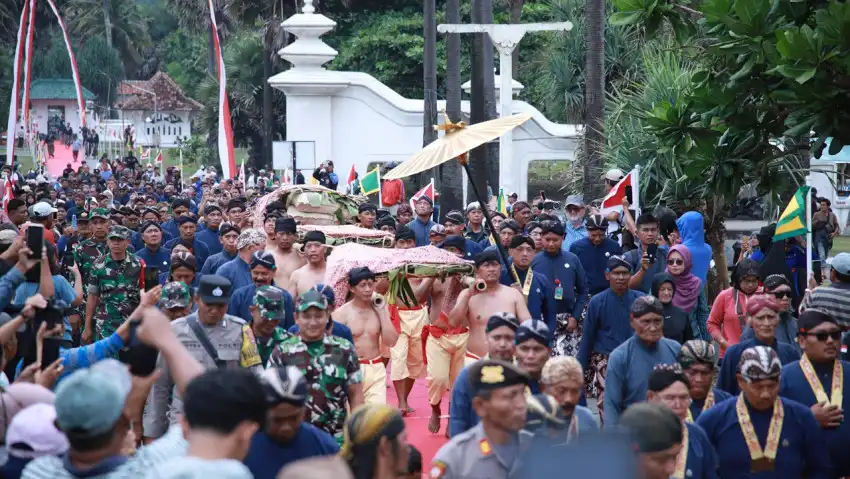
Javanese traditional ceremonies are cultural practices connected to family, community, spirituality, and social harmony. Rooted in centuries of cultural heritage, these ceremonies mark important moments in life, from birth and marriage to royal celebrations and village rituals, and continue to play an important role in Javanese society today.
Table of Contents
What Are Javanese Traditional Ceremonies?
Javanese traditional ceremonies commemorate significant occasions such as birth, marriage, death, harvest, village traditions, royal events, and the Javanese calendar. Although many ceremonies share similar values and symbolic elements, their practices often vary between regions, communities, and even individual families.
Life-Cycle Ceremonies in Javanese Tradition
Brokohan
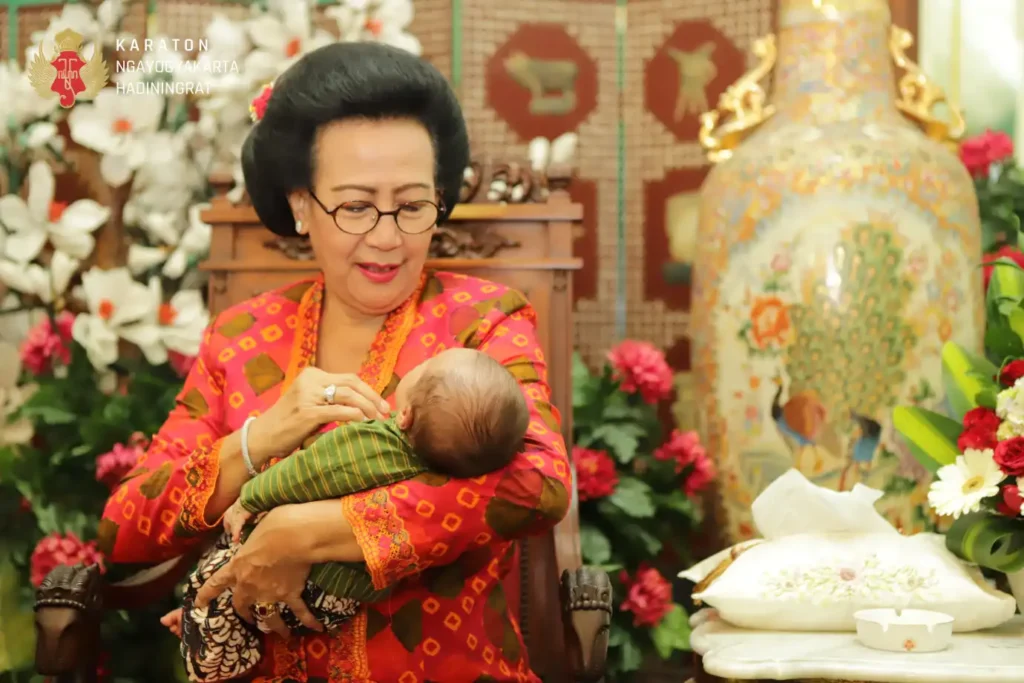
Brokohan is one of the life-cycle Javanese traditional ceremonies observed to welcome a newborn baby into the family. Held shortly after birth, it expresses gratitude for a safe delivery while offering prayers for the newborn’s health, happiness, and future. The ceremony is usually accompanied by a communal meal featuring traditional dishes.
Mitoni
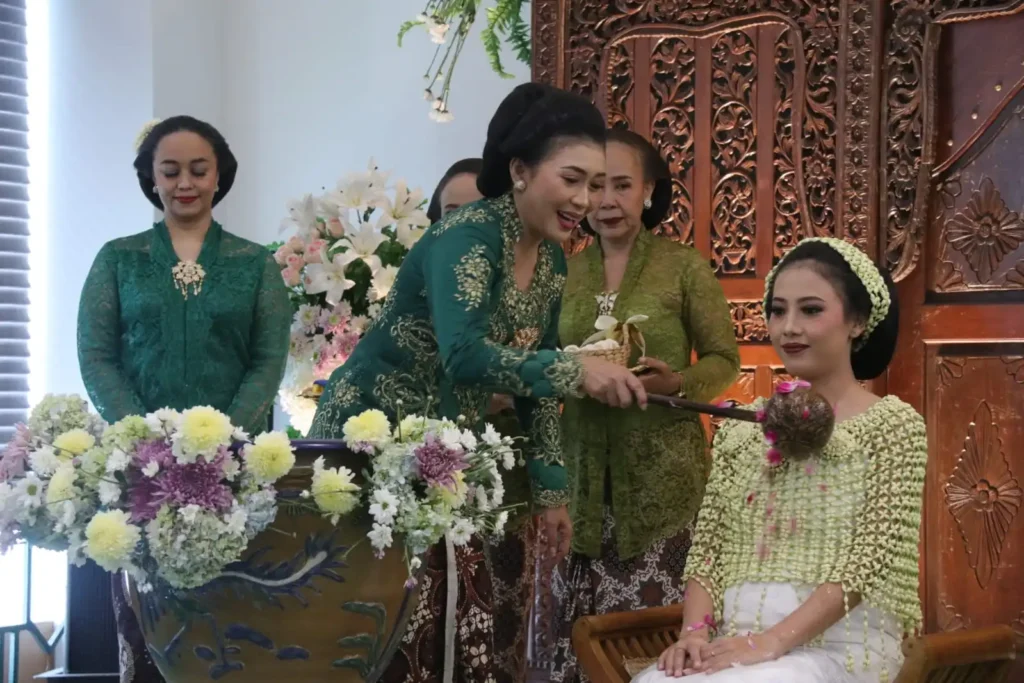
Also known as tingkeban, Mitoni is derived from Javanese word pitu, meaning seven. The ceremony is observed during the seventh month of pregnancy to pray for the well-being of both the expectant mother and the unborn child. The series of symbolic rituals include siraman, changing into several traditional outfits, brojolan, and slametan.
Tedhak Siten
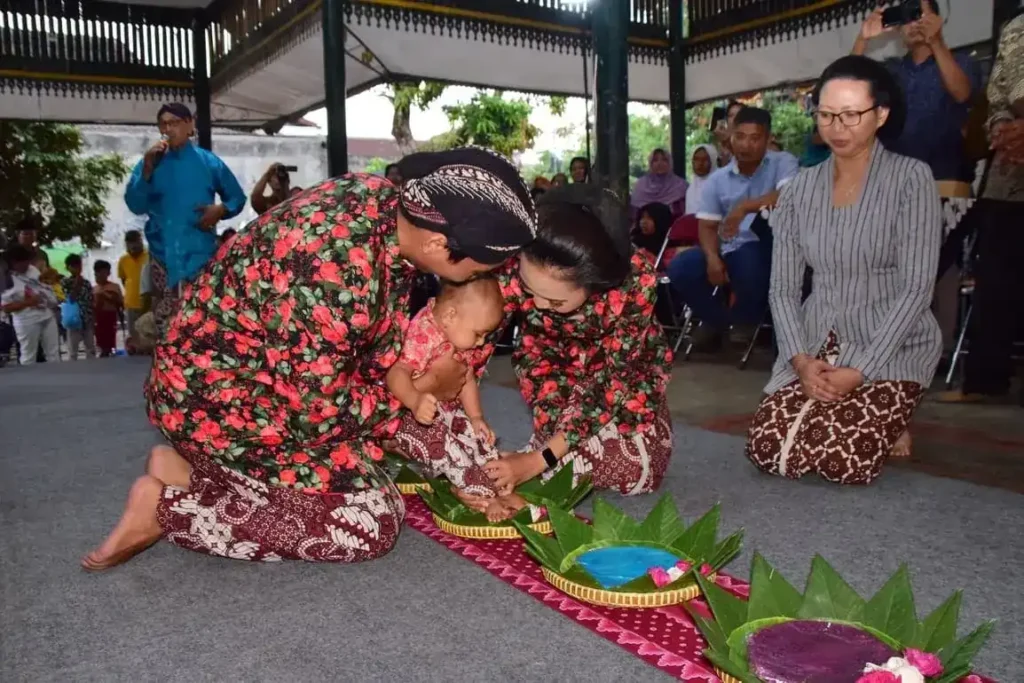
The Tedhak Siten ceremony truly lives up to its name. The word “Tedhak” means to step down or set foot on, while “Siten” means earth. This ceremony celebrates a child’s first steps on the ground, around 8 months of age, through a series of symbolic activities that reflect the family’s hopes that the child will grow up to be a healthy, independent, and successful individual.
Javanese Wedding Rituals
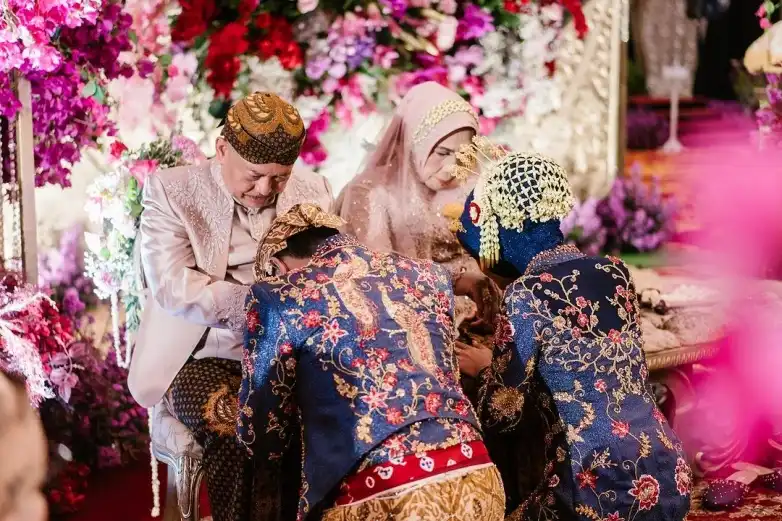
Javanese wedding rituals are far from merely a celebration of new life. With processions taking place before, during, and after the big day, each carrying its symbolic meaning. Common rituals include lamaran, siraman, midodareni, ijab, panggih, and sungkeman, although modern weddings often simplify some of these traditions.
Funeral-Related Traditions
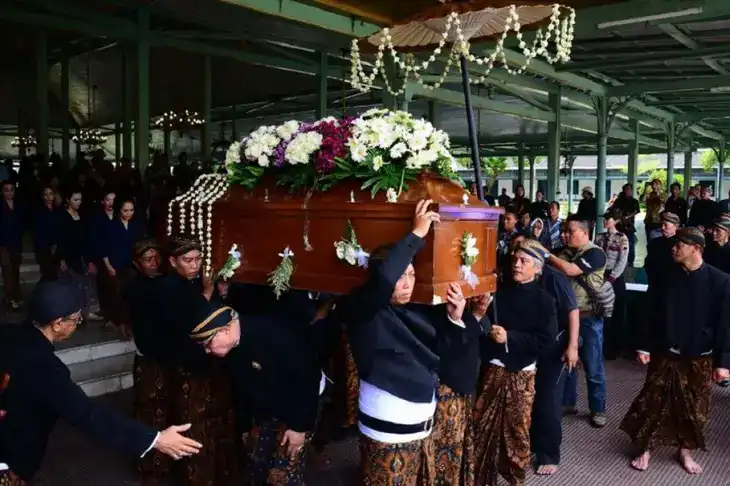
Following the passing of a loved one, Javanese families commonly hold a series of funeral-related traditions. It focuses on honoring the deceased while providing spiritual and emotional support for the family through prayers, communal gatherings, and remembrance ceremonies.
The exact practices vary according to local customs and religious beliefs, with rituals such as tahlilan and memorial services on the 3rd, 7th, 40th, and 1,000th days being some of the most common.
Community and Palace-Related Ceremonies
Grebeg
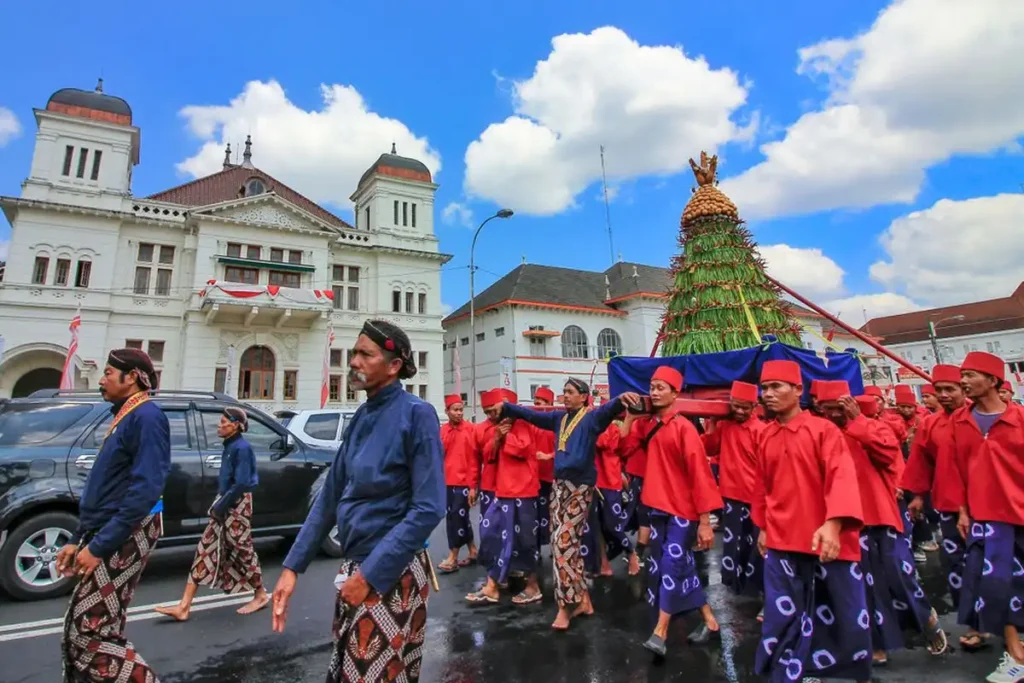
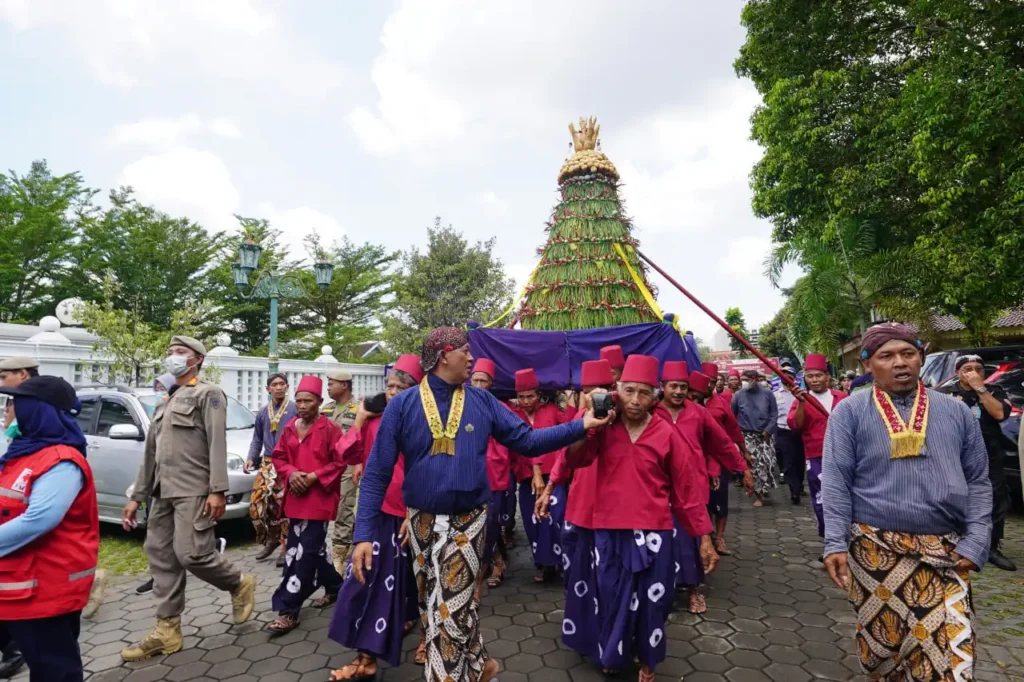
Held three times a year by the royal palaces of Keraton Yogyakarta and Keraton Surakarta, Grebeg symbolizes gratitude, royal generosity, and harmony between the palace and the people. One of its most iconic moments is the procession of the gunungan, large offerings made from agricultural produce and carried by palace guards before being distributed to the public.
Sekaten
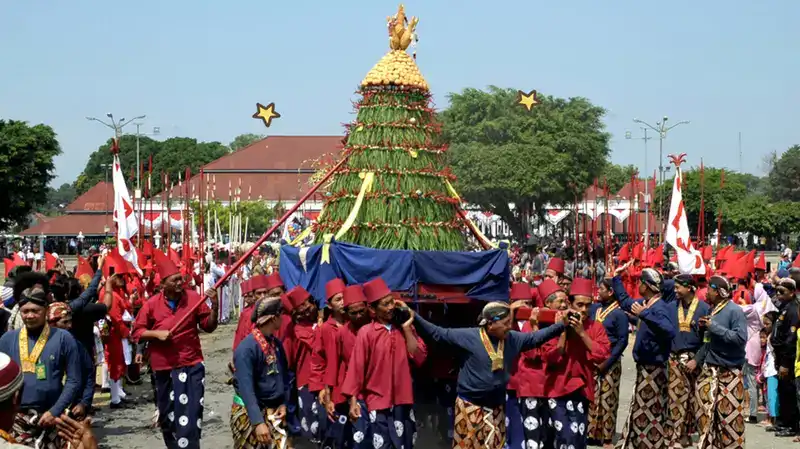
As one of the Javanese traditional ceremonies, Sekaten is an annual celebration commemorating the birth of the Prophet Muhammad. Traditionally lasting for seven days, from the 5th to the 11th of the month of Mulud (Rabi’ al-Awwal) in the Javanese calendar, the celebration combines royal traditions, sacred rituals, gamelan performances, and lively public festivities.
Labuhan
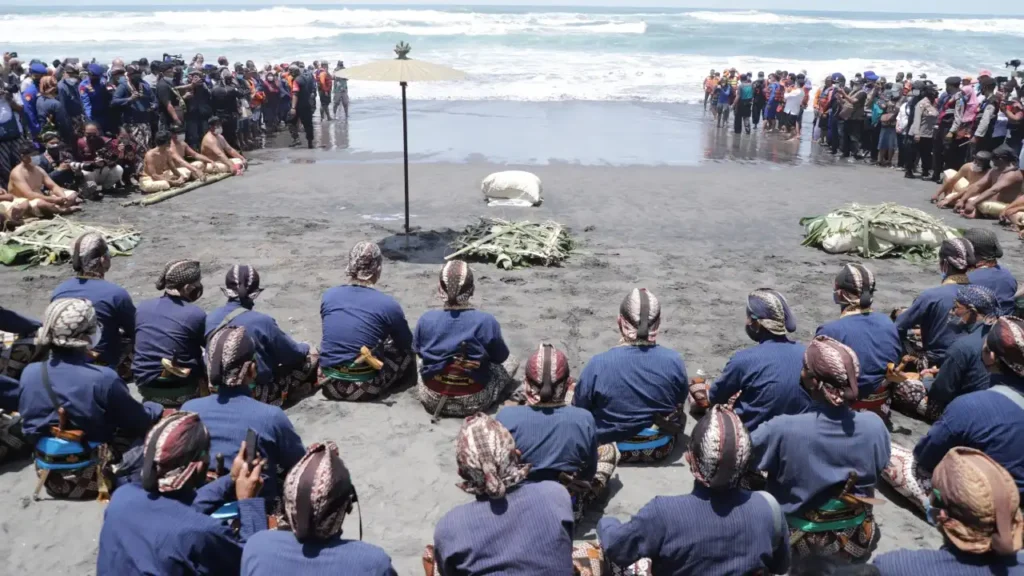
Labuhan is a ceremonial offering performed by the Yogyakarta Sultanate at several sacred locations, including the slopes of Mount Merapi and the southern coast. The tradition expresses gratitude while symbolically seeking harmony between humans, nature, and the Creator.
Bersih Desa
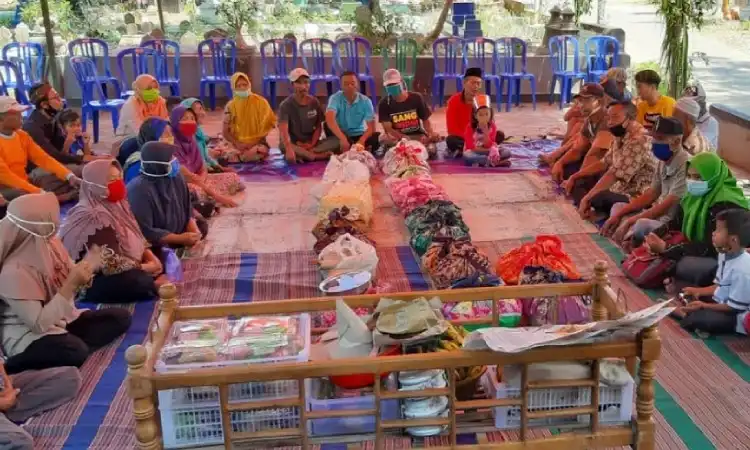
The Javanese traditional ceremony of Bersih Desa is widely practiced across many villages in Yogyakarta. It brings villagers together to clean shared spaces, offer communal prayers, enjoy traditional meals, and celebrate local arts as expressions of gratitude for prosperity and hopes for continued well-being.
Symbols Often Found in Javanese Ceremonies
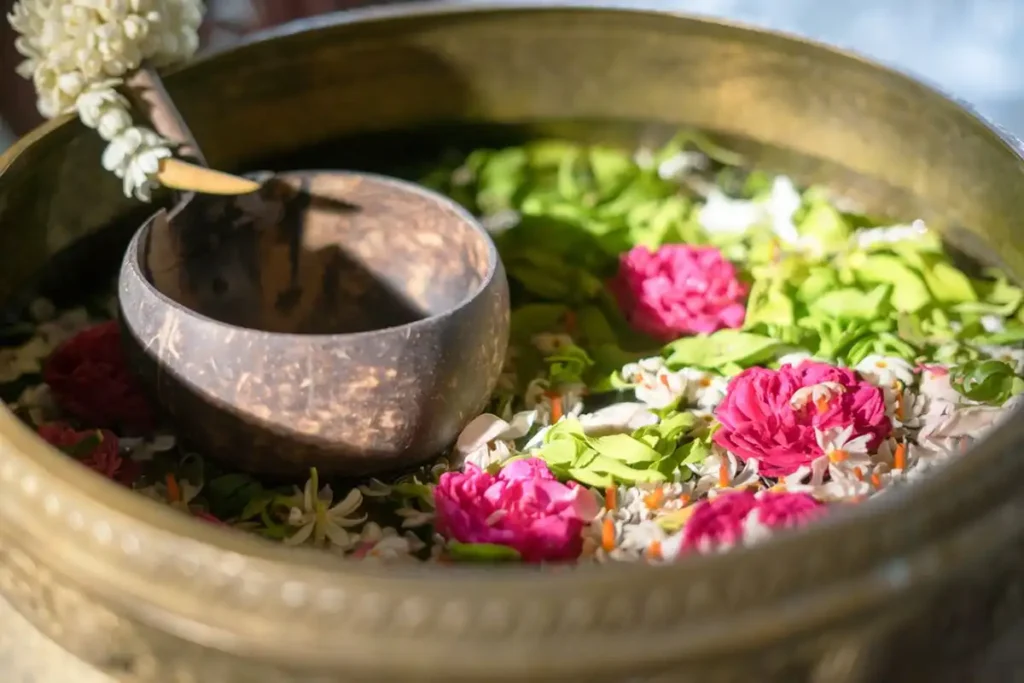
Although each Javanese ceremony has its own purpose, many share symbolic elements that carry meanings far beyond their physical appearance. Together, these symbols reflect the values, beliefs, and philosophies that continue to shape Javanese culture.
- Tumpeng represents togetherness and connections between human beings, nature, and God, while flowers carry positive energy and act as a symbolic language that conveys the hopes of our ancestors.
- Water is often associated with cleansing and spiritual renewal.
- Batik reflects cultural identity, with certain motifs reserved for specific ceremonies or stages of life.
- Music takes central role in several Javanese traditional ceremonies, with the soothing sounds of gamelan creating a ceremonial atmosphere while symbolizing harmonious life.
- Sesaji, or offerings, symbolize gratitude and prayers. Depending on the ceremony, they may also express respect for ancestors and serve as a symbolic medium for seeking blessings and spiritual harmony.
- Active participation of family members highlights the values of togetherness, mutual support, and respect across generations.
FAQ
What are common Javanese ceremonies?
Some of the best-known Javanese ceremonies include Brokohan, Mitoni, Tedhak Siten, traditional Javanese wedding rituals, Grebeg, Sekaten, Labuhan, and Bersih Desa.
What is Mitoni?
Mitoni is a traditional ceremony performed during the seventh month of pregnancy to pray for the safety and well-being of the mother and unborn child.
What is Grebeg?
Grebeg is a royal ceremony held by the palaces of Yogyakarta and Surakarta during major Islamic celebrations. It is best known for its procession of gunungan, which symbolizes gratitude and prosperity.
Can tourists watch Javanese ceremonies?
Yes, many public ceremonies such as Grebeg, Sekaten, and Bersih Desa can be attended by visitors. However, family ceremonies and certain palace rituals may have limited access or require respectful observation. Visitors are encouraged to follow local customs, dress appropriately, and avoid disrupting the proceedings.
Javanese traditional ceremonies are a living expression of the region’s centuries-old heritage, values, and beliefs. More than visual attractions, they continue to mark important milestones in everyday life while strengthening the bonds between families, communities, and generations.
If this article has sparked your curiosity, continue exploring other fascinating aspects of Javanese culture, including the rich traditions of Javanese wedding tradition.