

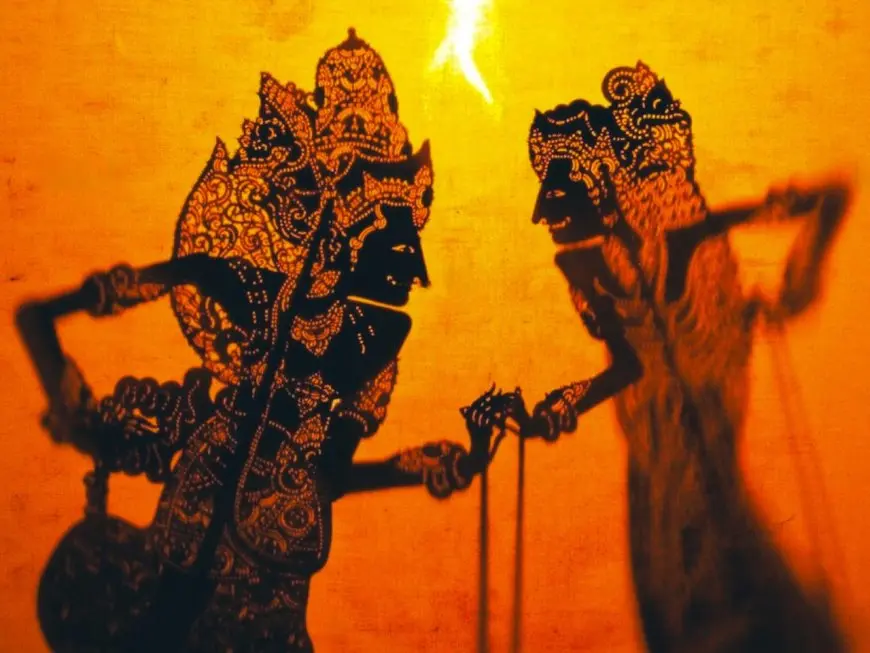
Wayang is a traditional Javanese performing art that symbolizes morality, spirituality, and cosmic balance through storytelling and shadow puppetry. The philosophy of wayang reflects the Javanese understanding of life, teaching values such as wisdom, self-control, leadership, and harmony between humanity and the universe.
Table of Contents
To truly understand why wayang remains deeply respected in Javanese culture, it is important to look beyond the performance itself.
Beyond Entertainment: Wayang as a Philosophy of Life
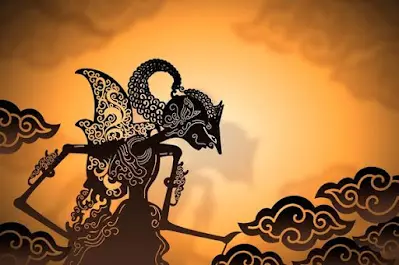
The philosophy of wayang goes far beyond a mere puppet show, reflecting meanings that are often deeply misunderstood. For the Javanese, wayang is tuntunan, a guide for living, as much as it is tontonan, a spectacle to be watched. Every character, movement, and musical cue carries meaning that extends far beyond the stage.
The values embedded within wayang are closely connected to Nusantara philosophy because wayang itself is a cultural tradition that grew and developed within the Indonesian archipelago. The art form contains layers of ethical, cultural, mystical, religious, and philosophical teachings that reflect identity, character, nationalism, and guidance for life.
The Javanese Cosmological Universe in Wayang
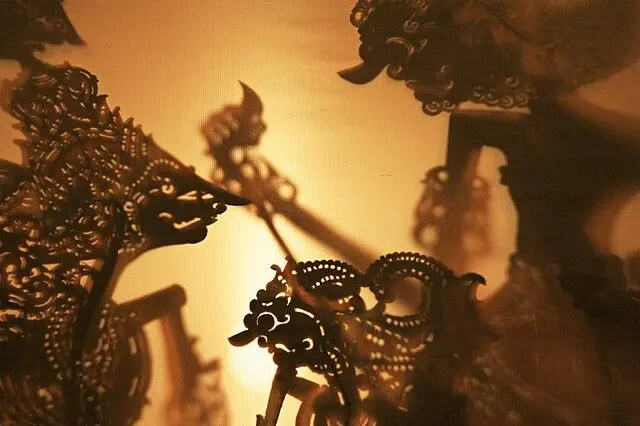
The philosophy of wayang embodies a rich cosmological belief system that offers a sophisticated view of the universe. The tripartite vision of upper, middle, and lower worlds reflects a profound awareness of how every element of existence is bound to every other, nothing in life stands without consequence.
This philosophy teaches that human life should exist in harmony with nature and the cosmos rather than in opposition to them. Each layer of existence carries its own role and equilibrium, and disruption in one layer inevitably affects the others.
Even further, this concept of harmony also appears in the philosophy of manunggaling kawula Gusti, which describes the spiritual union between humanity and the divine. Within this worldview, worldly life becomes inseparable from spirituality, emphasizing that both are deeply interconnected and that harmony extends beyond the visible physical world.
Good vs Evil: The Eternal Battle in the Philosophy of Wayang
The central dramatic tension of most Wayang performances is the conflict between the Pandawa and the Kurawa.
The Pandawa (Goodness, Refinement, Order)
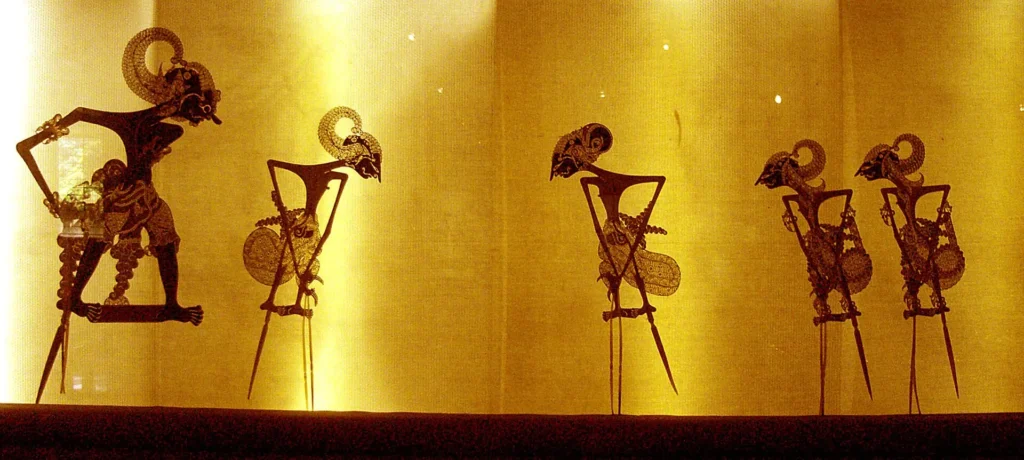
The Pandawa brothers are commonly portrayed as symbols of virtue, refinement, and moral order in Javanese wayang traditions.
Yudhistira, the eldest, represents wisdom, honesty, and self-restraint. Arjuna, the third brother, symbolizes the perfect knight: disciplined, spiritually aware, calm, and devoted to higher values rather than ego.
Meanwhile, Semar holds a unique place within Javanese philosophy. Though physically humble and comedic, Semar is considered spiritually enlightened. An ancient god who chose to descend to earth in a humble form, he represents the wisdom of ordinary people and serves as a reminder that truth and virtue don’t always come from kings or warriors.
The Kurawa (Ego, Chaos, Desire)
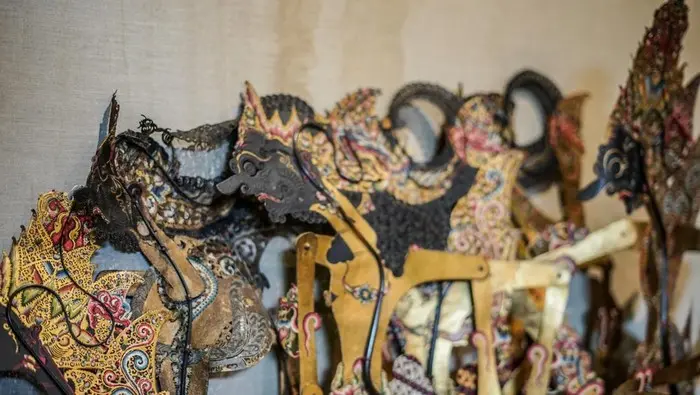
The Kurawa are often viewed as antagonists within wayang stories, but they are not portrayed as evil in a simplistic sense. Instead, the Kurawa symbolize the darker aspects of human nature: greed, anger, envy, ambition, arrogance, and uncontrolled desire. In Javanese philosophy, these traits exist within every individual. The battle between the Pandawa and Kurawa therefore reflects the internal struggles humans face throughout life.
The Gunungan (Kayon) — Center of the Cosmos
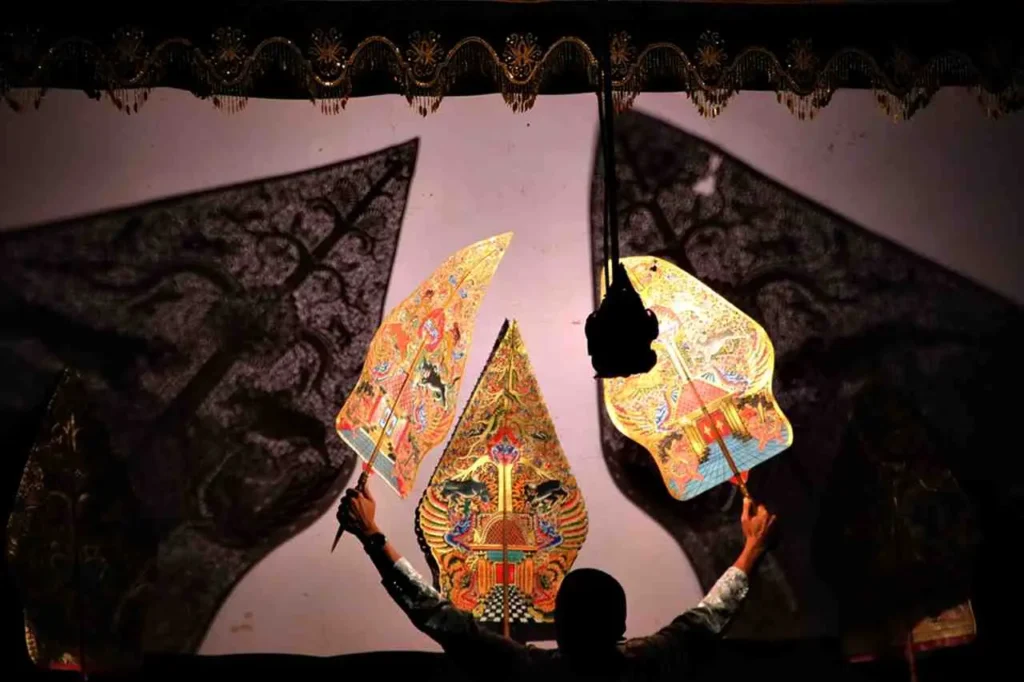
Wayang represents the center of the cosmos through the gunungan. Shaped like a mountain tapering upward, the gunungan is filled with carvings of leaves, animals, natural elements, and sacred symbols, with the pohon hayat standing at its center to connect and balance everything.
Philosophically, the gunungan symbolizes the macrocosm or jagad gede, where every component of existence is interconnected and reflects the broader balance of the universe. The arrangement of symbols within the gunungan is ordered from top to bottom following the concept of life’s energy hierarchy—from the highest spiritual realm to the earthly world below.
In performances, the gunungan commonly serves as both the opening and closing symbol of the story, representing birth, life, and death. Because of this symbolism, when the dalang moves the gunungan to mark a transition, it symbolically invokes the movement of the cosmos itself.
The Spiritual Significance of Wayang
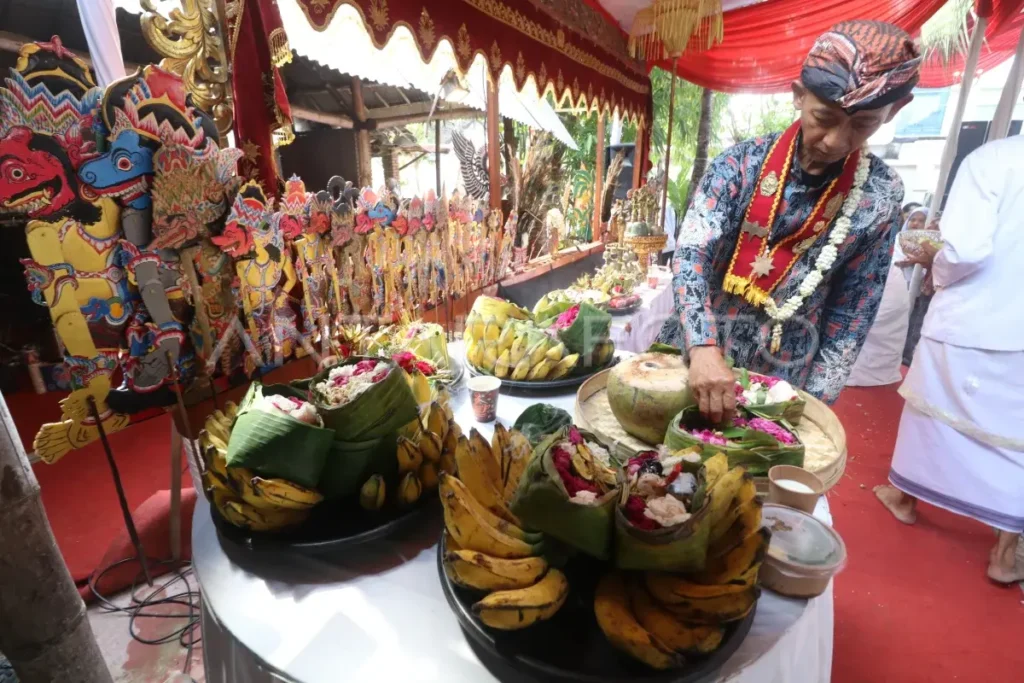
Wayang performances have long carried spiritual significance within Javanese society. Beyond public entertainment, wayang is frequently used for rituals such as ruwatan, a traditional cleansing ceremony intended to remove misfortune or spiritual disturbances. It may also accompany weddings, village ceremonies, harvest celebrations, and rituals meant to ward off danger or restore harmony.
Within these contexts, the dalang is not merely an artist, but also a spiritual mediator capable of guiding symbolic communication between the physical and unseen worlds.
Is Wayang Kulit Religious?
Wayang Kulit isn’t considered a formal religious practice, but it is profoundly spiritual. Javanese people believe that the philosophy of wayang reflects the cycle of life, showing how both good and bad unfold with justice.
Its roots lie in the pre-Hindu animist traditions of Java, later enriched by Hindu-Buddhist cosmology and eventually adapted by the Walisongo to convey Islamic values without abandoning the broader Javanese spiritual framework.
What the Characters Symbolize
| Character | Symbolism | Life Lesson |
| Yudhistira | Wisdom and honesty | Leadership requires integrity |
| Arjuna | Discipline and spirituality | Inner control leads to balance |
| Bima | Strength and loyalty | Power should protect truth |
| Semar | People’s wisdom and humility | Simplicity often holds the deepest wisdom |
| Duryodana | Ambition and greed | Uncontrolled desire creates destruction |
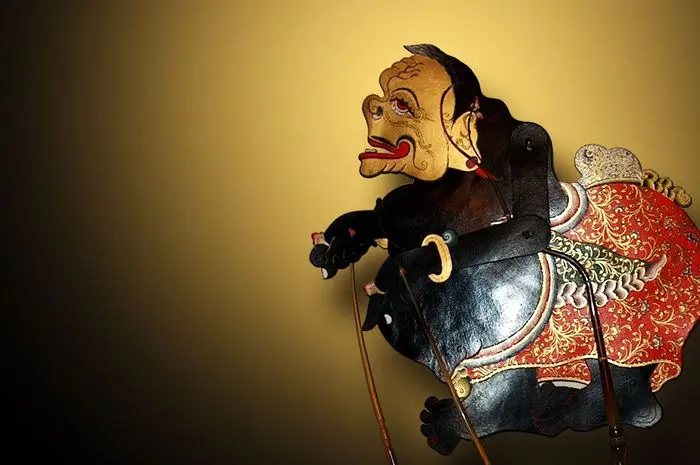
Out of all the characters, Semar particularly deserves attention. One of the most uniquely Javanese figures, Semar, the wisest figure, appears as a humble, comic servant. His character truly reflects how the Javanese have long understood that wisdom does not announce itself through power or beauty.
The Philosophy of the Dalang
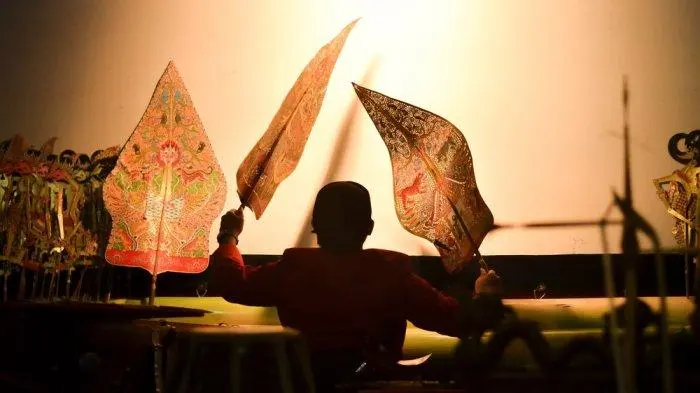
In Javanese philosophy, the dalang occupies a deeply symbolic role. Positioned behind the screen, controlling every movement and voice, the dalang is often viewed as a “small god” within the universe of the performance.
The dalang determines the rhythm of the story, directs conflict, restores balance, and guides every character toward their fate. This role reflects the broader philosophical belief that life itself unfolds within a carefully ordered cosmic structure.
How the Philosophy of Wayang and Javanese Ethics Today
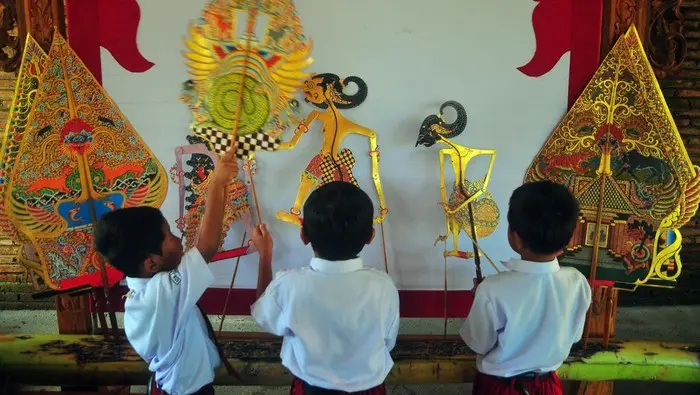
Although modern entertainment has changed how people consume stories, the ethical teachings within wayang remain highly relevant in contemporary Javanese society.
Values such as humility, self-control, harmony, patience, respect for others, and balance between material and spiritual life continue to shape social attitudes in Java today. Wayang stories are still referenced in politics, education, family life, and public discussions about morality and leadership.
Lastly, Wayang represents a living philosophy about humanity, morality, balance, and the universe itself. Through its characters, symbols, and stories, Wayang Kulit continues teaching lessons that remain deeply relevant across generations.
To get a better understanding of the art, continue the complete guide to Wayang Kulit performances and Gamelan orchestra