

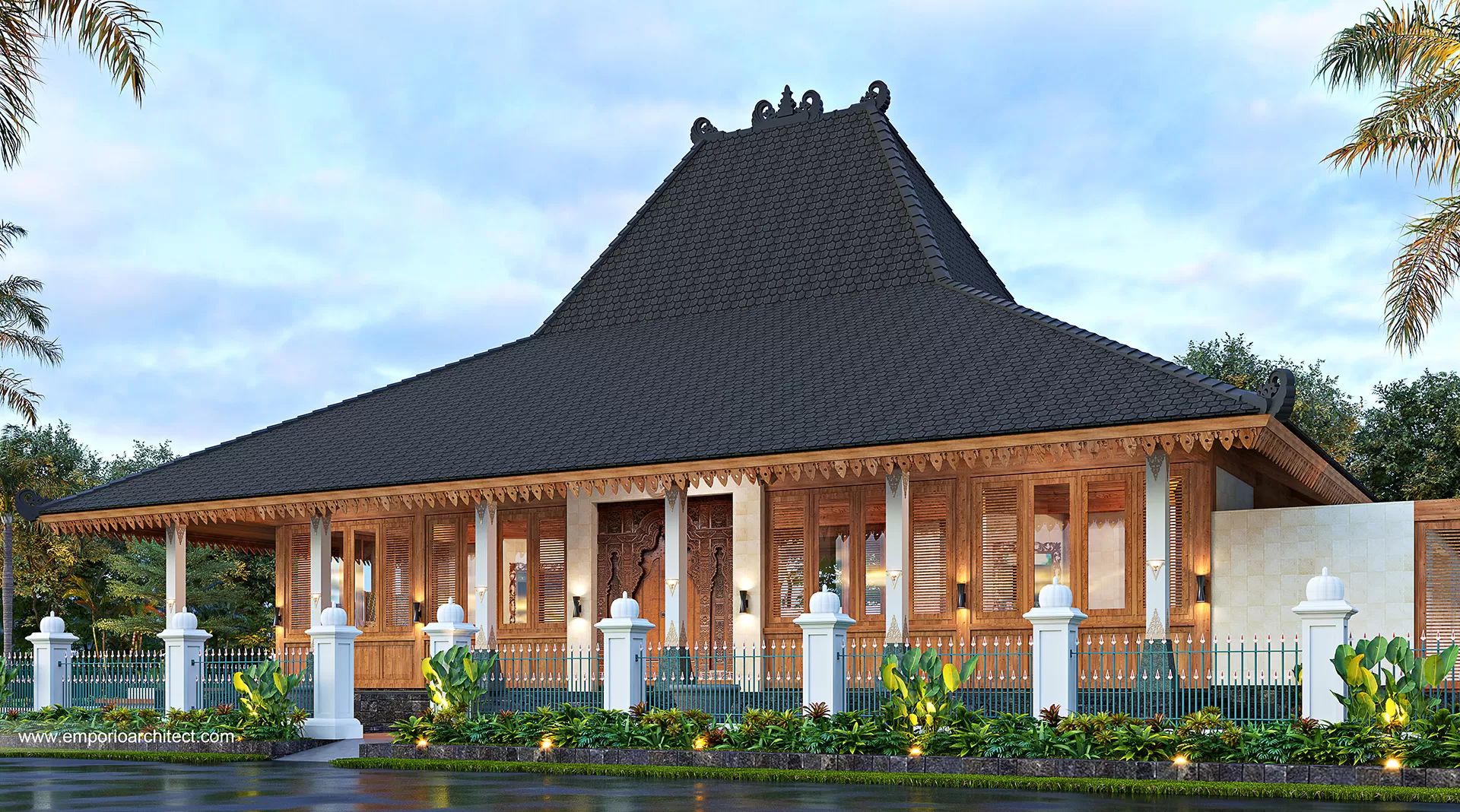
Joglo Sinom is one of the recognized variations within Javanese Joglo architecture, identified mainly by its layered roof structure of brunjung, penanggap, and penitih. When you’re in Yogyakarta, there’s a good chance you’ve already come across a Joglo Sinom without realizing it. This guide is here to help you better understand Joglo Sinom, offering deeper insights into this distinctive variation of the traditional Joglo house.
Table of Contents
What Is Joglo Sinom?
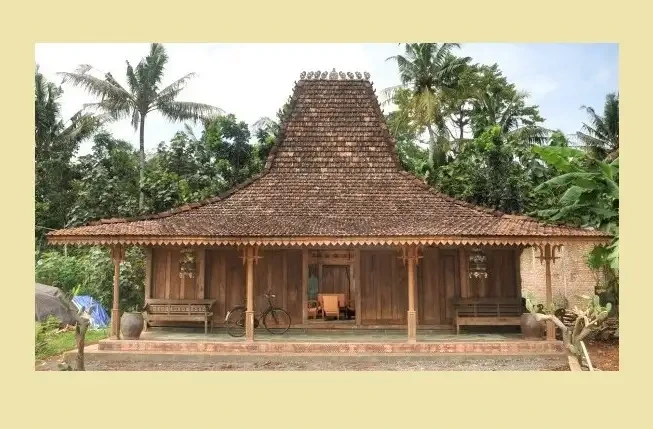
Joglo Sinom is a traditional Javanese architectural type, one of several recognized forms within the broader Joglo category. It’s defined by its distinctive tiered roof and structural reliance of four primary load-bearing columns known as Saka Guru.
It’s important to understand that Joglo Sinom is a design type, not a building name. Compared to other variations of Joglo, the Sinom sits in the sweet spot between simplicity and grandeur, and is often associated with pendopo—an open, public-facing pavilion designed for gathering, ceremony, and formal reception.
Key Features of Joglo Sinom
Roof structure
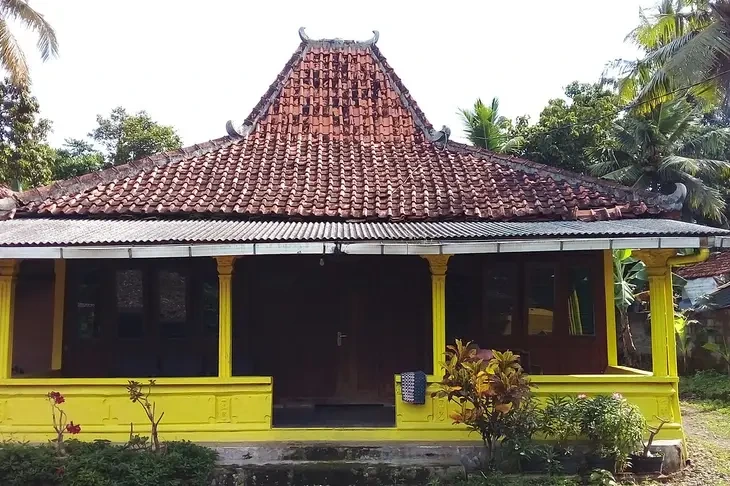
The roof is the most recognizable feature of Joglo Sinom. It rises in three main tiers with a single central ridge, creating a layered silhouette more complex than that of a standard Joglo roof. Its mountain-like form reflects a core Javanese belief that mountains are sacred spaces and symbolic dwellings of the divine.
Saka Guru pillars
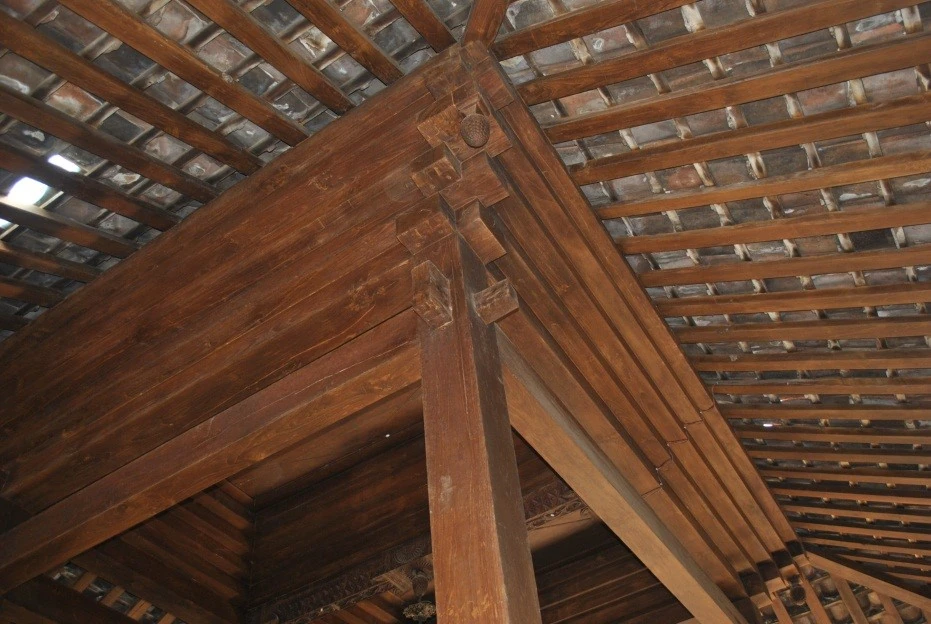
Joglo Sinom is supported by four central pillars known as the Saka Guru. These pillars serve as the structural and symbolic core of the building, providing stability while marking the most sacred point of the space.
Supporting pillars
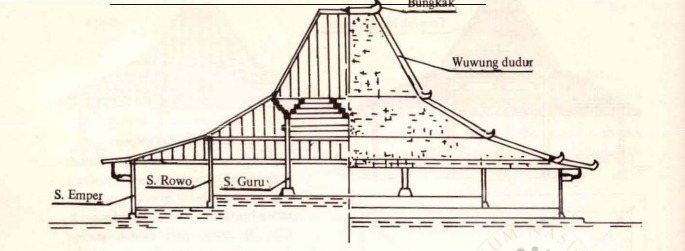
Beyond the Saka Guru, Joglo Sinom incorporates additional columns arranged in concentric configurations outward from the central four. These supporting pillars carry the outer roof tiers and define the structure’s broader spatial extent.
Open layout
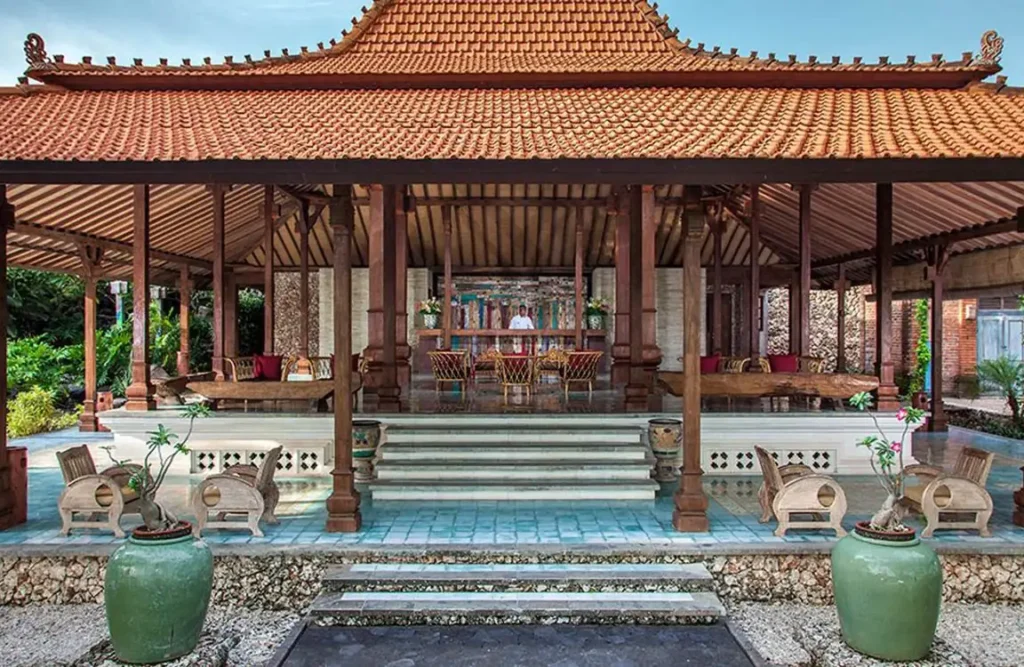
Joglo Sinom is known for its open design. Instead of relying on permanent walls, the structure is defined by its wooden pillars and distinctive roof. This layout allows air to flow freely through the space, helping keep the interior cool in Java’s tropical climate. Because of its openness, Joglo Sinom makes an ideal venue for welcoming guests, holding gatherings, and hosting traditional ceremonies.
How Joglo Sinom Works as a Pendopo Design
In Javanese architecture, the pendopo is the outermost and most public space of a compound. It’s open on all sides and positioned at the front of the property, making it ideal for accommodating gatherings of varying scales, from intimate audiences to large ceremonies.
Joglo Sinom’s structural characteristics closely align with those required by a pendopo. The high central roof creates generous interior volume, allowing large numbers of people to gather beneath it without the space feeling compressed.
The open layout ensures visibility throughout the entire floor, with no columns obstructing the host’s view of guests and no walls interrupting the flow of air or people.
The spatial hierarchy created by the Saka Guru at the center and the supporting columns at the periphery maps naturally onto Javanese ideas of social order, with the most honored guests and the most significant ceremonial positions gravitating toward the central space beneath the highest point of the roof, while others are accommodated in the outer zones.
Joglo Sinom and Joglo Hageng: What Is the Difference?
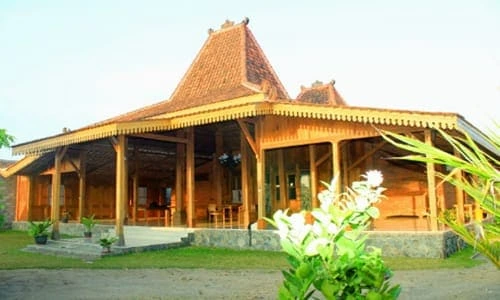
Joglo Sinom and Joglo Hageng differ in several respects. Sinom represents a more foundational expression of the Joglo form, proportionally balanced and appropriate for a wide range of ceremonial and residential uses. Hageng, which carries the Javanese meaning of “great” or “large,” denotes an expanded, more complex development of the same architectural idea.
In practical terms, a Joglo Hageng tends to be larger in footprint, more elaborate in its roof configuration, and more demanding in its structural requirements. Additional roof layers, wider spans, and more supporting columns characterize the grander form.
The two types should not be treated as fully interchangeable, as they’re distinct from one another.
Pendopo Agung Ambarrukmo — A Real Example of Joglo Sinom
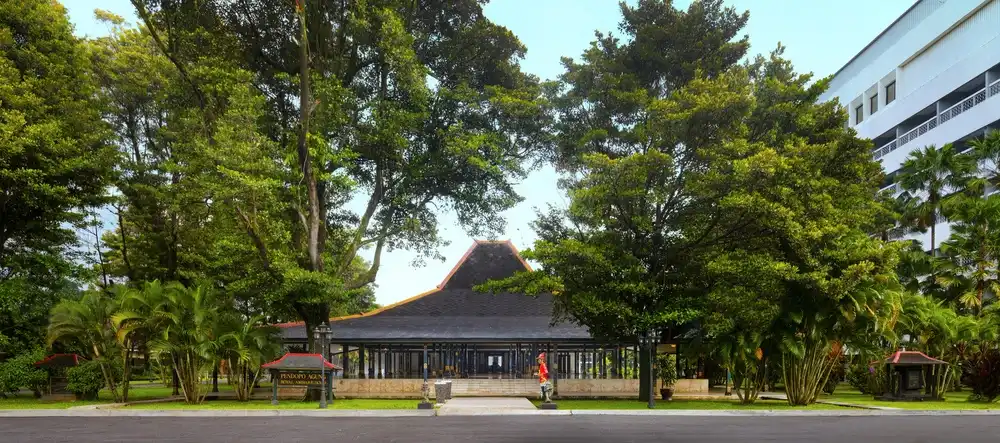
Located on the right wing of the Royal Ambarrukmo Hotel complex, the Pendopo Agung Ambarrukmo is a real-world example inspired by the Joglo Sinom form. It was originally built as part of the Ambarrukmo pesanggrahan, a royal retreat established by Sultan Hamengku Buwono VII.
Over time, the structure has been expanded and adapted, bringing it closer in scale and complexity to a Joglo Hageng while still retaining its Joglo Sinom foundations.
Joglo Sinom is just one of several variations within the broader Joglo architectural tradition. To learn more about the history, philosophy, and different types of Joglo houses, explore our complete guide to Javanese Joglo architecture.