

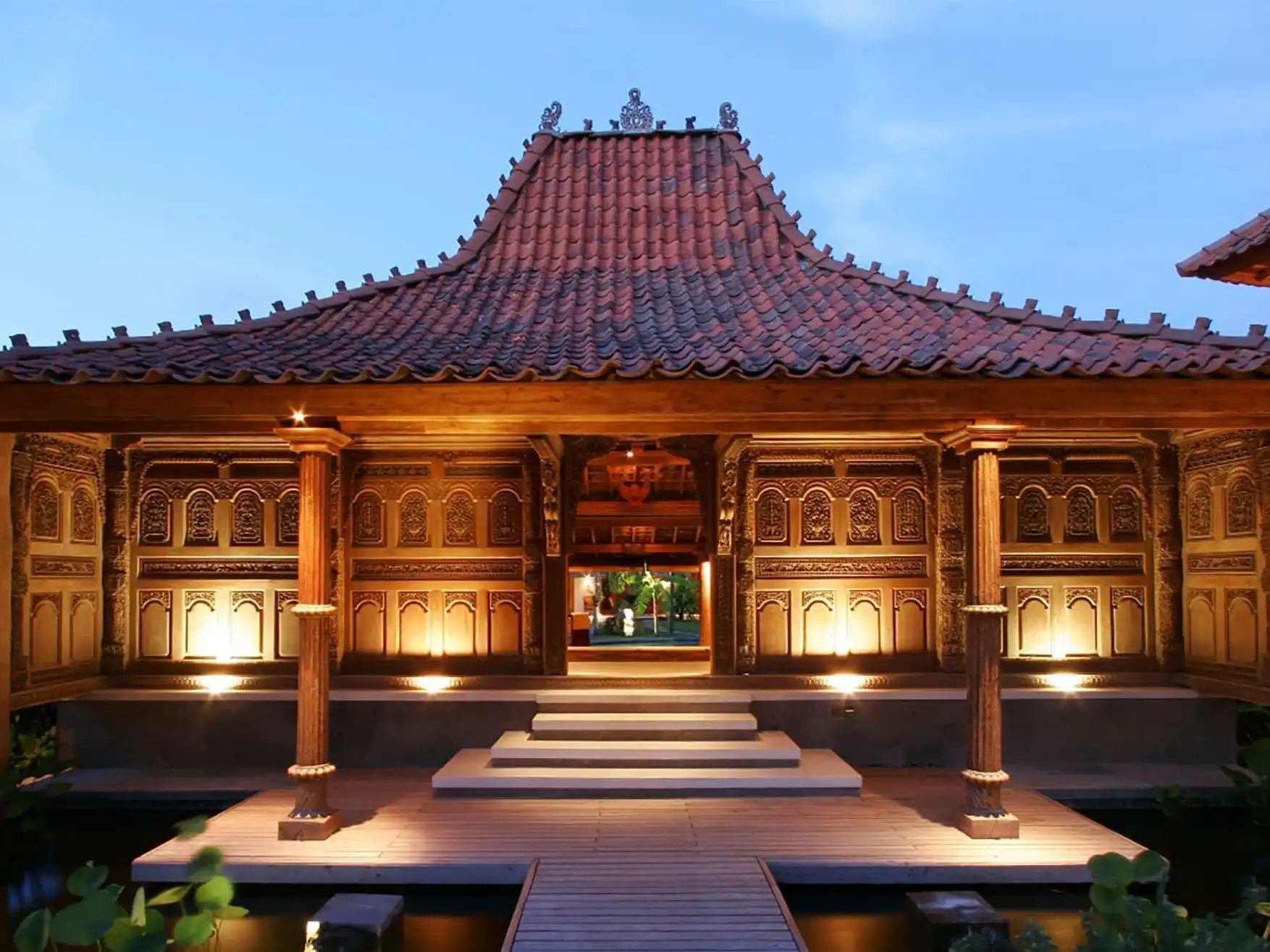
Among the many treasures of Javanese heritage, the Joglo House stands as one of the region’s most iconic architectural achievements. Joglo is a traditional Javanese house form closely associated with Central Java, Yogyakarta, and Surakarta.
Table of Contents
In traditional Javanese society, Joglo House was usually occupied by nobles or people of great social standing. The name “Joglo” comes from two Javanese words, “tajug loro.” Closely associated with its distinctive roof shape, which resembles a mountain and symbolizes the connection between humans and the divine.
What Is a Joglo House?
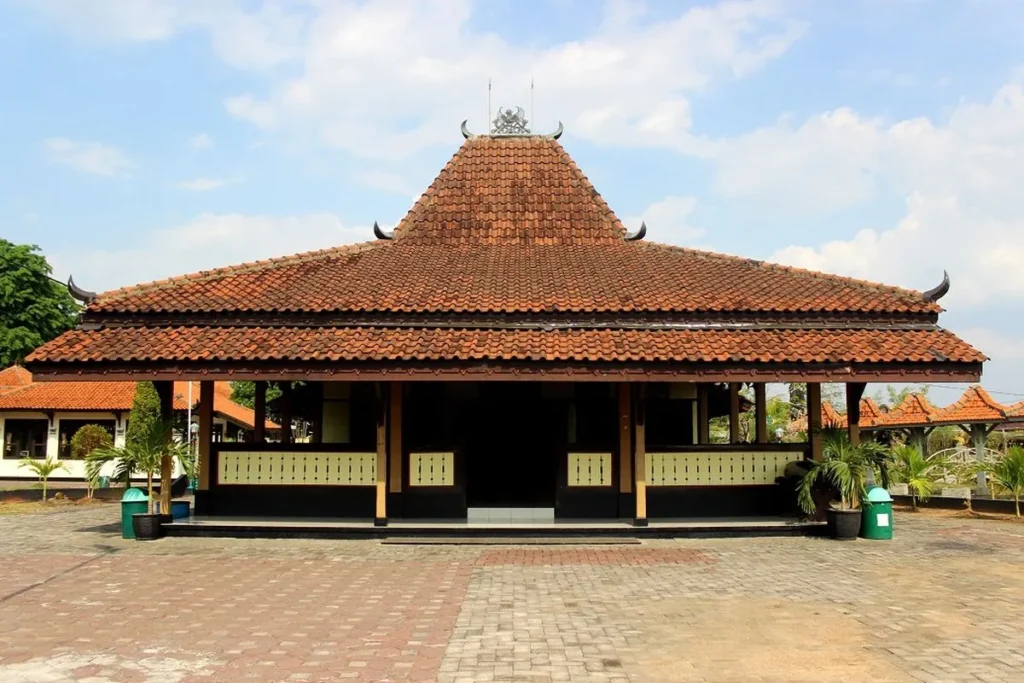
A Joglo house is a traditional Javanese house defined by its distinctive high, tiered central roof and four primary structural columns known as the Saka Guru. These columns bear the roof’s weight and form the architectural and symbolic core of the structure. The roof rises in a series of stacked tiers, creating the house’s silhouette.
Visitors to Yogyakarta are most likely to encounter Joglo in places like the Keraton Yogyakarta, ceremonial halls, museums, and heritage accommodations.
History of Joglo
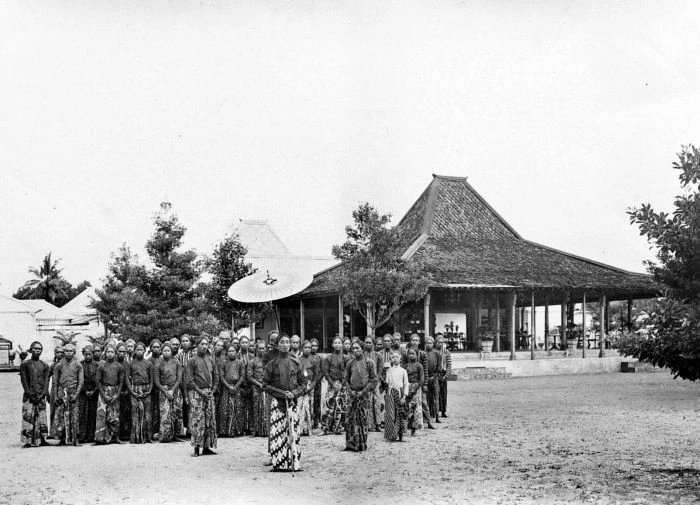
The Javanese Joglo house has long been woven into the cultural fabric of Java as early as the era of ancient kingdoms. Traditionally, it was not a home for everyone. Instead, Joglo houses were primarily owned by royalty, nobles, and highly respected figures
Beyond its striking appearance, the Joglo was deeply tied to Javanese customs and values, with every element carrying symbolic and spiritual meaning. Many traditional ceremonies were once held beneath its roof.
Initially being restricted and carefully observed, Javanese Joglo houses gradually became more accessible beyond the royal circle. Today, Joglo houses can be found in museums, cultural centers, hotels, and public spaces, where they continue to offer visitors a deeper understanding of Javanese heritage and philosophy.
Main Parts of a Joglo House
Pendopo as public receiving space
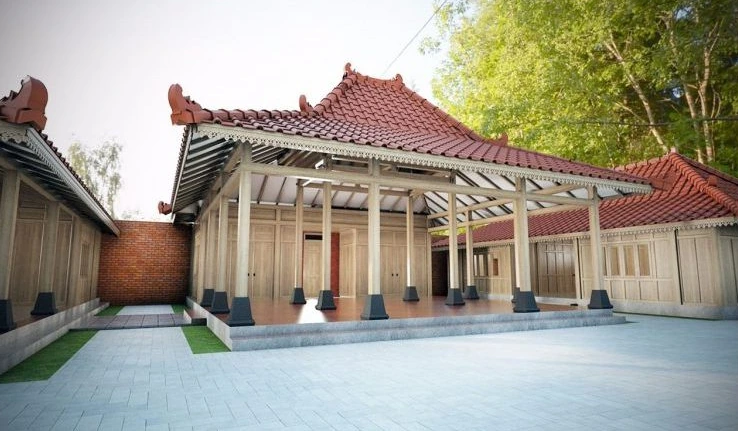
Pendopo is the outermost and most open section of the Joglo. It’s a large, roofed pavilion without walls, designed to receive guests, hold ceremonies, and conduct the household’s public life.
Pringgitan as Transition Space
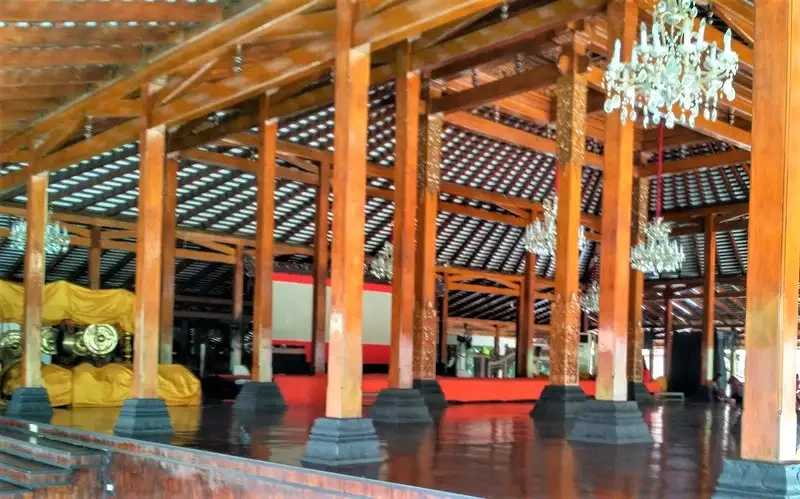
Pringgitan serves as a transitional corridor between the pendopo and the more private interior. It was traditionally the space where artistic performances, such as wayang kulit.
Omah Njero as Inner Family Space
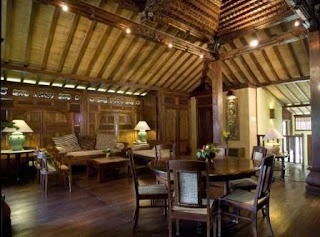
Omah Njero is the inner hall of the Javanese Joglo house. More enclosed and more intimate than the pendopo, Omah Njero is where the rhythms of daily private life played out.
Senthong as Private or Symbolic room
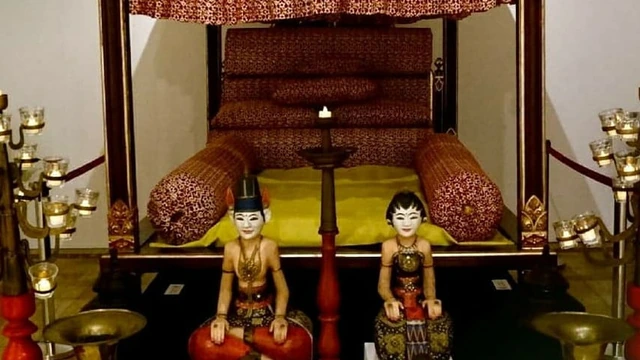
Senthong refers to the inner rooms that open off Omah Njero, typically arranged in a tripartite configuration: left, center, and right. The central senthong, known as the senthong tengah, held particular ceremonial significance, often serves as a space to store heirlooms, known as pusaka.
Types of Joglo Architecture & Style
This traditional Javanese house isn’t a single fixed form. Within the broader category of Javanese traditional architecture, several distinct Joglo types are recognized, each with its own roof configuration, proportional rules, and historical associations.
Joglo Sinom
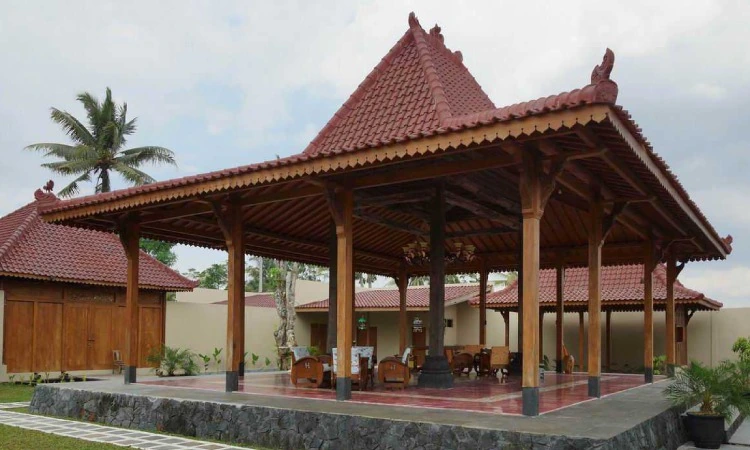
The Joglo Sinom is a variation of the traditional Joglo house, distinguished by its surrounding veranda. One of its defining features is the use of 36 wooden pillars, including four main pillars known as the saka guru. Its roof is equally distinctive, featuring a layered roof design divided into several sections and rising in three levels beneath a single central ridge.
Joglo Pangrawit or Pengrawit
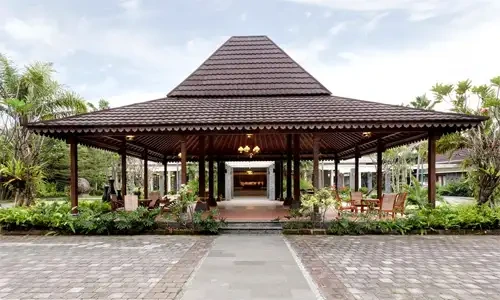
Joglo Pangrawit is recognized for its elegant dome-like roof and decorative hanging ornament at its peak. Another distinctive feature is the presence of supporting pillars at each corner of the structure, adding both stability and visual balance.
Joglo Mangkurat
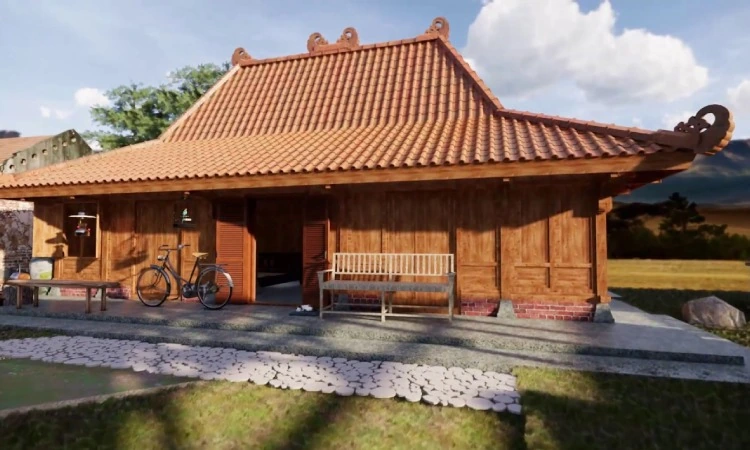
Joglo Mangkurat stands out through its distinctive roof composition. Its roof is arranged in three tiers, each with a different slope, creating a dynamic, layered appearance. The central section is typically built higher than the surrounding levels, giving the house a more prominent and imposing profile.
Joglo Hageng
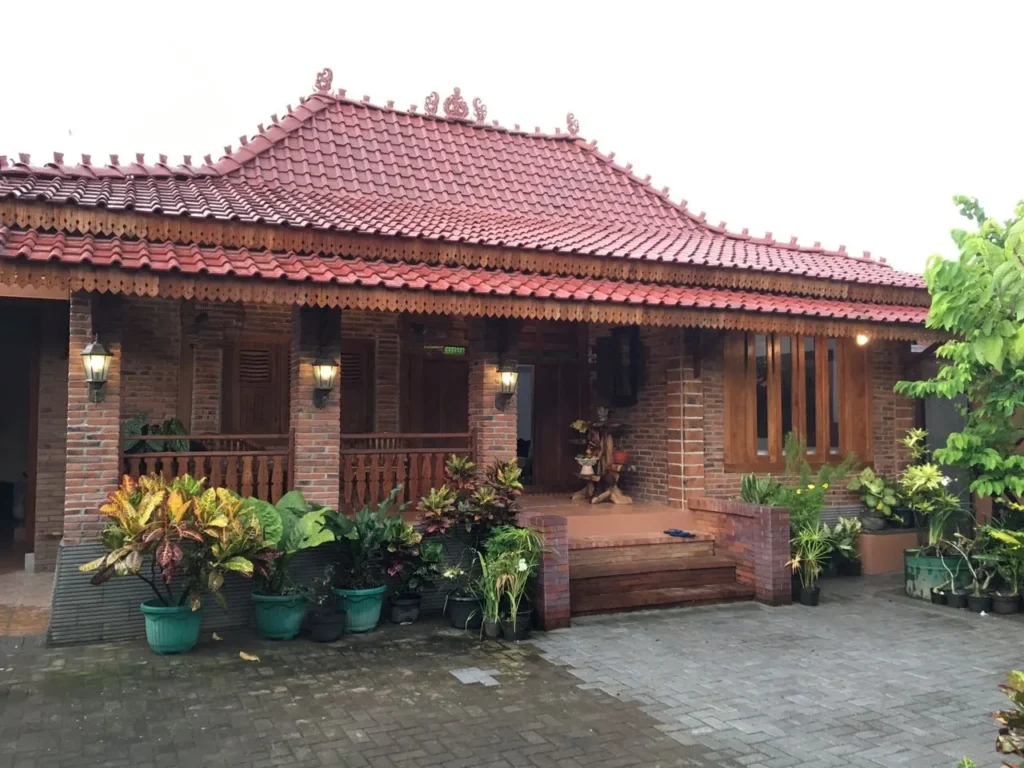
Joglo Hageng is the largest and most expensive type of Joglo house. Traditionally associated with grand residences and important buildings, it’s designed to accommodate large gatherings and ceremonial activities. Its roof consists of five tiers arranged from top to bottom: brunjung, penanggap, penitih, peningrat, and emper.
A note on related forms
The Limasan is another traditional Javanese roof type that travelers and readers sometimes encounter alongside the Joglo. While both belong to the broader family of Javanese vernacular architecture and share certain constructional principles, they are distinct forms with different structural logic and historical associations.
The Philosophy of Joglo
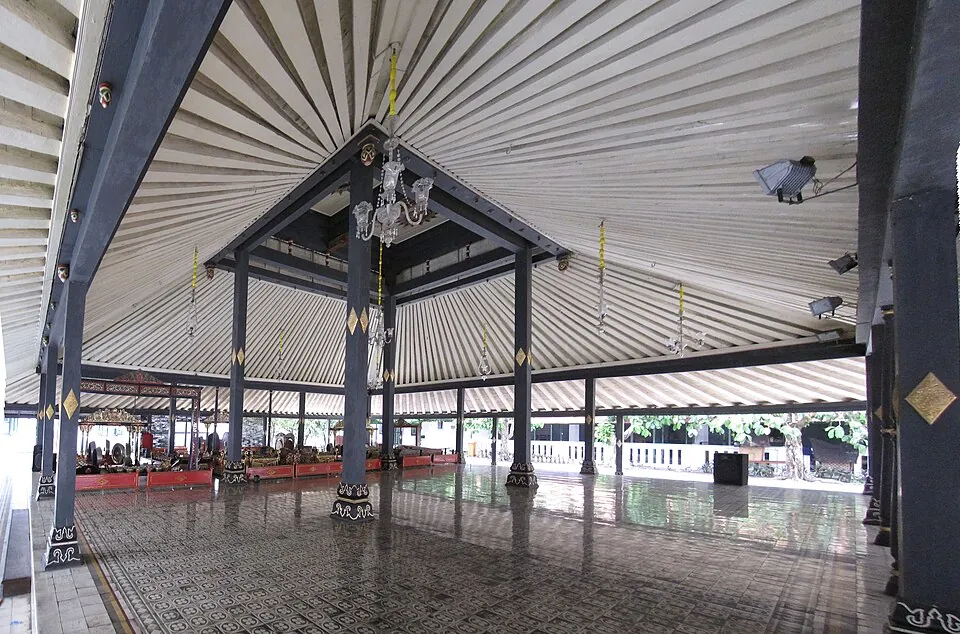
Traditional Javanese architecture was designed with more than practicality in mind. Every part of a Joglo house carries the values, beliefs, and social structure of Javanese society.
At the center of the house stands the Saka Guru, with four main pillars that support the roof. These pillars are considered the most important part of the structure, symbolizing the human connection between humans, nature, and the divine.
The roof is another defining feature of the Joglo. Its tiered design rises toward a central peak, symbolizing a connection between the human world and the spiritual realm. The higher sections of the roof also reflect the importance of the spaces beneath them.
The layout of a Joglo follows a clear progression from public to private areas. The pendopo serves as a welcoming space for guests and community gatherings. Further inside are more private family areas, while the innermost rooms were traditionally reserved for important family activities and spiritual purposes. Taken together, this layout represents the Javanese belief in social order and balance.
More than a traditional house, the traditional Joglo house offers a glimpse into the worldview of Javanese society. Its carefully planned spaces, symbolic structure, and timeless design reveal how architecture was once used to express identity, values, and harmony with the surrounding world.
If the Sinom variant particularly caught your attention, discover our dedicated guide to Joglo Sinom for a closer look at its unique characteristics.