

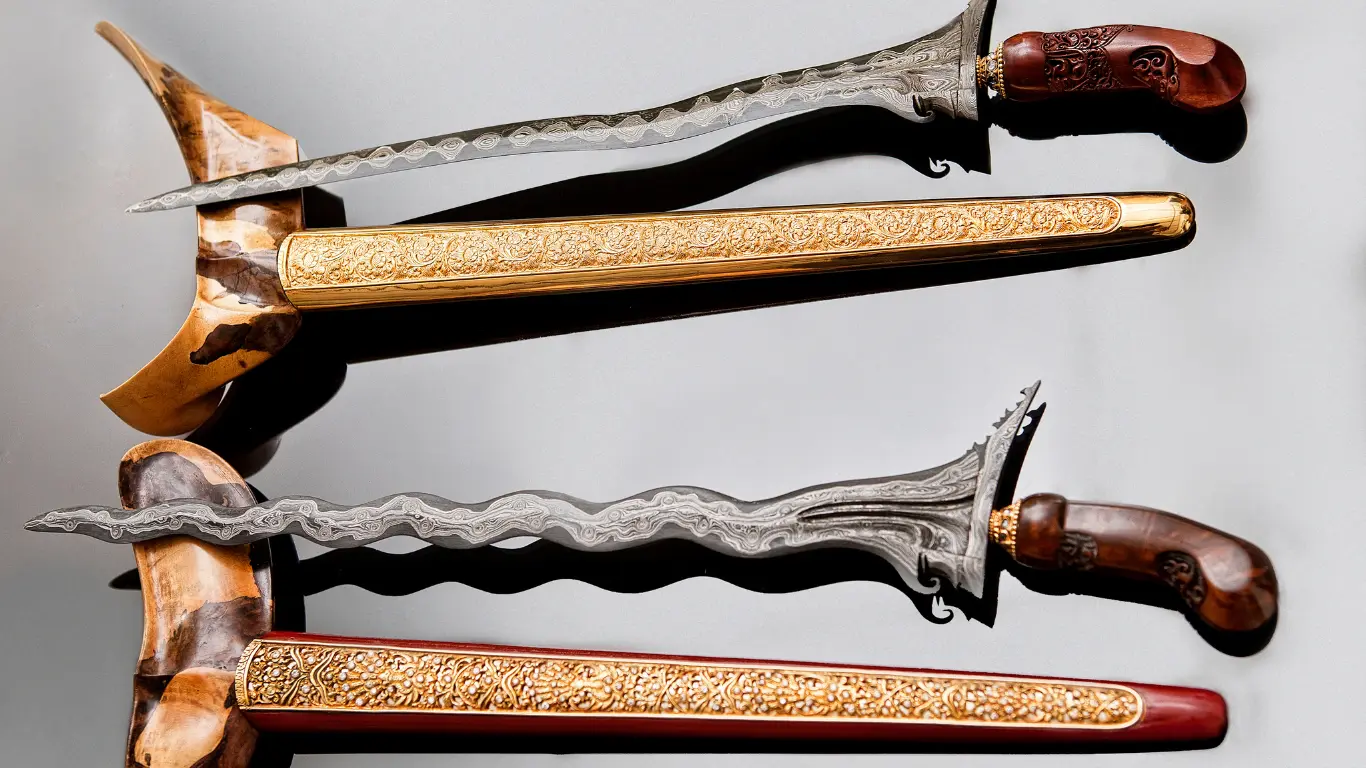
Keris is one of Java’s most iconic cultural heirlooms. More than a traditional javanese dagger, the Javanese keris symbolizes spirituality, social status, protection, and philosophy deeply rooted in Javanese culture.
Table of Contents
Until present times, keris remains seen as a fascinating treasure. To truly appreciate its cultural depth, one typically must take a closer look at the sacred javanese dagger and the meanings carried within it.
What is a Keris?
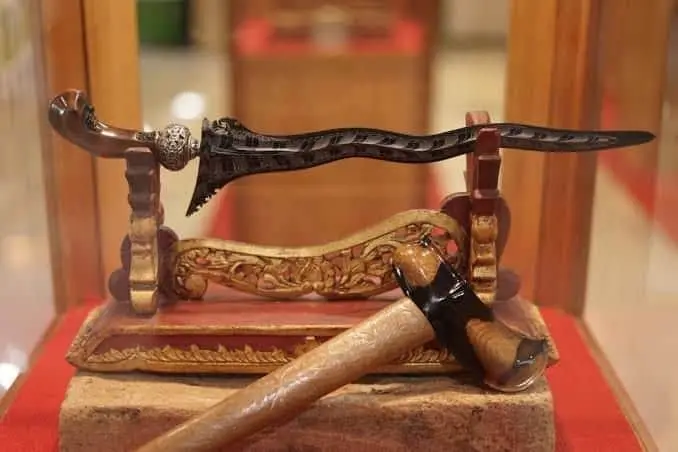
Keris is a traditional asymmetrical javanese dagger originating from Java, recognizable through its distinctive blade that may be straight or wavy known as luk. Historically used as both a weapon and ceremonial object, the keris also symbolizes social status, spiritual protection, and cultural identity. In 2008, UNESCO recognized the Indonesian keris as an Intangible Cultural Heritage of Humanity.
The History of the Keris
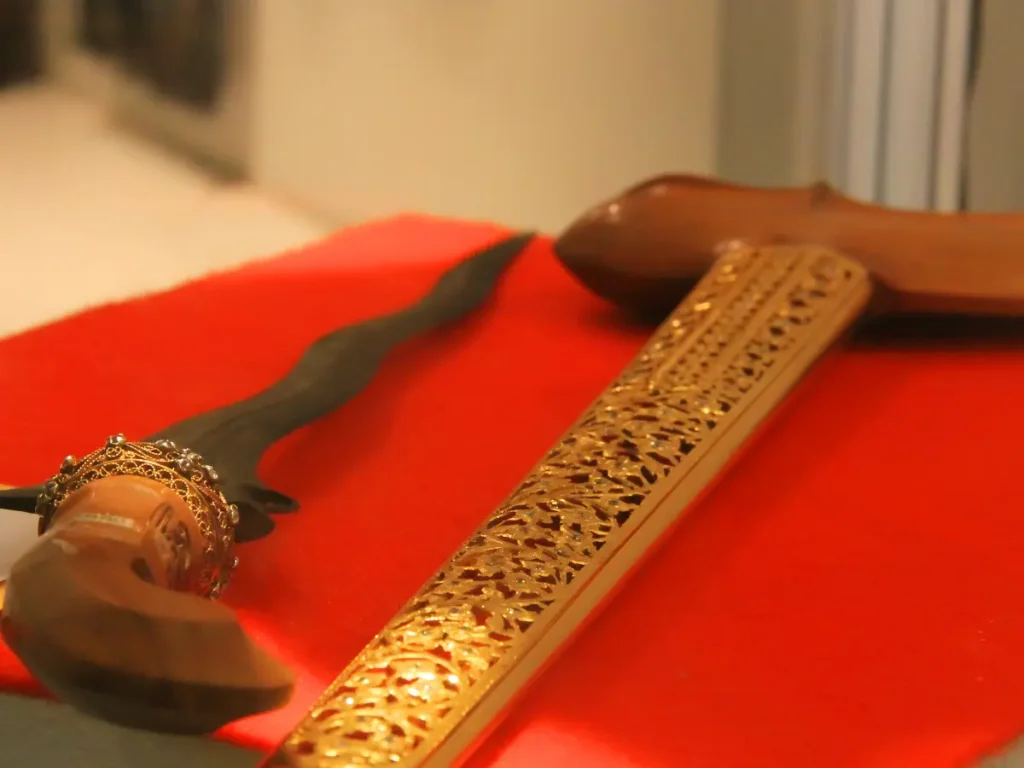
Similar to many other Javanese cultural traditions, the keris carries a history stretching back centuries. The earliest known depictions of keris appear in the relief carvings of Borobudur Temple in the 9th century. These carvings show figures carrying daggers with the distinctive asymmetrical form that would later define the keris tradition.
During the era of the Majapahit Empire, the keris developed into both a battlefield weapon and a royal court symbol. Large-scale development of more modern keris forms is believed to have occurred during this period, including the transition from predominantly straight blades into the iconic wavy forms known today.
When the Islamic Mataram Sultanate rose to dominance in the 16th and 17th centuries, the keris was not abandoned but instead absorbed into the new cultural and spiritual framework. The royal courts of Yogyakarta and Surakarta maintained vast collections of sacred keris known as pusaka, or heirlooms, each carrying its own name, history, and spiritual identity.
The Making of a Keris (Empu)
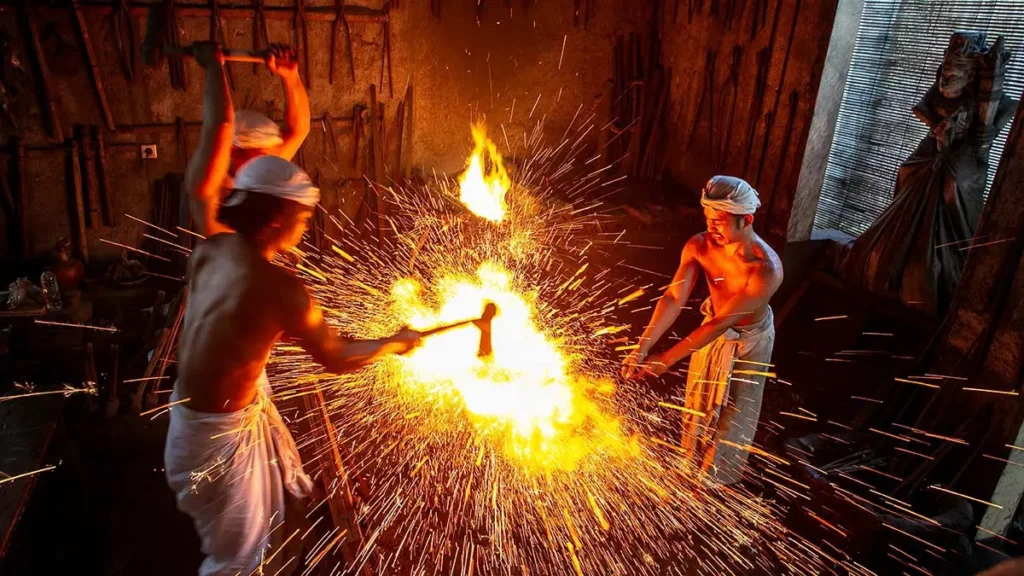
The creation of a keris is traditionally entrusted to a master craftsman known as an Empu. More than simply blacksmiths, empu are often regarded as spiritual practitioners possessing deep philosophical and ritual knowledge.
Traditional keris are forged through repeated layering of iron, steel, and sometimes meteorite metal to create distinctive surface patterns called pamor. These flowing silver-like motifs are highly valued because each pattern is believed to carry symbolic meanings and spiritual qualities.
The forging process itself can take weeks or even months depending on complexity. Traditionally, empu may undergo fasting, meditation, and ritual prayers throughout the creation process, reflecting the belief that a keris carries spiritual essence beyond its physical form.
Anatomy of a Keris
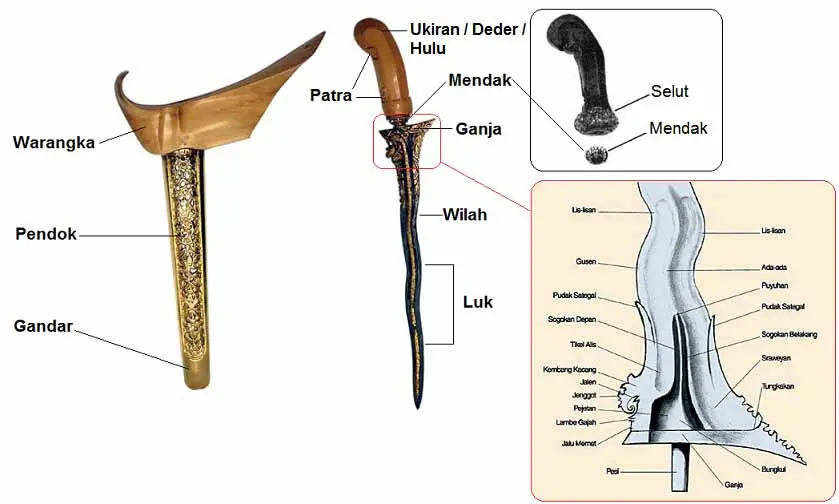
Every element of a Keris carries meaning, and understanding its parts transforms the object from a decorative curiosity into a legible spiritual text. The bilah is the blade itself. It may be straight or wavy, and if wavy, the number of curves (luk) is always odd: 3, 5, 7, 9, 11, or 13, representing Javanese spiritual numerology in which odd numbers are believed to carry active, dynamic energy. A keris with 3 luk is associated with success. One with 5 luk is linked to wisdom.
The ganja is the guard at the base of the blade, a separately forged piece that fits precisely between blade and handle. In a genuine antique Keris, the fit of the ganja is considered a mark of the empu’s skill: it should be precise without being forced.
The pesi is the narrow tang that extends from the blade into the handle, connecting the two components. The hulu is the handle itself, often carved from wood, ivory, or precious stone, and shaped according to regional traditions that vary significantly across Java and the broader archipelago.
Finally, the warangka is the sheath. In the Javanese tradition, the warangka is considered as important as the blade it houses. Warangka teaches that true strength should remain humble and concealed beneath elegance.
Spiritual & Symbolic Meaning
Keris as a Living Object
Within Javanese belief systems, many people regard the Keris as a living spiritual object rather than an ordinary weapon. Certain keris are believed to possess spiritual guardians connected to the blade. Because of this, heirloom keris often undergo ritual cleansing known as jamasan, where the blade is carefully washed and spiritually maintained as a sign of respect.
Famous Cursed Keris in Javanese Legend
One of the most famous stories surrounding keris mythology is the legend of Mpu Gandring. According to the tale, Ken Arok impatiently killed Mpu Gandring using an unfinished keris forged by the blacksmith himself. Before dying, Mpu Gandring cursed the blade, prophesying that it would take seven lives—including Ken Arok’s own. The story remains one of the best-known legends in Javanese history.
Another famous heirloom is Kyai Setan Kober, often associated with mystical power and political conflict during the Demak Sultanate era.
Keris in Javanese Ritual & Ceremony
Keris continue to play essential roles in Javanese ceremonies today. Royal heirloom collections are preserved within palace traditions, while ceremonial keris commonly appear during weddings, traditional attire processions, and cultural rituals including jamasan pusaka.
Javanese vs Filipino Kris — What’s the Difference?
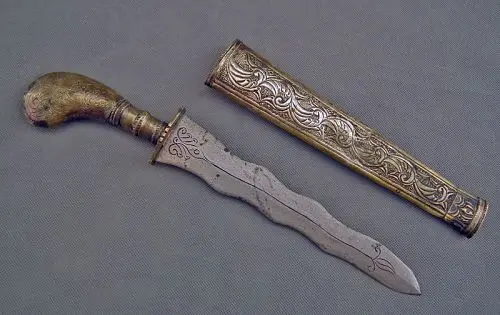
Although the Javanese keris and the Filipino kris share Austronesian cultural roots and both feature wavy blades, they differ significantly in form and meaning. The Javanese Keris is generally older and far more connected to spirituality, philosophy, and court symbolism. Meanwhile, the Filipino kris evolved more prominently as a battlefield weapon among Moro communities.
Is it Legal to Own a Keris?
To own a keris in Indonesia is generally legal, as it’s treated as a cultural artifact. Regulations regarding keris ownership may vary between countries, especially concerning transportation and public display.
Where to See & Buy Authentic Keris in Yogyakarta
Yogyakarta is filled with places where visitors can both admire and purchase authentic keris. If you’re interested in exploring the tradition further, here are several must-visit spots.
Sonobudoyo Museum
Sonobudoyo Museum houses an extensive collection of thousands of keris. Visitors can immerse themselves in various forms of keris featuring different luk counts such as 7, 11, and 13, originating from multiple regions across Java and the archipelago.
Pasar Ngasem
Apart from its culinary attractions, Pasar Ngasem also thrives with local craftsmanship. Among the handmade cultural products available are keris replicas and collectible blades that many visitors purchase as souvenirs or additions to private collections.
Kotagede
Kotagede remains famous for traditional craftsmanship, including keris artisans. Some workshops also offer consultations and maintenance services for heirloom keris preservation and care.
When buying a keris, authentic pieces usually display detailed pamor patterns, balanced craftsmanship, and carefully carved fittings. Replicas, meanwhile, often rely on factory-made symmetry and decorative imitation patterns.
Keris is a window into Javanese history and spirituality. Whether viewed as a sacred heirloom, historical artifact, or cultural masterpiece, the keris continues to hold a deeply respected place within Indonesian culture today. That same philosophical spirit can also be found in Wayang Kulit, the traditional shadow puppet performance that reflects the balance of life