
Time-honored Javanese traditions are still very much alive today. Among them are becak and andong, traditional modes of transportation that have connected locals with the region’s heritage for generations. Once relied upon by residents to carry out everyday activities and transport essential goods, these vehicles have found a new role in tourism-centric cities like Yogyakarta, offering visitors a unique glimpse into the city’s cultural soul.
Table of Contents
Two Wheels & Four Hooves: Yogyakarta’s Living Icons
More than merely Javanese transportation, becak and andong have become symbols of Yogyakarta’s identity and rhythm of life. Amid the rise of ride-hailing apps and modern Javanese transportation, the presence of these traditional vehicles remains a cherished sight as they evoke nostalgia while preserving traditions that have survived for generations.
The Becak: Java’s Pedal-Powered Rickshaw
What is a Becak?
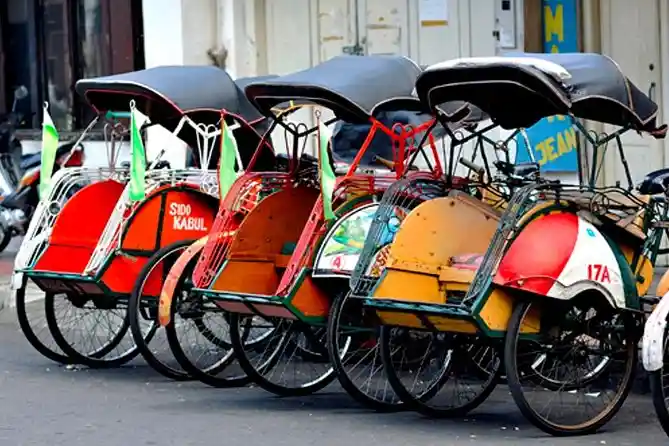
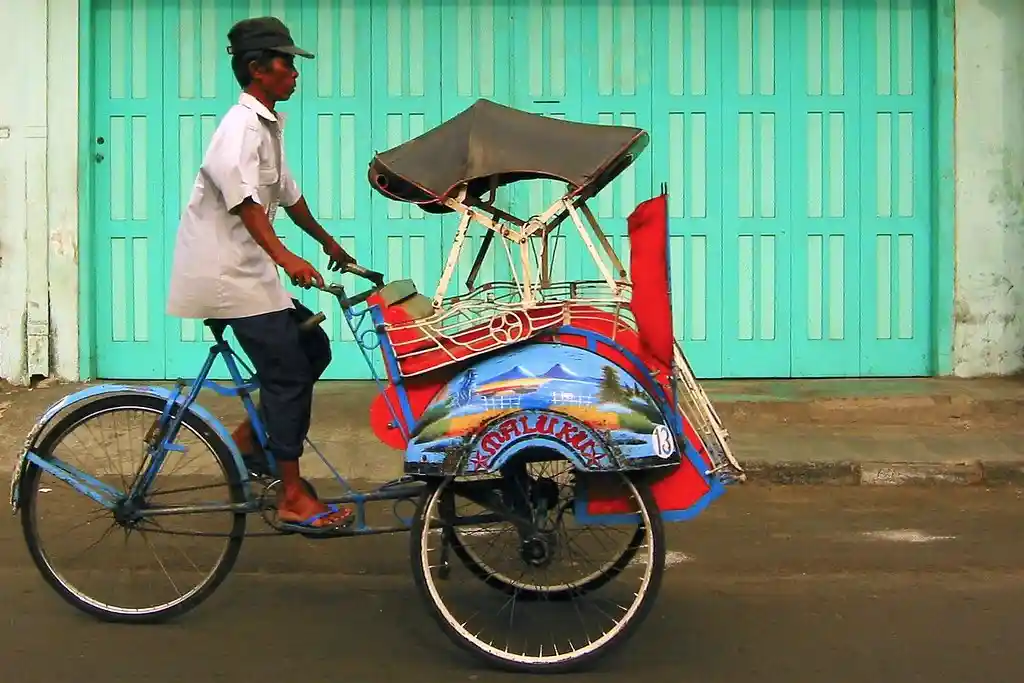
A becak is a three-wheeled pedal-powered rickshaw commonly found in Indonesia. Unlike many South Asian rickshaws where passengers sit behind the driver, a becak places passengers in a seat located at the front, while the driver pedals from behind. It’s traditionally used for short-distance travel.
History of the Becak in Java
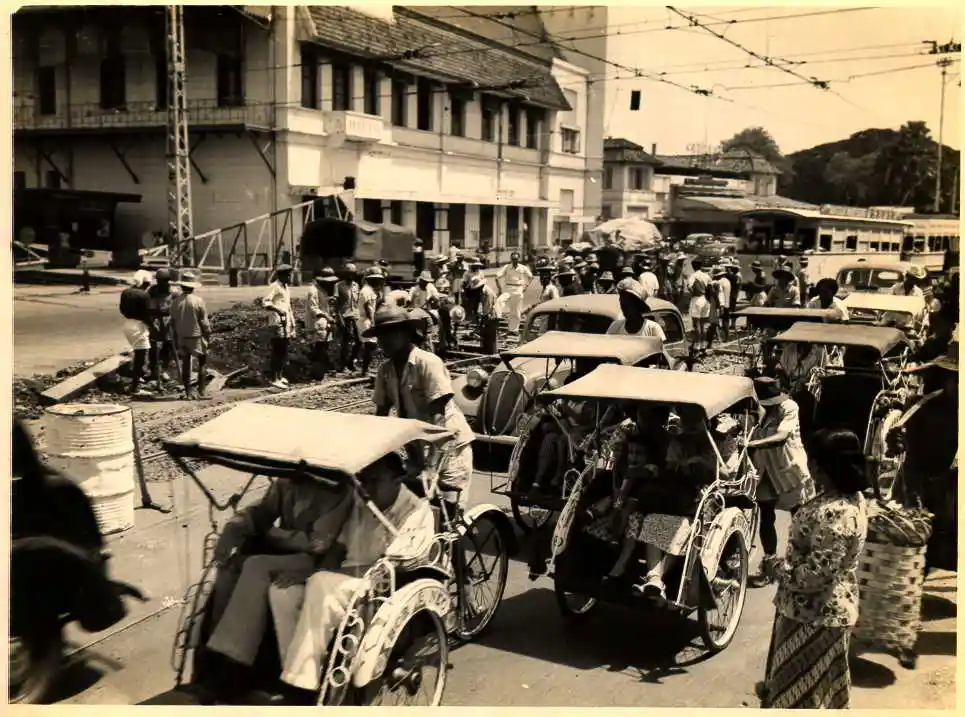
Becak is believed to have first entered Indonesia from Singapore during the Dutch colonial era. While it was initially widely accepted, it also experienced periods of opposition in certain cities due to concerns over traffic congestion and road efficiency.
It wasn’t until the Japanese occupation that becak became a primary means of transportation. The vehicle quickly spread across major cities and saw rapid growth in Jakarta through the 1970s. However, as motorcycles, cars, and online ride-hailing services became more prevalent, the number of becaks gradually declined.
How Does a Becak Work?
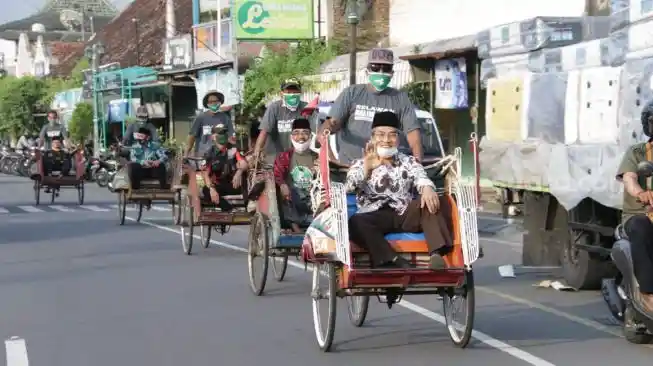
A becak consists of three wheels: two supporting the passenger compartment in front and one rear wheel connected to the driver’s pedaling system. It operates through human-powered pedaling, although some modern adaptations have incorporated engines, creating what is known as a becak motor. Most becaks can comfortably carry two adult passengers, with fares often negotiated before the trip begins.
Becak Routes in Yogyakarta Today
Becaks are still commonly found around tourist areas in Yogyakarta, including:
- Malioboro Street
- Prawirotaman
- Pasar Beringharjo
For short rides within central Yogyakarta, visitors can generally expect fares ranging from IDR20,000 to IDR80,000 depending on distance and negotiation.
The Andong: Yogyakarta’s Horse-Drawn Carriage
What is an Andong?
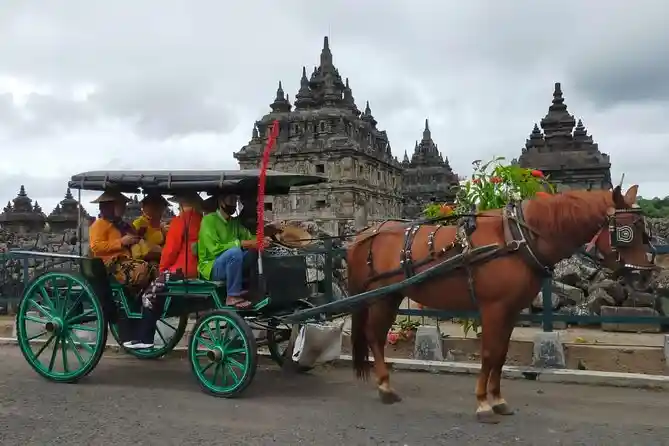
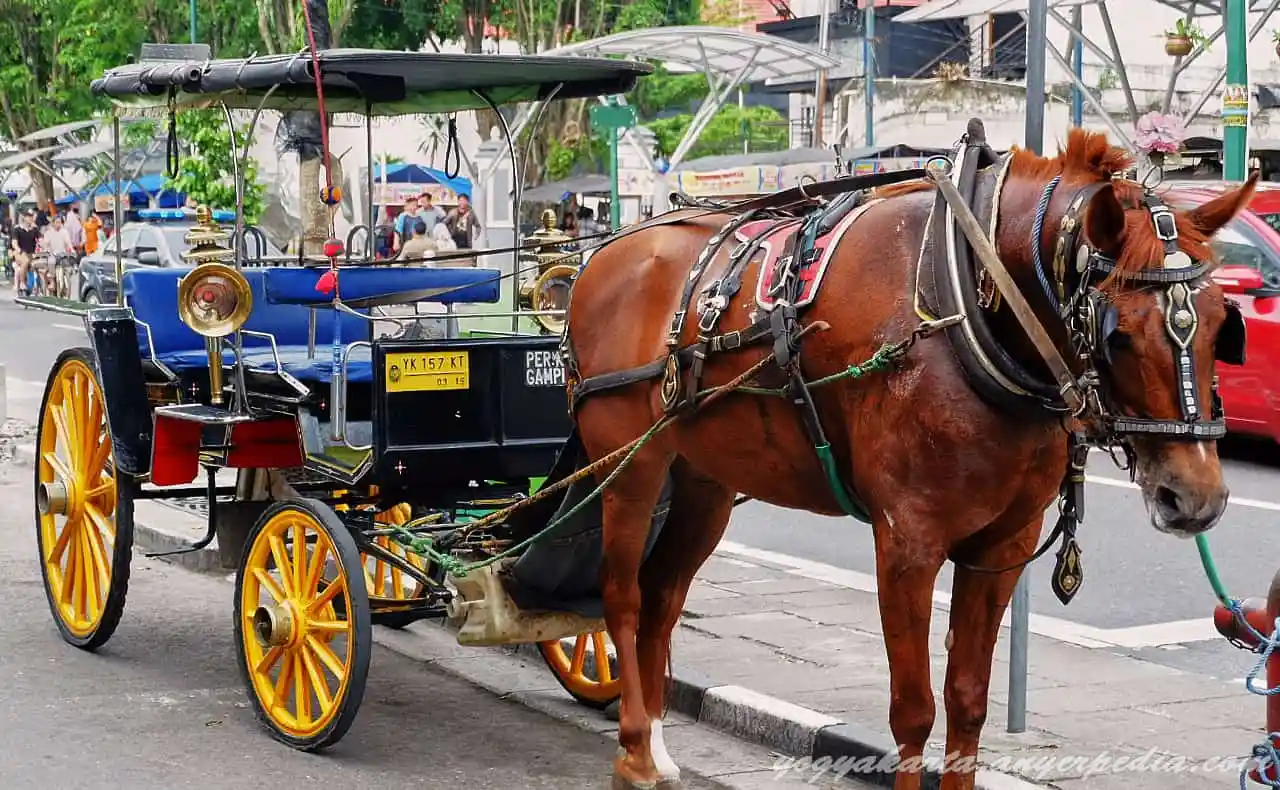
An andong is a traditional four-wheeled horse-drawn carriage originating from Java. Driven by a coachman known as a kusir, an andong is typically capable of carrying between six and eight passengers. It’s historically associated with nobility and ceremonial travel.
Andong vs Delman vs Cidomo — What’s the Difference?
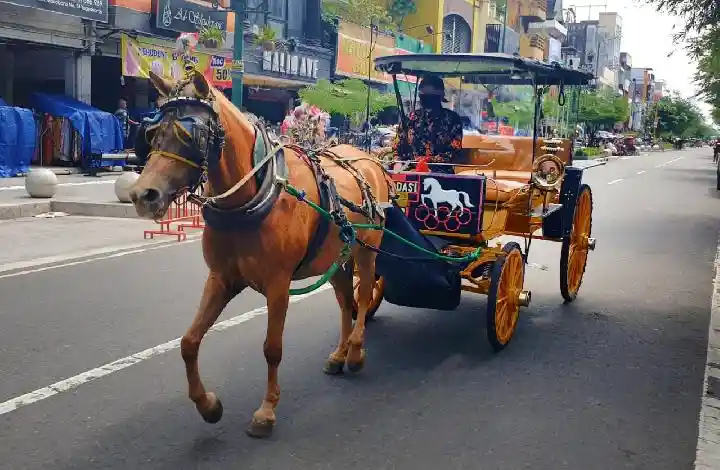
Although often grouped together as horse-drawn transportation, andong, delman, and cidomo each have distinct characteristics.
| Vehicle | Region | Wheels | Typical Use |
| Andong | Yogyakarta & Central Java | Four | Tourism, ceremonial rides |
| Delman | Jakarta | Two | Urban and village transportation |
| Cidomo | Lombok | Two | Local transportation and tourism |
Andong Routes in Yogyakarta
Most andongs operate around Yogyakarta’s tourism district, including:
- Malioboro Street
- Keraton Yogyakarta
- Alun-Alun Kidul
Many drivers are available throughout the day, with evening rides becoming particularly popular due to the cooler temperatures and city lights. Depending on the route and duration, fares generally range between IDR100,000 and IDR200,000.
The Horses & Their Welfare
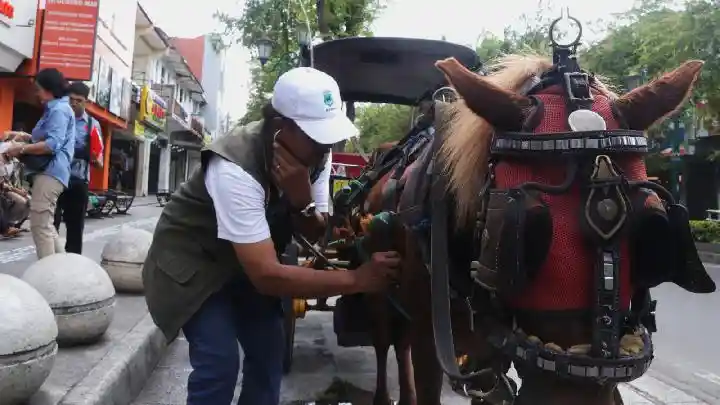
As andong tourism continues to thrive, horse welfare has become an increasingly important topic. Local authorities and community organizations have raised awareness about the importance of providing proper feed, nutrition, healthcare, and adequate rest for working horses. Many kusir also view their horses as valued partners and dedicate significant care to their wellbeing.
Cultural Significance: More Than Just Transport
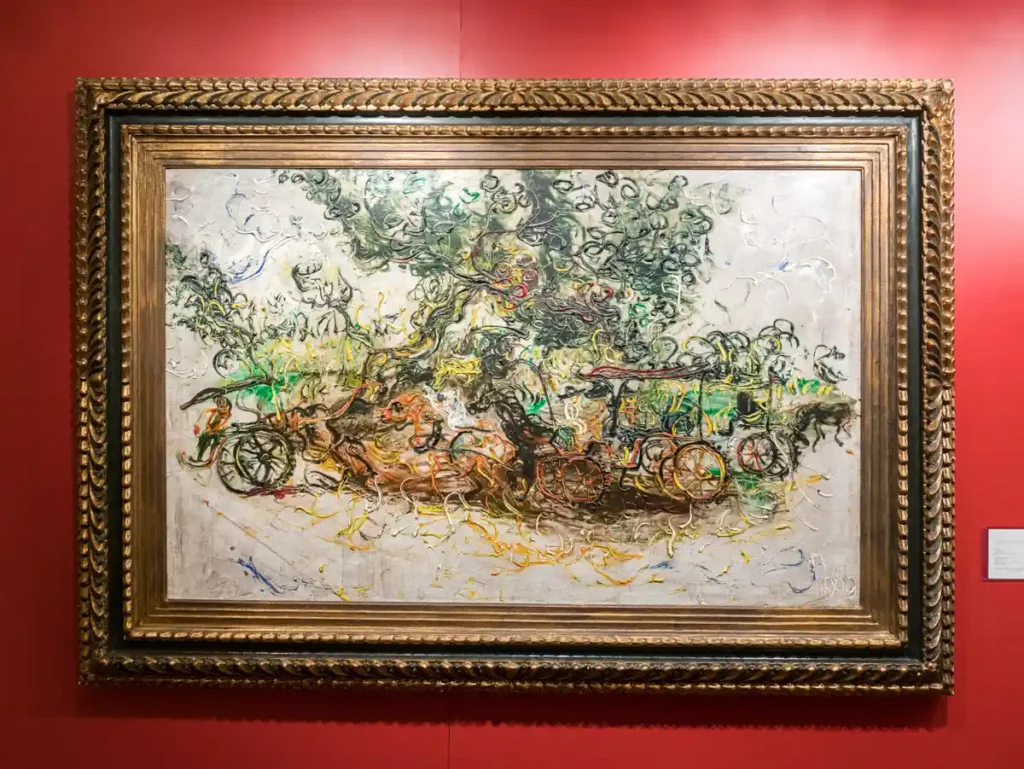
More than Javanese transportation, becak and andong are living cultural symbols. During the colonial era, becaks became associated with economic empowerment for native Indonesians, providing accessible employment opportunities and affordable transportation. Meanwhile, andongs were often viewed as symbols of prestige and social status, as horse-drawn carriages were not accessible to everyone.
Because of their cultural significance, they have appeared in paintings, photography exhibitions, postcards, films, and tourism campaigns representing Yogyakarta.
Riding Becak & Andong: Practical Guide for Visitors
To help you enjoy the experience to the fullest, here is a practical guide covering where to find them, how to negotiate fares, and the best routes to explore.
Where to Find Them
Andong and becak are most easily find near major attractions and tourist areas. These include Malioboro Street, Pasar Beringharjo, Keraton Yogyakarta, Taman Sari, Alun-Alun Kidul, and Prawirotaman.
How to Negotiate the Fare
As andong and becak fares are often not fixed, some visitors may end up paying more than expected. To avoid misunderstandings, here are a few helpful tips:
- Ask for the price upfront.
- Confirm whether the fare is per vehicle or per person.
- Clarify the route and duration.
- Politely negotiate if necessary.
- Carry small cash denominations for convenience.
Best Routes for a Scenic Ride
For the most memorable experience, consider these routes:
Becak
Andong
- Malioboro → Keraton Yogyakarta
- Keraton → Taman Sari
- Evening ride around Alun-Alun Kidul
These routes offer a blend of historic architecture, local life, and cultural landmarks.
While modern transportation may be faster, few experiences capture the spirit of Yogyakarta quite like riding a becak or andong. To make the most of your journey, a visit to Malioboro Street is practically a must, offering one of the best opportunities to experience these iconic modes of transportation while immersing yourself in the city’s vibrant atmosphere and top landmarks.
What is a becak in Indonesia?
A becak, or rickshaw, is a three-wheeled vehicle commonly found in Indonesia, especially in Yogyakarta. There are two main types: conventional becaks, which are pedaled, and motorized becaks, which run on engines similar to those in motorcycles.
What is the difference between becak and andong?
Becak and Andong differ in several ways, including how they move, how many wheels they have, how many people they carry, and their history. A becak is pedal-powered, has three wheels, and usually carries one or two passengers. An andong is pulled by a horse, has four wheels, and can carry four or six people.
Where can you ride becak and andong in Yogyakarta?
You can find Becak and Andong (horse-drawn carriages) in places like Malioboro, the Yogyakarta Palace, Beringharjo Market, and Kranggan Market. There are different routes you can take, so just tell the driver where you want to go and have cash ready to pay.
How much does it cost to ride a becak or andong in Yogyakarta?
A short becak ride of about 2 kilometers costs IDR 20,000. For longer routes up to 5 kilometers, the fare can be around IDR 50,000. Andong fares are higher. Prices start at IDR 50,000 for short routes and IDR 100,000 for longer routes with 2 to 4 passengers.