

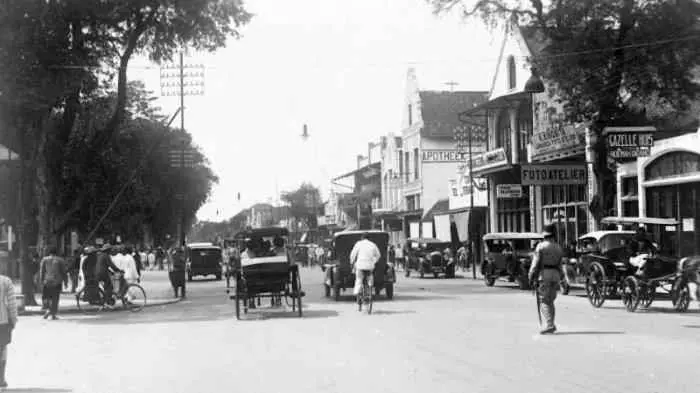
Malioboro is one of the most iconic streets in Yogyakarta, known today for its busy shopping areas, historic buildings, and lively public spaces. However, its present-day character is the result of changes that have taken place across several historical periods a story few tourists know.
Table of Contents
Long before it became a major commercial and tourist destination, Malioboro was part of the urban layout of the Yogyakarta Sultanate and served an important role in the city’s royal traditions.
Over time, the street developed alongside the growth of colonial administration, commercial activity, and the struggle for Indonesian independence, with changes in functions and physical appearance becoming evident.
Malioboro Before the Colonial Era
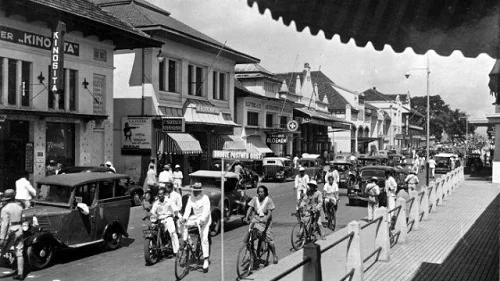
The history of Malioboro is linked to the establishment of the Yogyakarta Sultanate in 1755 and the development of its royal capital. Under Sultan Hamengkubuwono I, the city was planned around the palace, or Keraton Yogyakarta, with a series of roads and public spaces arranged according to Javanese cosmological and philosophical principles.
Malioboro formed part of the north–south royal axis connecting the palace with Tugu Yogyakarta. This route was associated with the city’s symbolic relationship between the ruler, the people, and the wider universe. It also served as a rajamarga, or royal road, used for certain palace ceremonies and processions.
The surrounding area was also part of the daily administration and economic life of the kingdom. The Kepatihan complex served as an administrative centre, while Pasar Gedhe, which later developed into Pasar Beringharjo, became an important marketplace for residents.
Malioboro During the Colonial Era
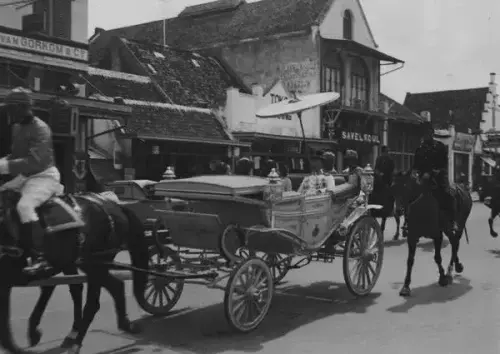
Malioboro underwent significant changes as Dutch colonial influence expanded in Yogyakarta. During the early 19th century, the area gradually flourished into a centre for colonial administration, public services, and commercial activity.
Among the developments were Fort Vredeburg, the Dutch administrative and residential buildings, the Dutch Club, the governor’s residence, the post office, and Javasche Bank. These institutions reflected the growing presence of colonial authority and commercial interests in Yogyakarta, changing both its architectural character and its function within the city..
Commercial activity also expanded as local and migrant communities became increasingly involved in trade. Chinese merchants played an important role in the development of the shopping district. By the early 20th century, the street had become one of the busiest commercial areas in Yogyakarta.
Malioboro and the Struggle for Independence
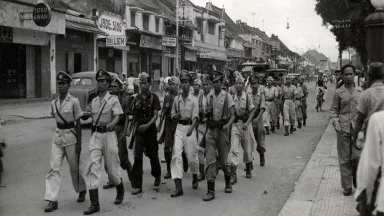
Malioboro’s past stories also reflect Yogyakarta’s integral position during the Indonesian independence struggle. After the proclamation of independence in August 1945, Yogyakarta became a centre of the Republican government.
When Jakarta came under Dutch military pressure, the capital of the Republic of Indonesia was moved to Yogyakarta in January 1946, placing the city at the centre of political and military developments during the Indonesian National Revolution.
One of the most significant events of this period was the General Offensive of 1 March 1949 (Serangan Umum 1 Maret). Indonesian forces launched a coordinated attack against Dutch positions across Yogyakarta, temporarily regaining control of parts of the city for approximately six hours.
Malioboro After Independence
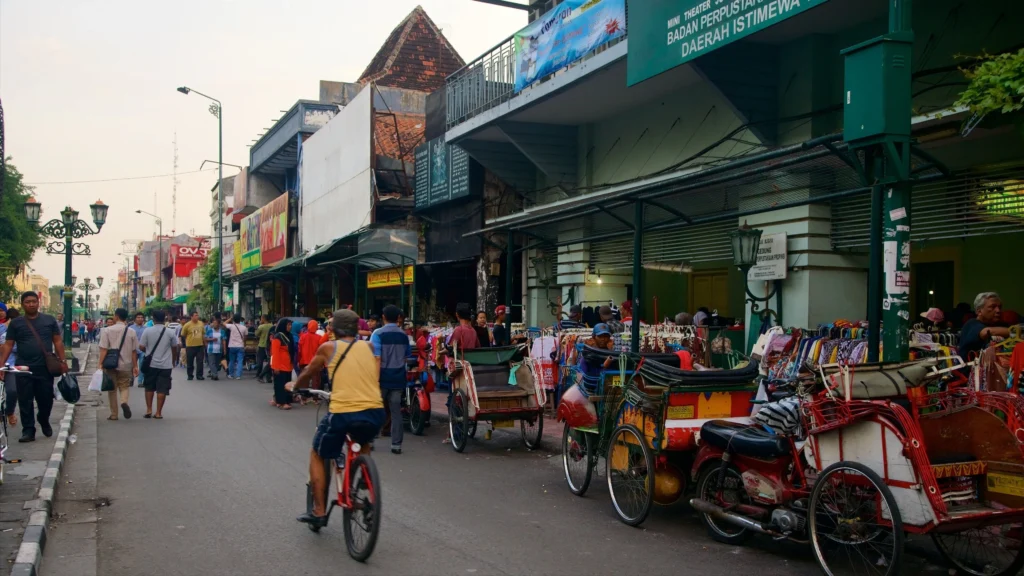
Following Indonesia’s independence, Malioboro continued to develop as one of Yogyakarta’s main commercial and public corridors. Its existing concentration of shops, markets, government buildings, and transport connections provided a foundation for further urban growth.
Traditional markets and established businesses remained important parts of the area’s economic life. Pasar Beringharjo continued to attract shoppers, while shops along Malioboro offered textiles, clothing, household goods, and other products.
The Transformation into a Modern Pedestrian Corridor
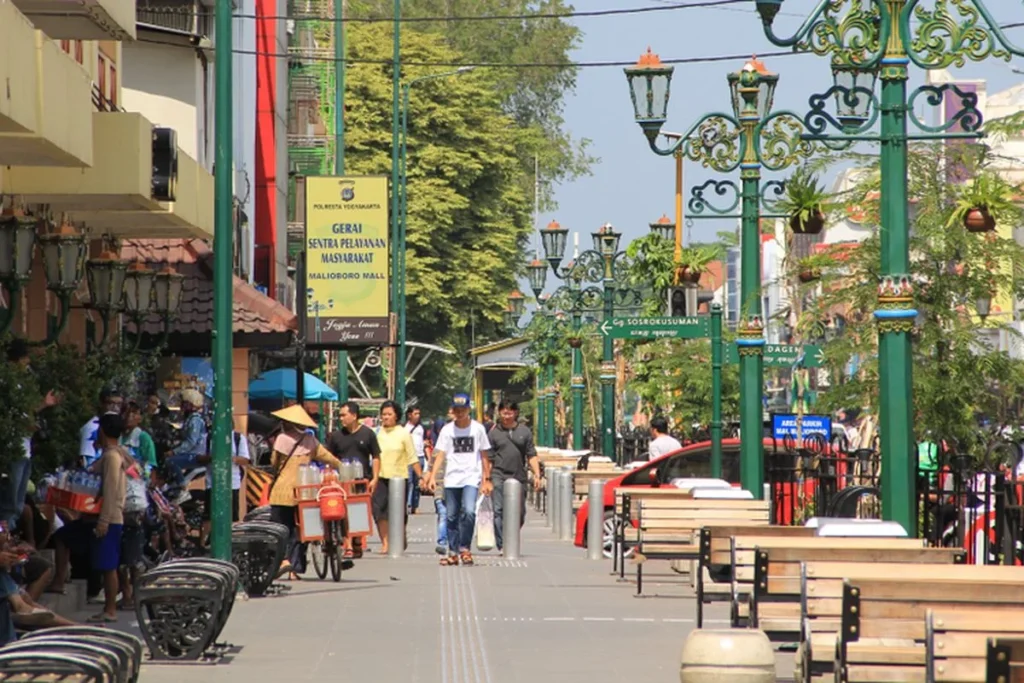
While Malioboro developed into a busy shopping centre, maintaining an orderly urban layout became an increasingly important challenge. In response, the area underwent several improvements in recent decades.
One significant stage began in 2016, when the Yogyakarta administration started reorganising the street, including improving its pedestrian areas. Further changes followed in 2022, when street vendors who had previously occupied parts of Malioboro were relocated to designated facilities known as Teras Malioboro. The relocation aimed to organise trading activities and create more accessible pedestrian spaces along the street.
Rather than functioning mainly as a road for vehicles and a place for roadside commerce, Malioboro was increasingly designed as a public corridor where people could walk, gather, and experience the surrounding urban environment.
What Malioboro Represents Today
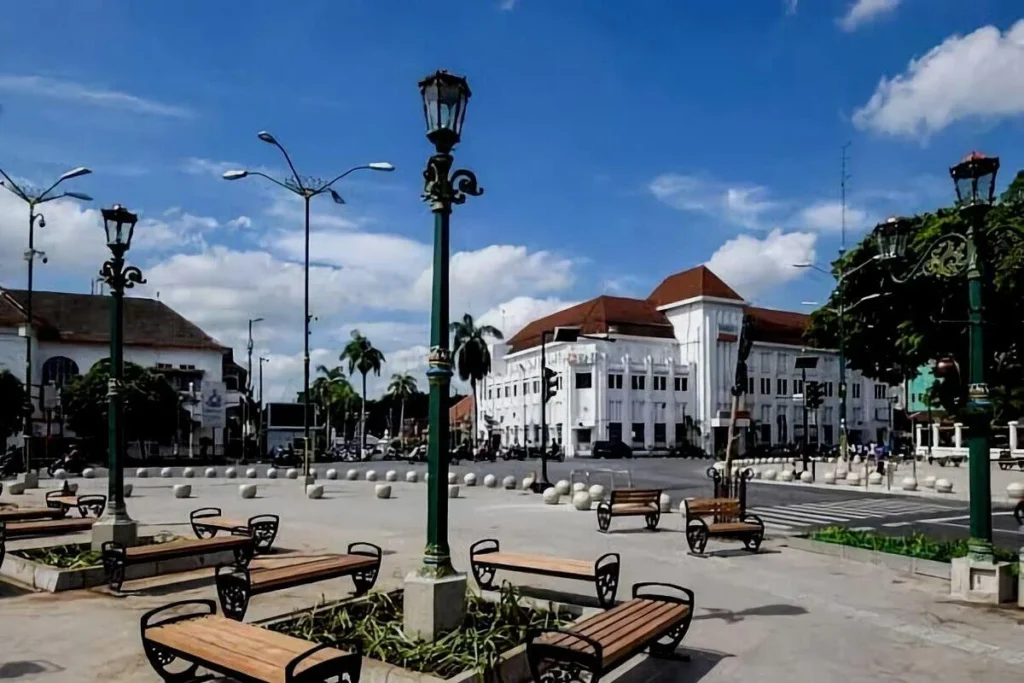
Today’s Malioboro is more than a shopping street. Its development represents several important chapters in Yogyakarta’s history, from the establishment of the Sultanate and the organisation of its royal capital to colonial urban development, the struggle for independence, and the growth of modern tourism.
Its historic buildings and surrounding neighbourhoods preserve traces of different communities and architectural influences, while its markets, commercial spaces, and pedestrian areas continue to support the everyday activities of residents and visitors. The street’s connection to the palace axis also gives it a place within the wider cultural landscape of Yogyakarta.
Frequently Asked Questions
When did Malioboro become an important street in Yogyakarta?
Malioboro became an important part of Yogyakarta’s urban layout after the establishment of the Sultanate in 1755. It initially served as a royal road connected to the palace axis, before being developed into a major commercial and administrative corridor during the colonial period in the 19th and early 20th centuries.
What was Malioboro like before the colonial era?
Before the expansion of Dutch colonial influence, Malioboro was primarily associated with the royal city of Yogyakarta. It formed part of the ceremonial route connecting the palace with Tugu Yogyakarta and was integrated into the city’s wider administrative and philosophical layout.
How did Malioboro become a shopping street?
Malioboro developed into a major shopping street through the expansion of colonial administration, commercial buildings, railway connections, and trading communities.
What happened in Malioboro during the Indonesian independence struggle?
During the independence struggle, Malioboro was part of the wider urban landscape of Yogyakarta, which served as the Republican capital from 1946 to 1949. Nearby Fort Vredeburg was involved in the fighting during the General Offensive of 1 March 1949, when Indonesian forces attacked Dutch positions across the city.
How has Malioboro changed over time?
Malioboro has transformed from a royal road into a colonial commercial street, then into a busy centre for trade, public activity, and tourism. More recently, pedestrian improvements and the relocation of street vendors to Teras Malioboro have reshaped how people use and experience the area.
Why is Malioboro important to Yogyakarta’s history?
Malioboro is important because it reflects the city’s development across several historical periods. It’s strongly connected to the royal palace, colonial institutions, independence struggle, trading communities, and modern urban planning.
Malioboro’s story is one of continuous transformations seen in Yogyakarta. Over several periods, the street has adapted to the changing needs of the city, from its beginnings as a royal road to its development as a colonial shopping district and its role in the struggle for the nation’s independence.
Today, its pedestrian spaces, commercial areas, and historic surroundings continue to bring together different aspects of the city’s identity. To explore more of this heritage, discover our guides to Exploring Malioboro Street: Beyond the Tourist Strip, Fort Vredeburg Museum, Kampung Ketandan, Tugu Yogyakarta, Pasar Beringharjo, and Teras Malioboro.