

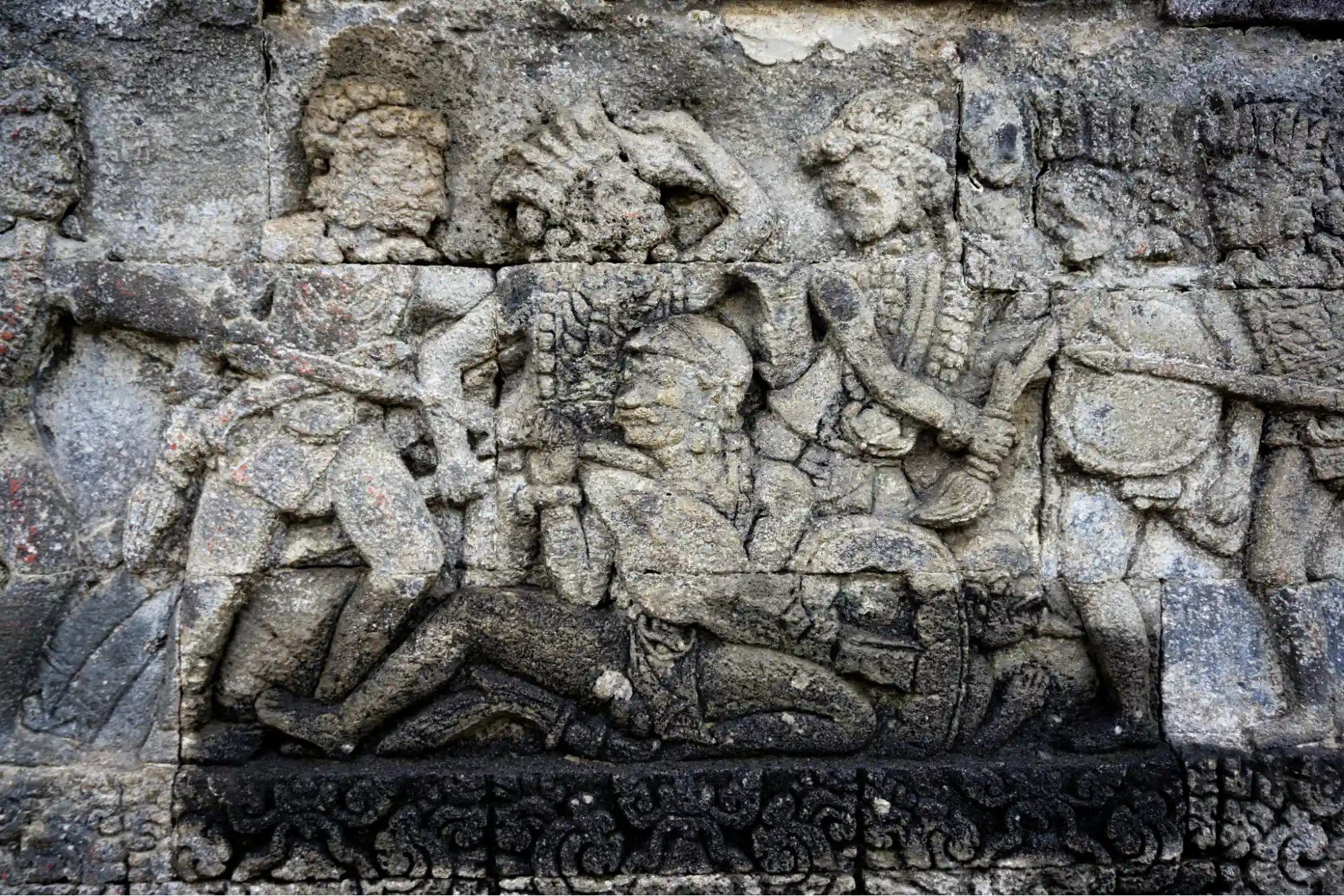
Ancient Javanese art is undoubtedly an important part of Java’s cultural heritage. The countless works of art found across the island, however, are important to understand as having emerged not from a single kingdom or developed in one uniform style. Over centuries, different kingdoms, religious traditions, and cultural influences shaped the art and architecture found across Java.
Table of Contents
From monumental temples and intricate stone reliefs to sculpture, manuscripts, and performing arts, these ancient javanese art pieces offer a glimpse into how people in different periods expressed their beliefs, recorded stories, and shaped their surroundings.
How Ancient Kingdoms Shaped Javanese Art
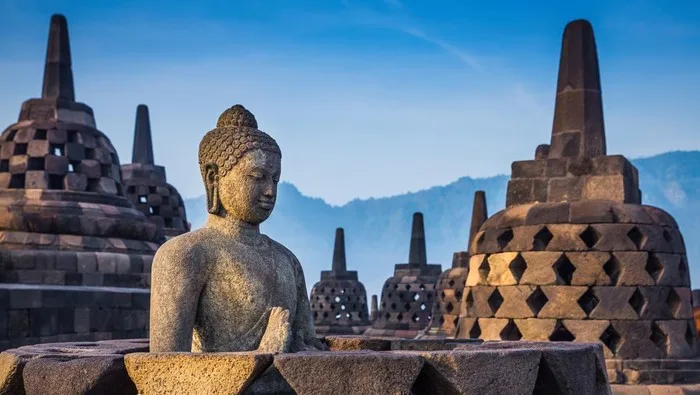
Art is often closely connected to the wider life of a society, including the beliefs, values, and everyday experiences of people in ancient Java. It can serve as a visual record of how people understood their world. In ancient Java, Hinduism and Buddhism heavily influenced the themes, symbols, stories, and architectural forms found in many surviving works. At the same time, local traditions continued to shape how these ideas were expressed.
Ancient Javanese art can therefore be found in many forms, including temple architecture, stone reliefs, sculpture, decorative motifs, literature and manuscripts, performing arts, as well as ritual and ceremonial traditions.
Art of the Mataram Kingdoms and Central Java
The Ancient Mataram Kingdom arguably represents one of the defining periods in the development of Javanese art. From roughly the eighth to the tenth centuries, the kingdom saw the construction of major religious monuments, including Borobudur and Prambanan. Although the two complexes are associated with different religious traditions, both demonstrate the period’s sophisticated architectural and artistic knowledge.
Temple Architecture and Reliefs
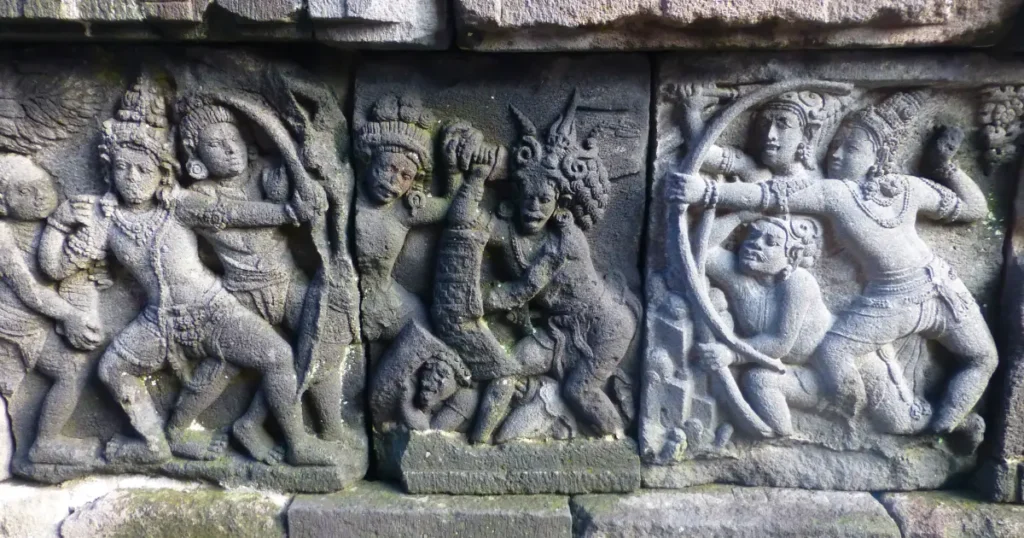
Borobudur rises in a terraced structure, with each level reflecting a different stage in the Buddhist understanding of the spiritual journey. Its architectural design is closely connected to the surrounding landscape of Central Java, where volcanic soils supported agriculture while mountains, rivers, and plains shaped settlement and religious life.
Its reliefs are equally significant. Through hundreds of carved panels, various stories and depictions of life in ancient Java were preserved in stone. At the base of the temple, the Karmawibhangga reliefs illustrate the Buddhist concept of karma, or the relationship between actions and their consequences.
Prambanan, on the other hand, is recognized as the biggest Hindu temple in Indonesia. Its main compound is dedicated to Shiva, while its overall layout, sculptural program, and hierarchy of shrines reflect Hindu religious beliefs and royal devotion.
The reliefs decorating Prambanan include scenes from the Ramayana and Krishnayana. The Ramayana narrative is arranged along the inner walls of the temple and is traditionally followed by visitors through a clockwise circumambulation known as pradaksina, a ritual practice associated with moving around a sacred structure in a clockwise direction.
Sculpture and Stone Art
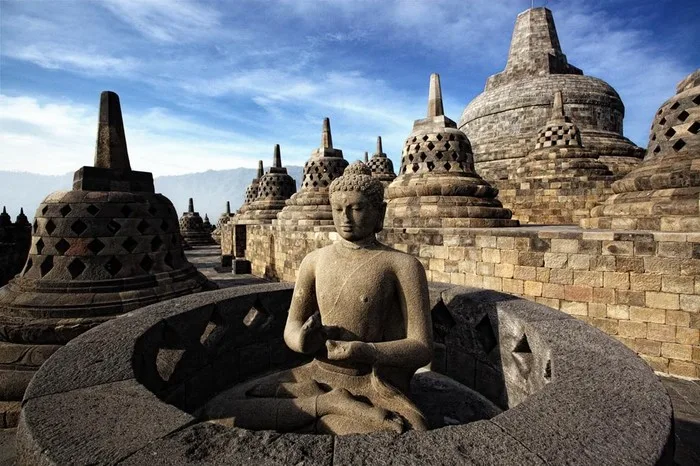
The sculpture and stone art found at Borobudur are closely connected to Buddhist traditions. In the Rupadhatu, the middle section of the monument associated with the realm of forms, visitors can find numerous Buddha statues surrounded by narrative reliefs depicting Buddhist teachings and stories.
Prambanan, meanwhile, offers a different approach to sculpture and stone art. Its figures and reliefs display a strong attention to naturalistic details, particularly in the representation of clothing, plants, animals, buildings, and other elements of the surrounding world.
Majapahit Art and Cultural Heritage
The development of Javanese art continued as political power shifted toward East Java and, later, the Majapahit Kingdom. Compared with the earlier artistic traditions of Central Java, Majapahit-era heritage is particularly notable for its extensive use of terracotta and red brick alongside stone.
Decorative elements found across archaeological sites include floral and animal motifs, as well as imagery connected to Hindu-Buddhist traditions. The archaeological area of Trowulan in Mojokerto, East Java, provides one of the most extensive sources of archaeological evidence for Majapahit’s cultural heritage.
Terracotta and Everyday Art
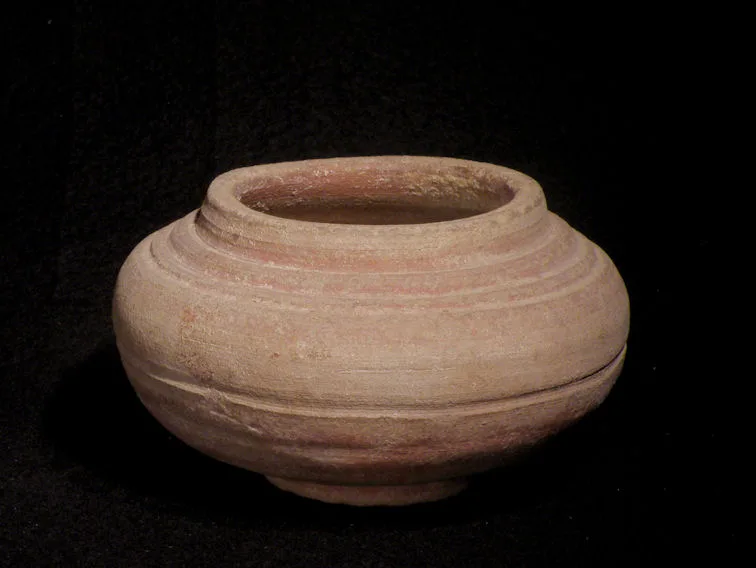
One of the most distinctive aspects of Majapahit archaeological heritage is its extensive collection of terracotta objects. From figurines and architectural decorations to household items, Terracotta was used to create a wide range of objects. These objects are particularly valuable because they provide glimpses into aspects of everyday life beyond the monumental architecture associated with royal and religious sites.
Reliefs, Architecture, and Motifs
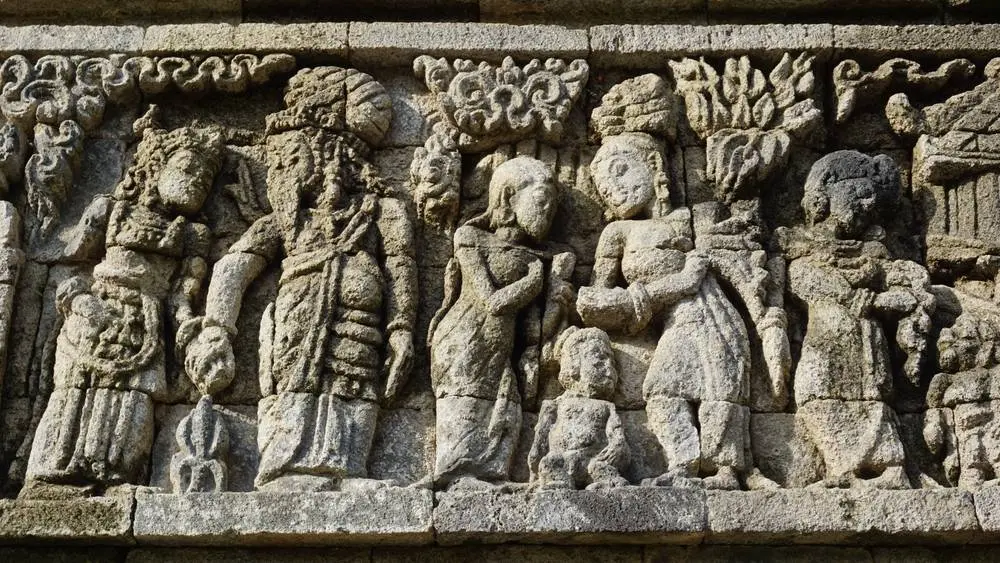
Across red brick, andesite stone, and terracotta are various carved and molded forms, including animals, plants, mythical figures, and human figures. These motifs created a visual language that could convey religious ideas while also decorating buildings and objects. Rather than serving a single purpose, these artistic elements could combine religious symbolism, decorative functions, and representations of the society that produced them.
Ancient Javanese Art You Can Still See Today
Temple Art
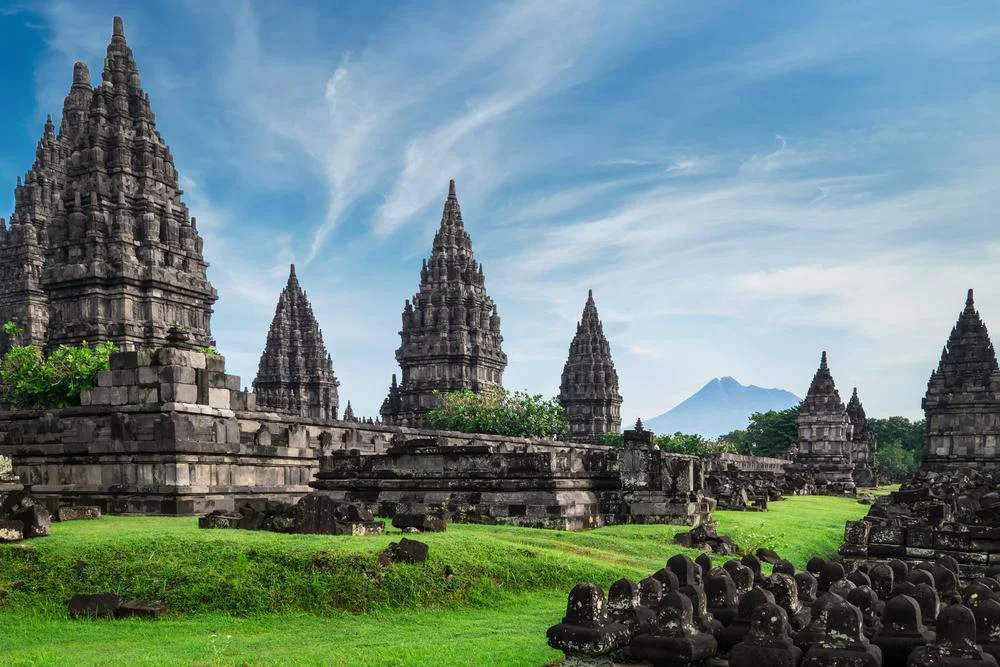
Borobudur and Prambanan are among the most significant places to experience ancient Javanese temple art. Both offer extensive architectural and sculptural landscapes, as well as visual narratives connected to their respective religious traditions and historical periods. At the same time, each temple has its own artistic characteristics.
Majapahit Heritage
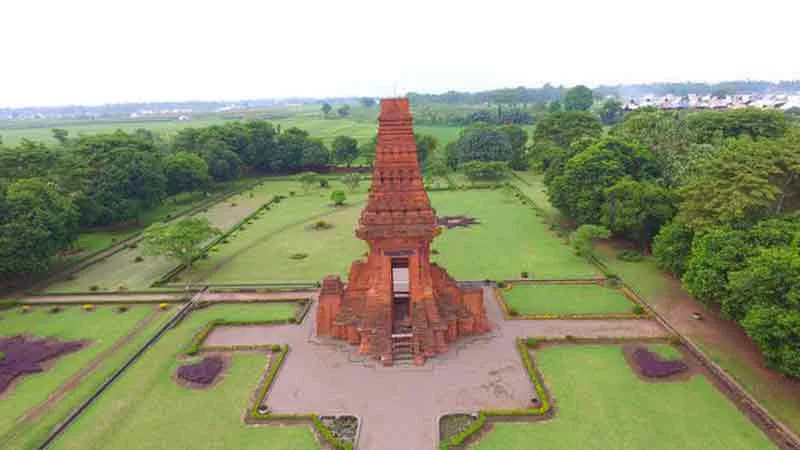
Trowulan is a particularly important destination for those interested in Majapahit art and archaeology. Visitors can explore archaeological remains and museum collections featuring objects recovered from the surrounding area. Terracotta figures, architectural fragments, pottery, sculptures, and other discoveries help illustrate the material culture of the Majapahit period.
Royal Art
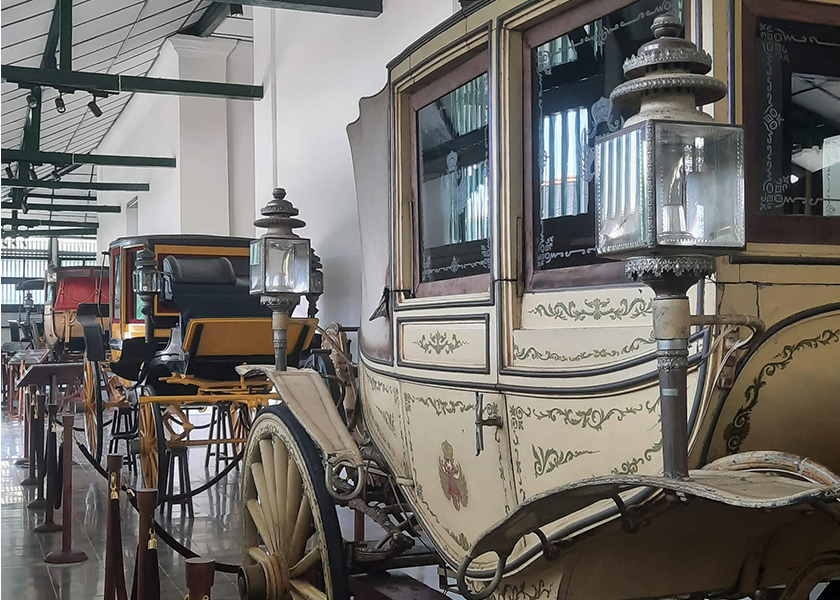
Even after the ancient kingdoms came to an end, Javanese art remained preserved and continued to develop through the royal courts of later periods. The Keraton Yogyakarta and Keraton Surakarta are among the places where visitors can encounter royal architecture, textiles, manuscripts, decorative arts, and other cultural objects that reflect the continued development of Javanese artistic traditions. Although, these works belong to later periods rather than the ancient kingdoms discussed above.
Performing Arts
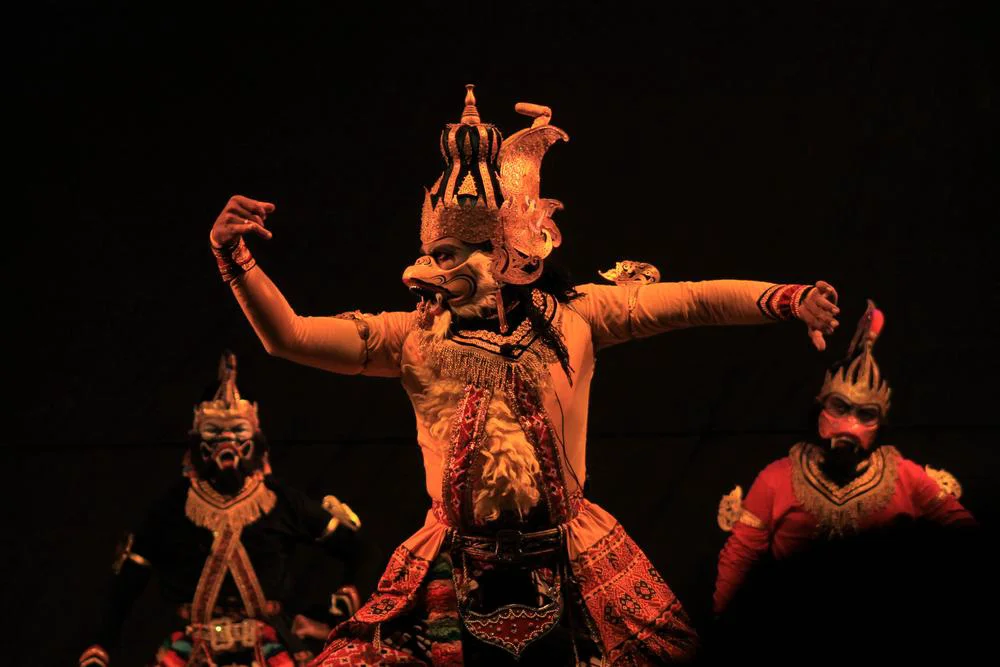
Beyond objects and architecture, Javanese artistic heritage is also expressed through performing arts. Wayang, gamelan music, and Javanese dance remain part of cultural life in cities such as Yogyakarta and Surakarta. Visitors can experience these traditions through performances at cultural institutions and venues, including wayang performances at the Sonobudoyo Museum in Yogyakarta and Wayang Orang Sriwedari in Surakarta.
Frequently Asked Questions
What are some examples of artwork from Indonesia?
Indonesia has a wide range of artistic traditions from different regions and cultural communities. Examples include Javanese temple reliefs and sculpture, Balinese painting and carving, and traditional textiles such as batik and ikat, as well as Torajan woodcarving.
What is the famous art in Indonesia?
There is no single form of art that represents all of Indonesia. Batik is, however, among the best-known examples internationally.
What makes ancient Javanese art distinctive?
Ancient Javanese art is distinctive for the way architecture, sculpture, religious narratives, and decorative elements were brought together.
Hindu and Buddhist traditions played an important role in many surviving monuments, while local Javanese cultural traditions also influenced their forms and visual language.
The story of ancient Javanese art is ultimately a story of change. From the monumental temples of Central Java to the terracotta discoveries of Trowulan, artistic traditions developed alongside changes in political power, religion, technology, and society. Each period left behind its own visual language, materials, and forms of cultural expression.
To explore more of Java’s historical heritage, continue with our guides to the Majapahit Kingdom and the broader Central Java’s temples.