

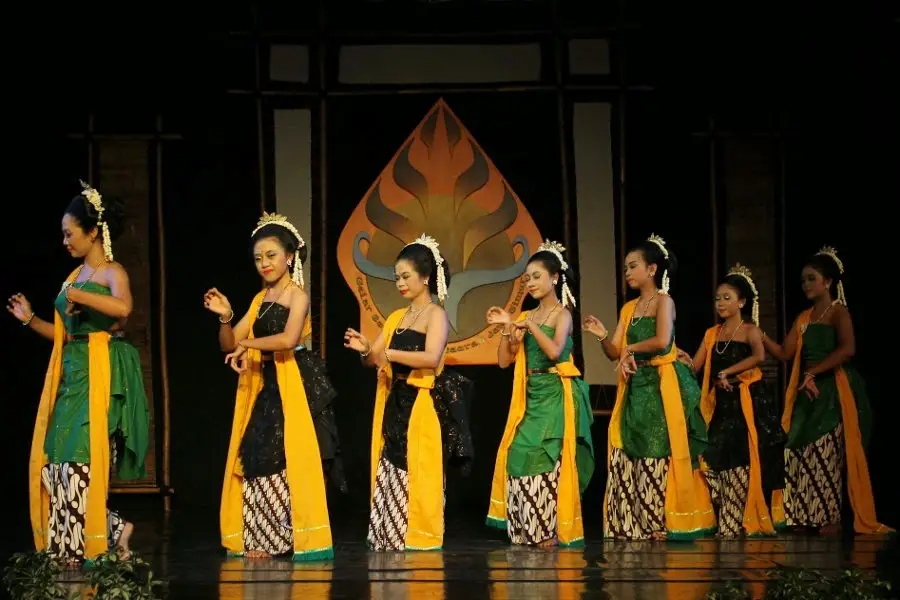
Traditional dances hold a special place in preserving and expressing a culture’s identity. In Solo, Gambyong dance lives up to that idea, widely recognised as one of the city’s most famous traditional performances.
Table of Contents
With flowing hand movements, expressive eyes, elegant costumes, and the rhythmic sound of Javanese gamelan, Gambyong finds its roots in folk performances before eventually entering the Surakarta court. Today, the dance remains an elegant manifestation of Javanese culture, continuing to gracefully open cultural events and official occasions across Solo.
What Is the Gambyong Dance?
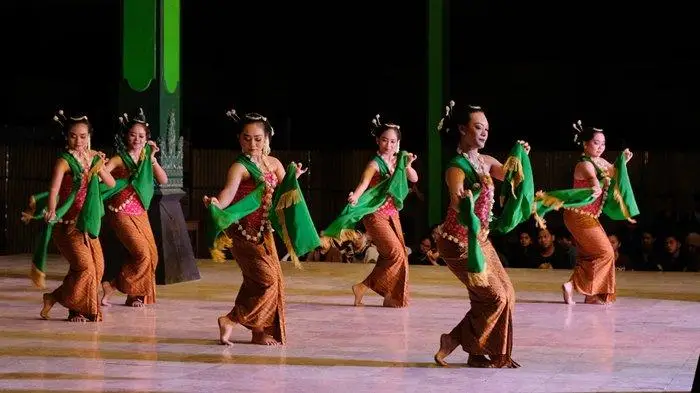
Gambyong is an elegant traditional Javanese dance closely associated with Surakarta, or Solo, in Central Java. Performed by female dancers, it evolved from folk dance traditions associated with tayub and taledhek performances before eventually becoming part of the traditions of Keraton Surakarta.
Today, Gambyong dance is best known as a welcoming dance, commonly performed to greet honoured guests or open official ceremonies and cultural events.
The Story Behind Gambyong
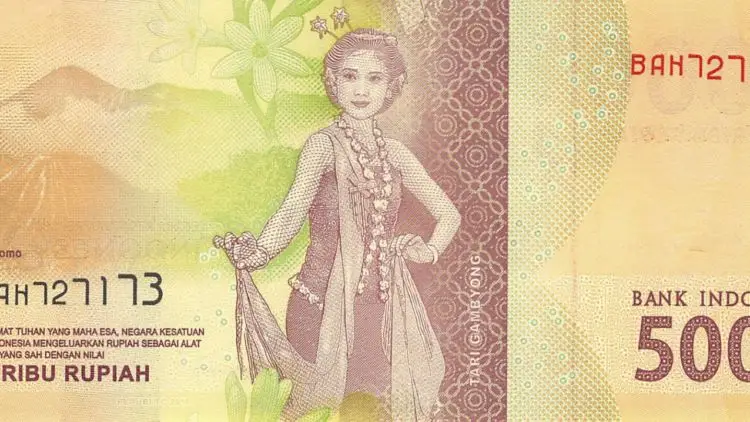
The name Gambyong is believed to have originated from a celebrated dancer named Gambyong, who was known for her graceful performances. As her dancing captivated the audience, the name eventually became associated with a style of performance that later developed into one of Solo’s most recognizable traditional dances.
Before its association with the royal court, however, Gambyong was rooted in folk traditions and performances that were often connected to agricultural communities and celebrations, including rituals expressing hopes for a bountiful harvest.
Its transition into the court tradition also went hand in hand with the development of more structured choreography, which then introduced Gambyong Pareanom a version later helped establish the form of Gambyong that is widely recognized today.
What Makes Gambyong Unique?
Graceful Movements
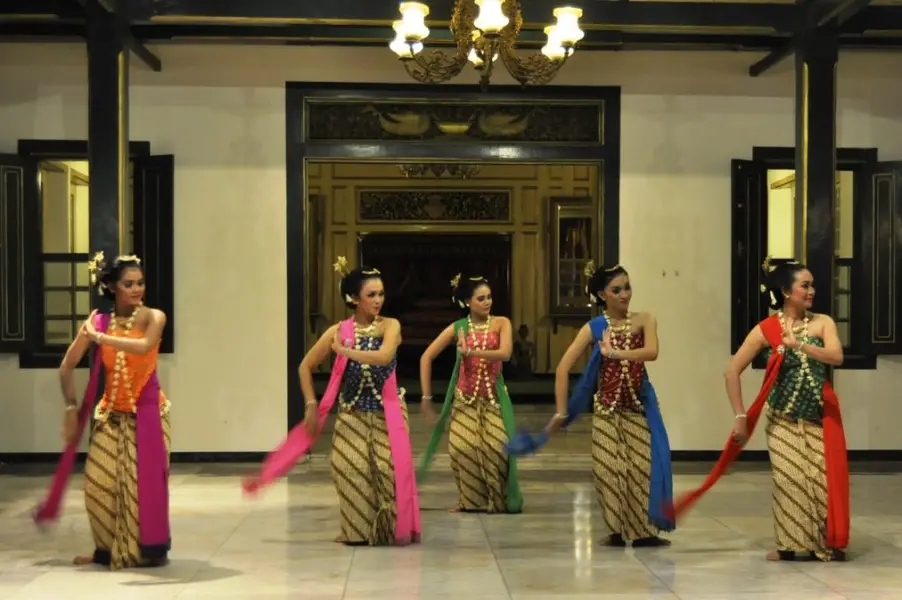
Gambyong dance is characterized by soft, fluid, and graceful movements. Rather than relying on large or dramatic gestures, the dance emphasises subtle coordination between different parts of the body. Throughout the performance, dancers carefully synchronise their hands, arms, shoulders, torso, head, and eye movements.
Music and Costume
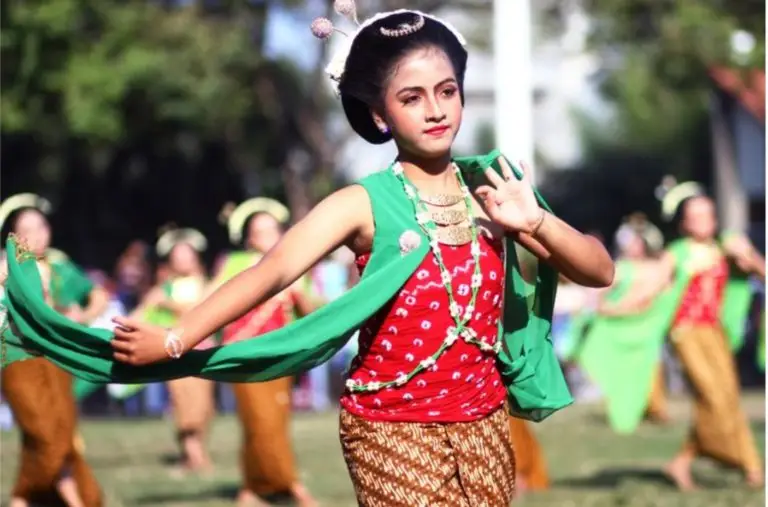
Gamelan remains the backbone of Gambyong, just as it does in many Javanese cultural performances. The kendang, in particular, plays an important role in controlling the rhythm and guiding changes in the dancers’ movements.
As for the costumes, each dancer typically wears a kain batik as a skirt paired with a traditional Javanese kebaya in bright colours. The look is completed with a sanggul, or traditional hair bun, along with a sampur, a long scarf or sash that also serves as an important prop throughout the choreography.
Different Types of Gambyong
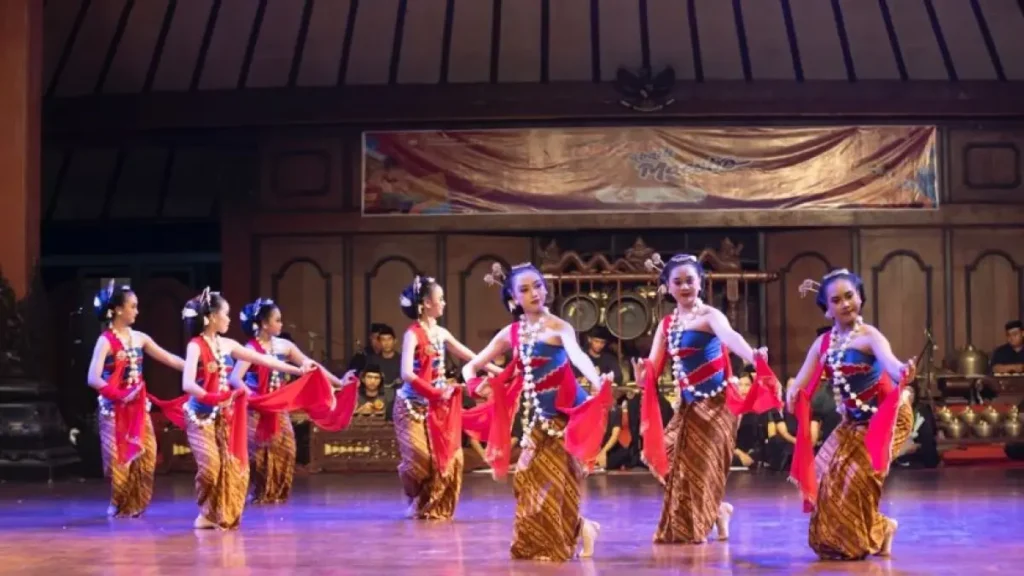
Following Gambyong’s development within the royal court, different variations of the dance began to emerge. Some of the most popular versions include Gambyong Pareanom and Gambyong Pangkur, each offering its own interpretation while retaining the fundamental characteristics of Gambyong.
The Role of Gambyong in Javanese Culture
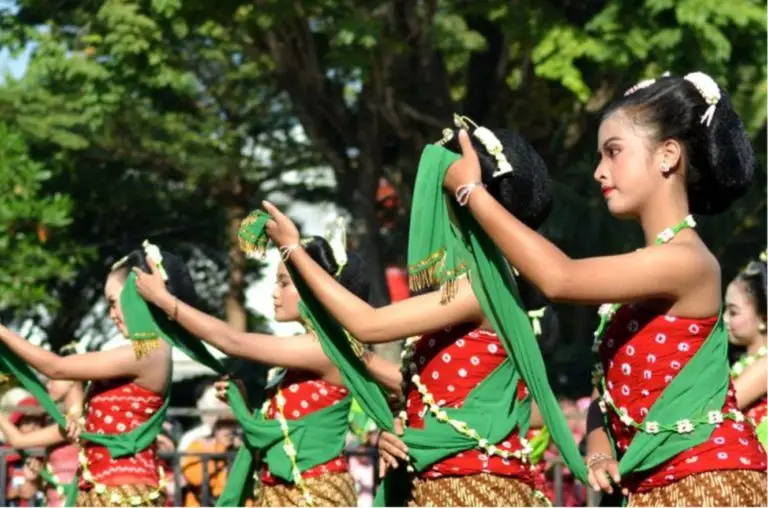
In Javanese culture, Gambyong holds a special distinction as a welcoming dance. It is commonly performed to greet honoured guests and open formal ceremonies, cultural events, and other important occasions.
More than that, the dance’s graceful movements are often associated with qualities such as gentleness, hospitality, and elegance. Carrying these values, Gambyong continues to be appreciated across various events in Solo.
Where to Watch Gambyong in Solo
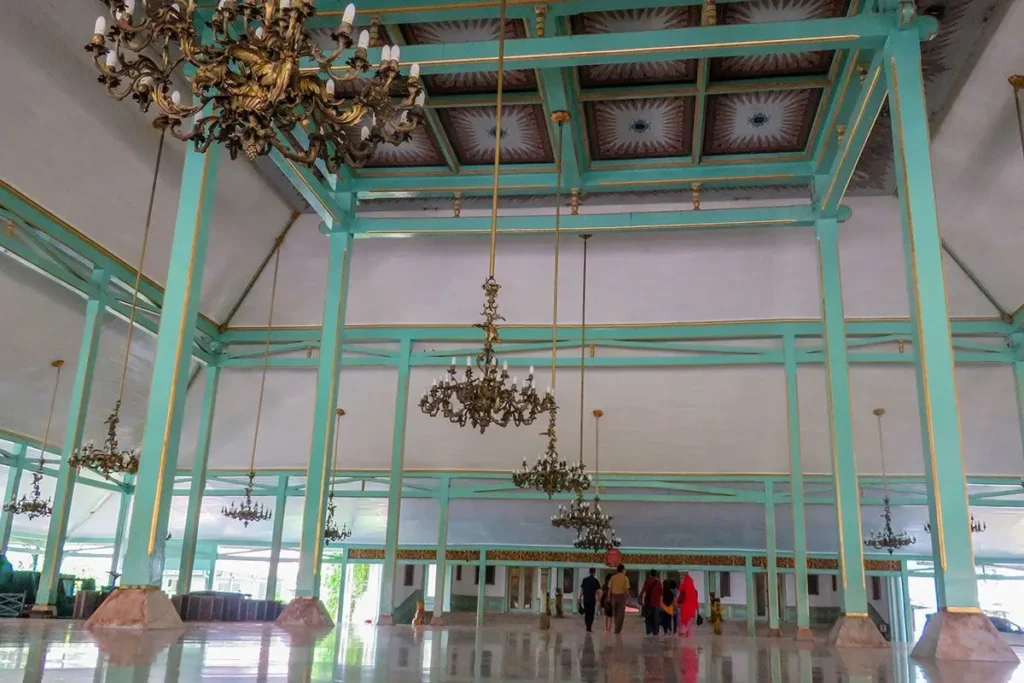
Keraton Surakarta and Pura Mangkunegaran are two of the city’s cultural institutions where you can catch Gambyong dance, although performance schedules can vary. Wayang Orang Sriwedari and various cultural festivals may also feature Gambyong.
Because performances can depend on ceremonies, cultural programmes, and special events, schedules aren’t always fixed. Visitors should therefore check the latest event information before making a special trip to see Gambyong.
Frequently Asked Questions
Where did the Gambyong dance originate?
Gambyong originated from folk dance traditions in Central Java, particularly those associated with tayub and taledhek. It later entered the Surakarta court, where its movements and presentation were refined.
Is Gambyong from Solo or Yogyakarta?
Gambyong is most strongly associated with Surakarta, or Solo.
What is the purpose of the Gambyong dance?
Gambyong is commonly performed as a welcoming dance to greet honoured guests. It can also be presented at official ceremonies, cultural events, festivals, and other celebrations.
What makes Gambyong different from other Javanese dances?
Gambyong is particularly recognised for its graceful and fluid movements, expressive eye and hand gestures, and its role as a welcoming dance.
Can tourists watch Gambyong performances in Solo?
Yes, although performances aren’t necessarily available every day. Gambyong may appear at royal cultural venues, performing arts programmes, festivals, and official events.
Gambyong may look effortless as its dancers glide across the stage, but every movement carries the discipline of a tradition shaped over generations. From its roots in folk performance to its refinement in the Surakarta court, the dance has continued to evolve while retaining the grace that makes it very much recognizable.
Keen to discover more of Solo’s royal traditions? Let’s explore Keraton Surakarta and Pura Mangkunegaran, or uncover the sacred side of Javanese court dance through Bedhaya Ketawang.