

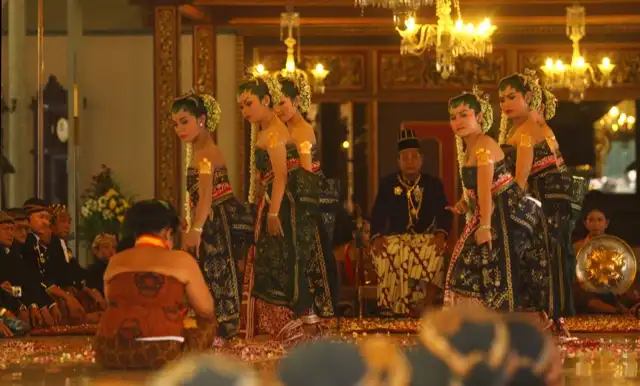
Have you ever come across a traditional dance performance so sacred that witnessing it is considered a once-in-a-lifetime opportunity? In Solo, that dance is Bedhaya Ketawang. Unlike the classical dances commonly presented to tourists, Bedhaya Ketawang is not a regular cultural show.
Table of Contents
Its performance is closely tied to the Tingalan Dalem Jumenengan, the ceremony commemorating the reigning Sunan’s accession to the throne. For this reason, seeing it performed is a rare privilege, even for those visiting Solo in search of its traditional arts.
What Is Bedhaya Ketawang?
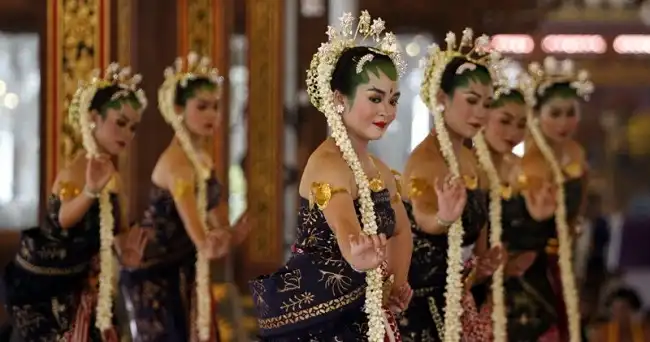
Bedhaya Ketawang is a sacred royal dance associated with Keraton Kasunanan Surakarta. It is traditionally performed by nine female dancers during the Tingalan Dalem Jumenengan, an annual ceremony commemorating the accession of the reigning Sunan. This makes it fundamentally different from a regular dance performance arranged for public entertainment.
The name itself reflects the elevated philosophy behind the dance. Bedhaya refers to female court dancers, while Ketawang is associated with tawang, meaning sky, as well as something high, noble, and sublime. Together, the name reflects the grandeur and elevated position of the dance within the royal tradition, closely tied to the idea of a king’s authority and greatness.
The Story Behind Bedhaya Ketawang
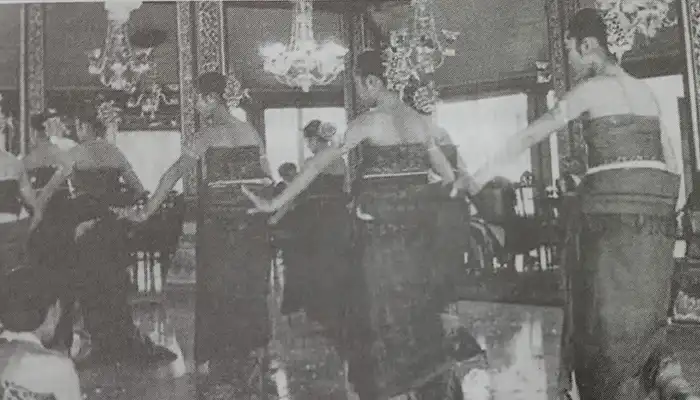
There are two widely known versions surrounding the origins of Bedhaya Ketawang. Neither can be recognised as the definitive account, as both have lived on through Javanese oral traditions and historical narratives.
The first version is connected to Sultan Agung Hanyakrakusuma, who ruled the Mataram Sultanate between 1613 and 1645. According to the story, Sultan Agung once heard a beautiful melody descending from the sky while performing meditation.
Fascinated by what he heard, he summoned his attendants and shared the experience with them before eventually creating a dance inspired by the melody. Another version, and perhaps the more widely known one, is associated with Panembahan Senapati, the founder of the Islamic Mataram Kingdom.
According to this tradition, Panembahan Senapati was meditating when he encountered Kanjeng Ratu Kidul. The story describes Kanjeng Ratu Kidul attempting to seduce him, only to be rejected. Their encounter later became closely associated with the symbolic narratives surrounding Bedhaya Ketawang.
As to why Bedhaya Ketawang later became closely attached to Keraton Surakarta can be traced back to the 1755 Treaty of Giyanti, which divided the Mataram Sultanate and established the political separation between Surakarta and Yogyakarta. Along with political authority, the division also involved cultural inheritances.
Why Is Bedhaya Ketawang Considered Sacred?
The Royal Ceremony
Bedhaya Ketawang is deeply connected to the idea of royal legitimacy and authority. Its performance forms part of the Tingalan Dalem Jumenengan, reinforcing the continuity of the royal institution through ceremony and tradition.
Spiritual Symbolism
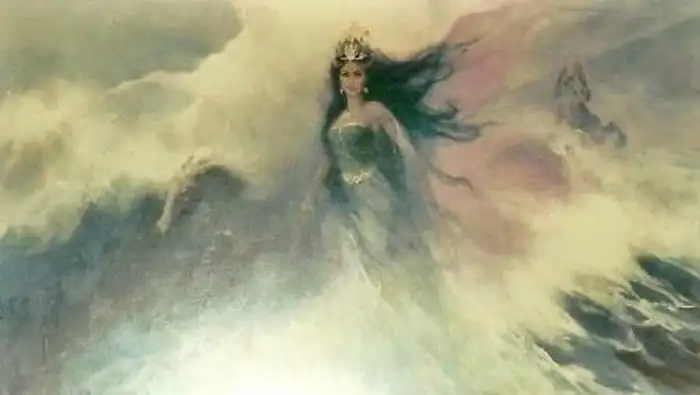
Beyond its visible representation of royal grandeur, Bedhaya Ketawang also carries layers of spiritual symbolism. Based on the traditions surrounding its origins, the dance is often associated with the relationship between the kings of Mataram and Kanjeng Ratu Kidul. Within Javanese court cosmology, this relationship symbolises the extraordinary spiritual authority and power attributed to the ruler.
Sacred Rituals Before the Performance
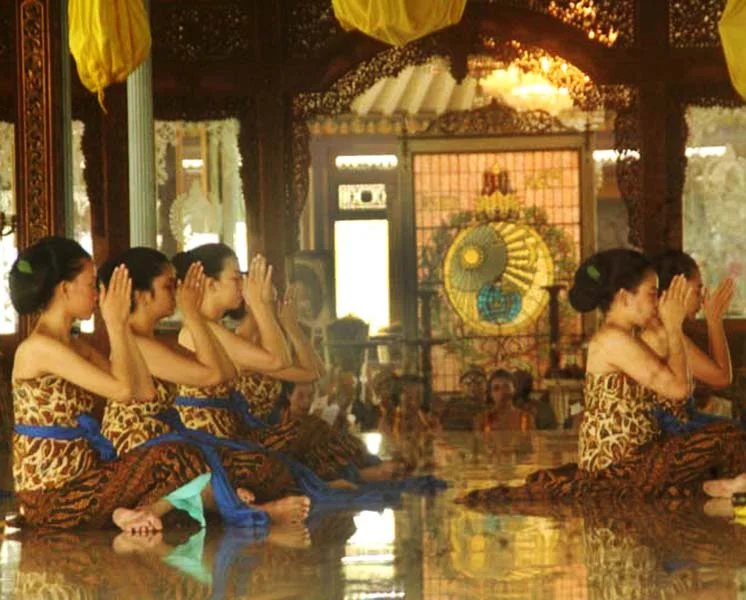
Performing Bedhaya Ketawang also involves a series of preparations and rituals that reflect the dance’s sacred status. Traditionally, the nine dancers are required to follow certain preparations, including puasa mutih, a form of ritual fasting, as well as ceremonial offerings known as caos dhahar for those who are in their period. As for the musical accompaniment, distinctive gamelan instruments are used.
The Meaning Behind the Dance
The Nine Dancers
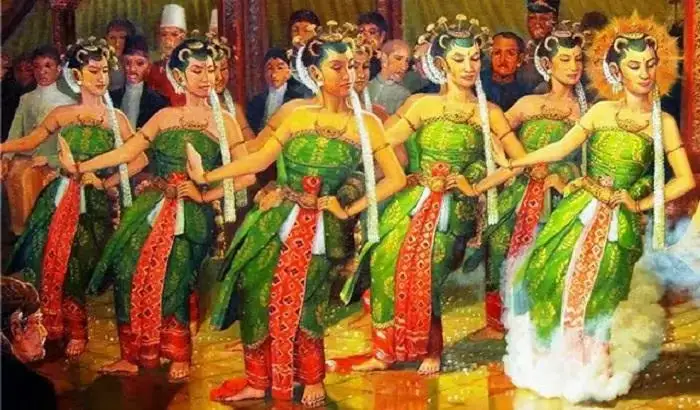
Bedhaya Ketawang is traditionally performed by nine dancers. The number nine carries several layers of symbolic interpretation within Javanese tradition. One interpretation connects the dancers with the nine directions of the cosmos, while another associates the nine roles with parts of the human body and aspects of human existence.
Costume, Music, and Choreography
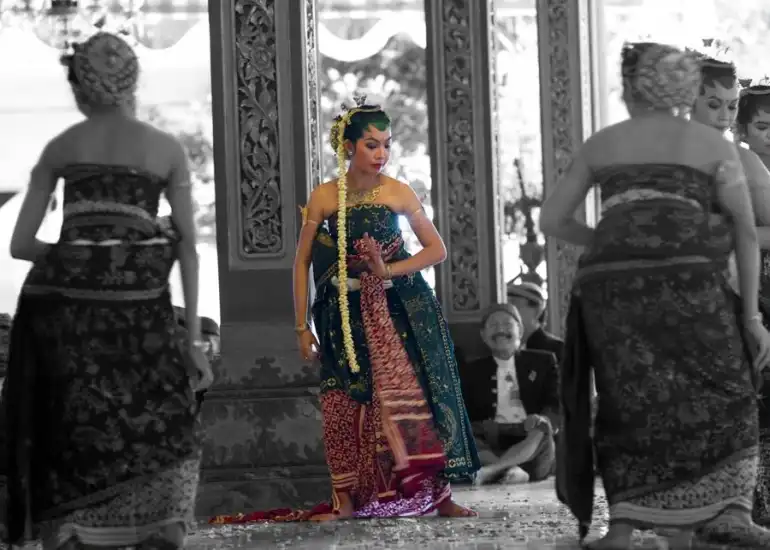
The visual character of Bedhaya Ketawang is unmistakably associated with Javanese court aesthetics. The dancers traditionally wear elaborate Javanese bridal costumes, including dodot and samparan, which complement the dance’s symbolic narrative surrounding the relationship between Kanjeng Ratu Kidul and the rulers of Mataram.
When it comes to the movements, Bedhaya Ketawang has it deliberately slow, controlled, and graceful, accompanied by a distinctive gamelan composition. Unlike a conventional gamelan ensemble, the musical accompaniment incorporates a combination of Javanese and Western instruments.
Can Visitors Watch Bedhaya Ketawang?
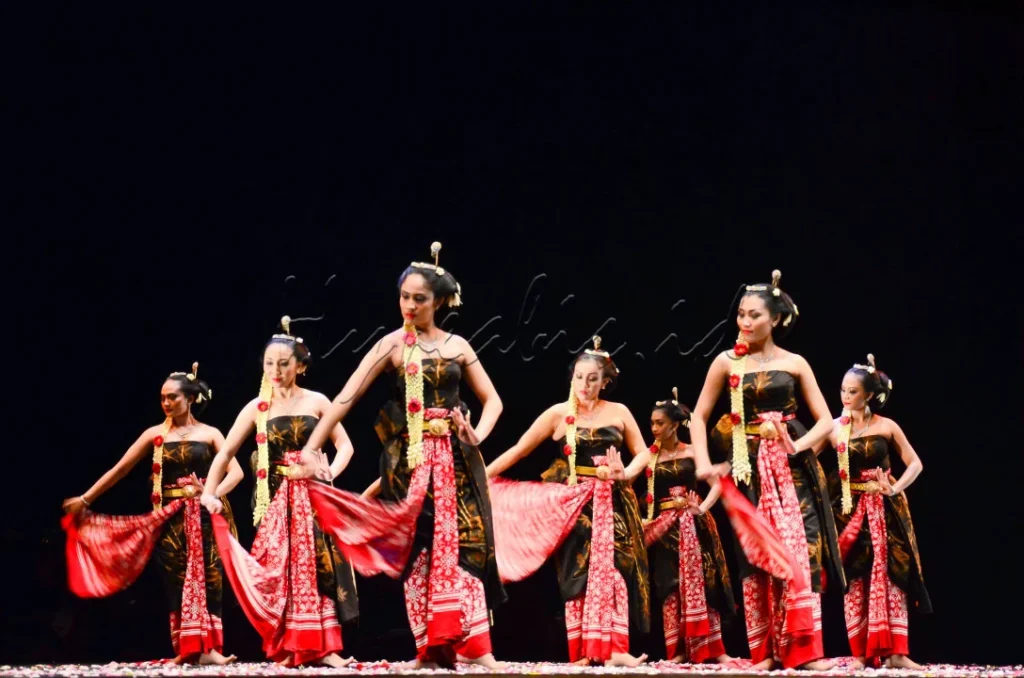
For most travellers, watching an actual Bedhaya Ketawang performance is unlikely to be part of a regular Solo itinerary. The dance is closely associated with the Tingalan Dalem Jumenengan and is not performed as a routine tourist attraction.
However, this doesn’t necessarily mean visitors cannot learn about Bedhaya Ketawang. Those interested in the dance can explore the cultural collections and exhibitions at Keraton Surakarta or look for performances of other Javanese classical dances in Solo.
Frequently Asked Questions
What does “Ketawang” mean?
Ketawang is commonly associated with the Javanese word tawang, meaning sky. It can also carry connotations of something highly, sublime, or lofty.
Who created Bedhaya Ketawang?
There is no single certain established historical account of its creation. One well-known tradition attributes its creation to Sultan Agung of Mataram, while another connects its origins to the story of Panembahan Senapati and Kanjeng Ratu Kidul.
How is Bedhaya Ketawang different from other Javanese court dances?
Its primary distinction is its sacred ceremonial function. Unlike court dances that may be performed as cultural presentations, Bedhaya Ketawang is traditionally reserved for the Tingalan Dalem Jumenengan of the Surakarta court. Its choreography, nine-dancer formation, music, costume, and spiritual symbolism are all closely connected to this ceremonial role.
Although it is not a performance most visitors will get the chance to witness, Bedhaya Ketawang remains a beautiful reminder that meaningful cultural traditions do not always need to be widely accessible to be appreciated. Sometimes, their significance lies precisely in the care taken to preserve them.
Looking to deepen your heritage discovery in Solo? Visit Keraton Surakarta, or experience another side of the city’s performing arts through Wayang Orang Sriwedari.