

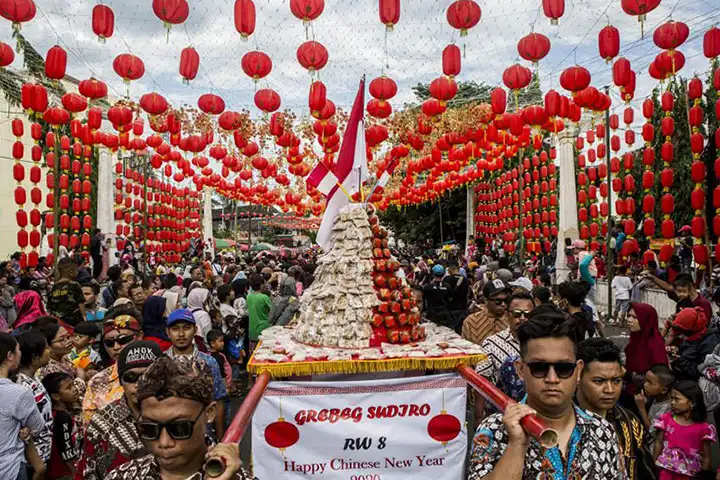
There’s always something interesting happening in Solo, and the lead-up to the Lunar New Year is no exception. During that period of time, Solo comes alive with Grebeg Sudiro, a unique celebration centered around Pasar Gede and Kampung Sudiroprajan.
Table of Contents
More than just a vibrant celebration, Grebeg Sudiro is especially known for its blend of Javanese and Chinese traditions. As such, Grebeg Sudiro serves as a reflection of generational cultural exchange and the everyday coexistence of two communities that have long been part of Solo’s identity.
What Is Grebeg Sudiro?
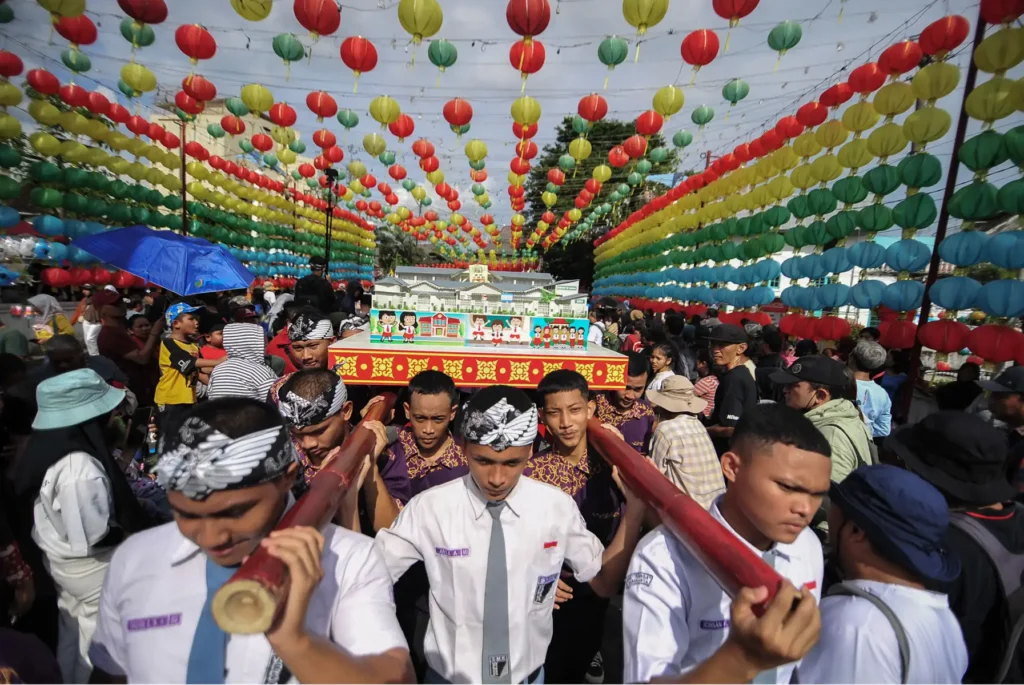
Grebeg Sudiro is an annual cultural festival held as part of Solo’s Chinese New Year celebrations. The event blends Javanese traditions with Chinese cultural elements, set against the setting of Pasar Gede and Sudiroprajan, a historic neighborhood known for its Chinese-Javanese heritage.
During the celebration, the streets come alive with lanterns, traditional performances, cultural parades, and food, transforming the area into one of Solo’s most vibrant destinations during Chinese New Year.
The Story Behind Grebeg Sudiro
Grebeg Sudiro’s presence in Solo is closely connected to Sudiroprajan’s long history as a multicultural neighborhood. As one of the city’s major Pecinan areas, Sudiroprajan has long been a place where Javanese and Chinese communities have lived alongside each other for generations.
With that background, 2007 became the year when the festival was developed as a way to celebrate this shared heritage. Rather than presenting Javanese and Chinese traditions separately, Grebeg Sudiro brings them together through a single celebration, making it a distinct expression of cultural acculturation between the two traditions.
What to See at Grebeg Sudiro
Gunungan Bakpia Parade
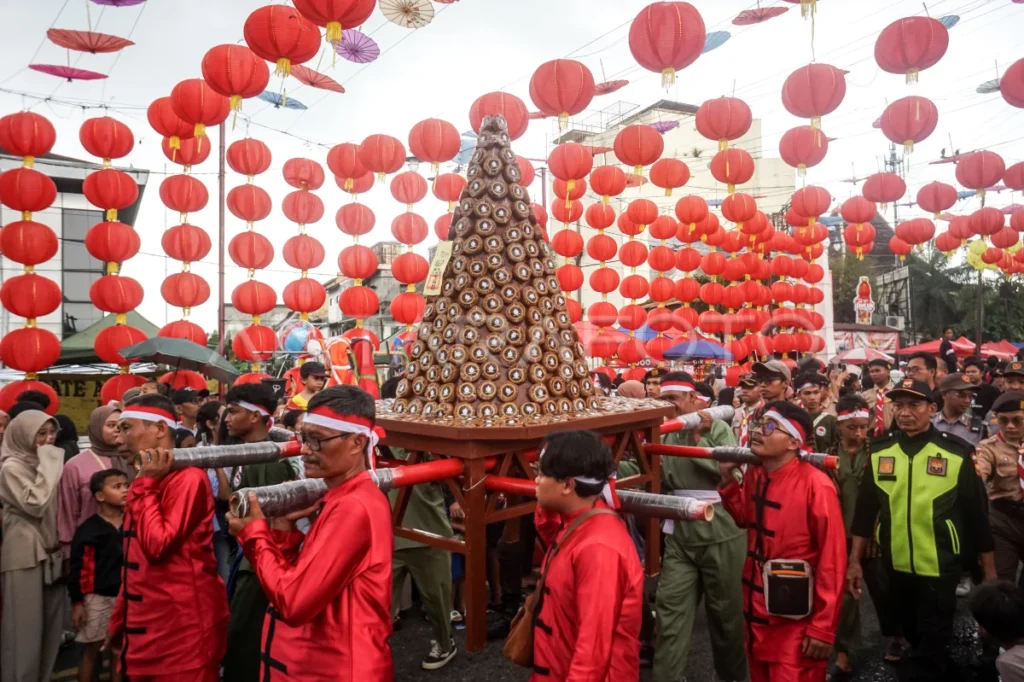
The gunungan bakpia is arguably the most recognizable symbol of Grebeg Sudiro. Inspired by the Javanese tradition of gunungan, a large mountain-shaped arrangement of food is created using the traditional snack bakpia.
After the gunungan is paraded through the neighborhood, it becomes the center of a communal procession, with people gathering for the rebutan tradition, reflecting values of gratitude, togetherness, and sharing.
Cultural Performances
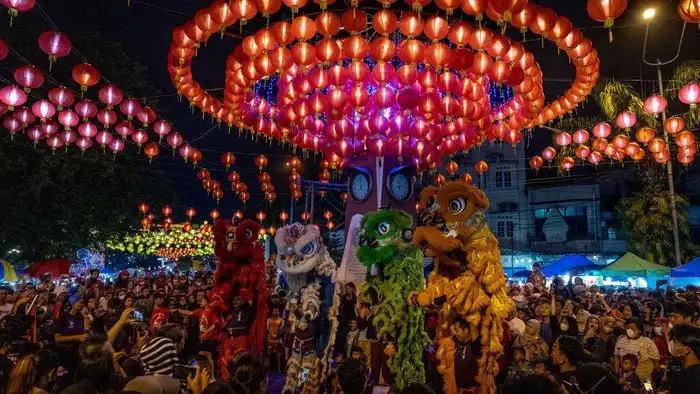
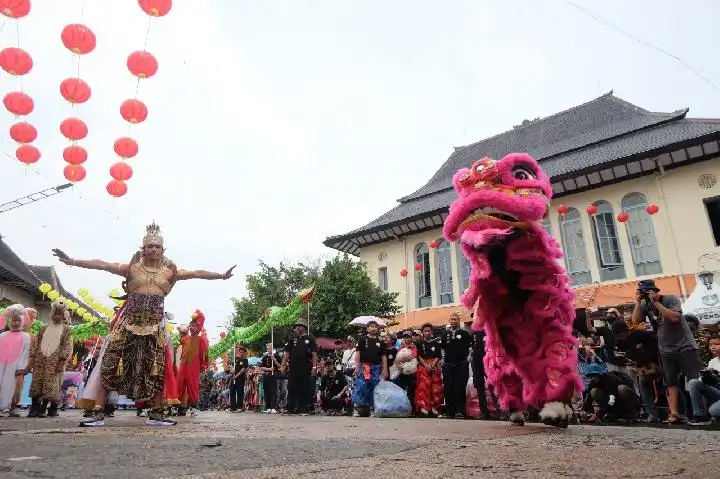
Grebeg Sudiro is also filled with performances that showcase the cultural diversity of Solo. Visitors can typically encounter barongsai and lion performances alongside gamelan, traditional Javanese dances, and cultural parades, creating an atmosphere that feels diverse yet harmonious at the same time.
Chinese New Year Decorations
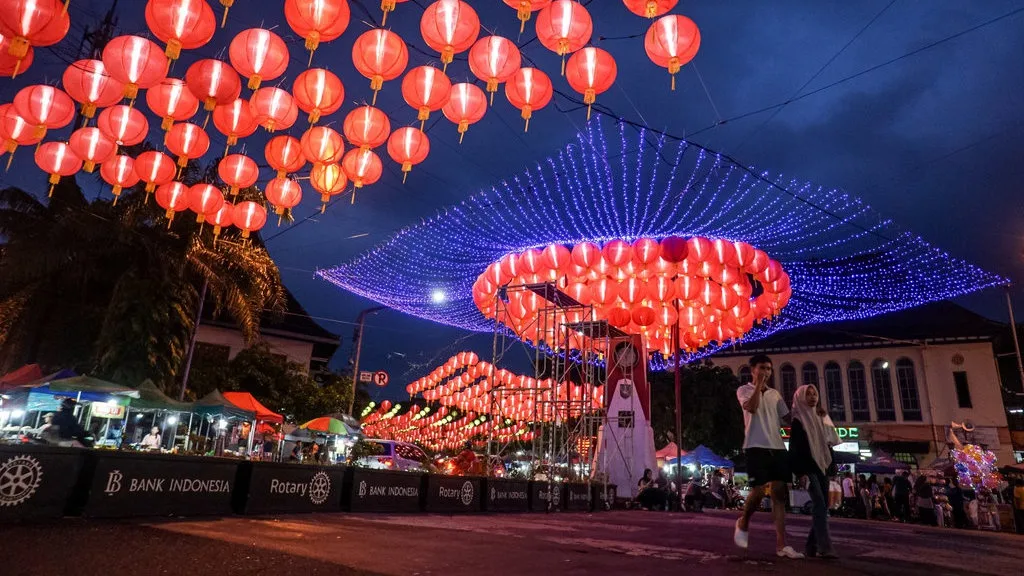
As Grebeg Sudiro takes place around the Chinese New Year celebrations, the area comes alive with festive decorations. Pasar Gede and the surrounding streets are decorated with red lanterns and colorful Imlek ornaments, transforming the historic market area into a particularly photogenic part of Solo.
Planning Your Visit
Festival Schedule
Grebeg Sudiro follows the Chinese New Year calendar, so its exact date changes every year. The festival usually takes place in the days leading up to or around Imlek. Visitors are advised to check Solo’s official tourism or event announcements before planning a visit, especially for Grebeg Sudiro.
Location and Getting There
The main festivities take place around Pasar Gede and Kampung Sudiroprajan in central Solo. You can reach the area by ride-hailing apps or public transport, such as Bus BatikSoloTrans FD7 or FD10, from Polsek Pasar Kliwon near Keraton Solo.
Those coming with private vehicles can park at designated parking areas around the festival grounds. These have previously included strategic points around Benteng Vastenburg, Gedung Parkir Ketandan, and Solo City Hall, though parking arrangements may change depending on the year’s event setup.
Tips for Visitors
Grebeg Sudiro can attract large crowds. Arrive early if you want a good viewing spot, especially along the gunungan bakpia procession route.
For photography, look for a spot slightly away from the densest crowd while keeping the parade route within view. Most importantly, remember that Grebeg Sudiro is a cultural celebration rather than simply a photo opportunity hence always do your best to respect the procession and behave ethically.
Why Grebeg Sudiro Is Unique
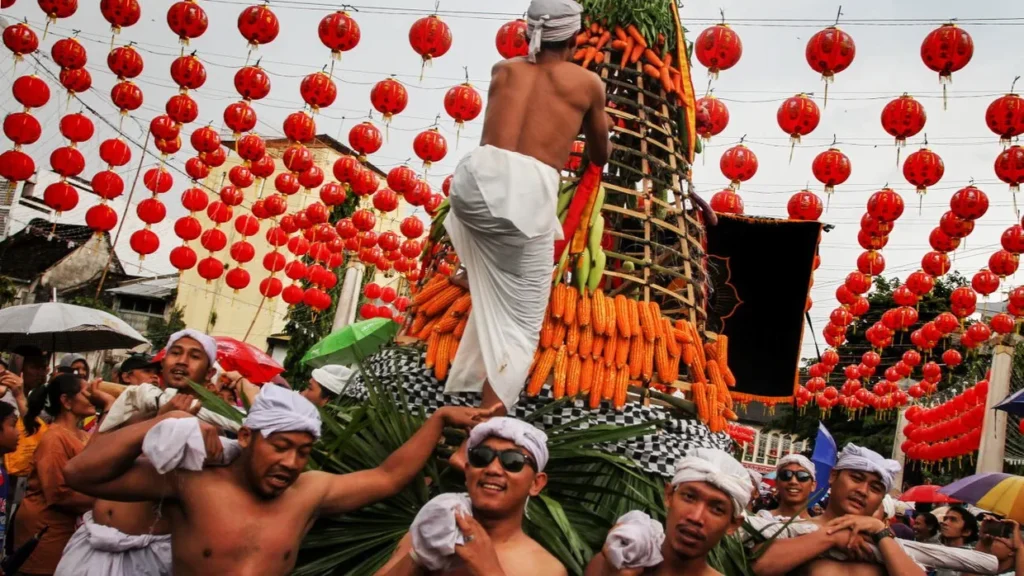
What makes Grebeg Sudiro stand out from other Chinese New Year celebrations in Indonesia is its showcase of Javanese-Chinese cultural harmony. Instead of focusing exclusively on Chinese New Year customs, the festival incorporates Javanese traditions into the festivities.
The gunungan bakpia is perhaps the clearest example of this cultural blend: a Javanese ceremonial tradition takes on a distinctly Chinese-Javanese culinary identity. Meanwhile, barongsai, liong, gamelan, traditional dance, and local parades share the same streets.
This combination makes Grebeg Sudiro one of Solo’s notable cultural events.
Frequently Asked Questions
When Is Grebeg Sudiro Held?
Grebeg Sudiro is held annually around Chinese New Year, typically within days leading to the celebration. The schedule and main procession can vary each year, so visitors should check the latest event announcement before visiting.
Is Grebeg Sudiro Free to Attend?
Yes, Grebeg Sudiro is generally free to attend. Visitors can watch the public parades, performances, decorations, and other festivities without purchasing an entrance ticket.
Where Does Grebeg Sudiro Take Place?
The festival is centered around Pasar Gede and Kampung Sudiroprajan in Solo, Central Java.
What Is the Gunungan Bakpia?
The gunungan bakpia is a large, mountain-shaped arrangement made from bakpia, a traditional pastry associated with Solo’s Chinese-Javanese culinary heritage.
How Long Does the Festival Usually Last?
Grebeg Sudiro isn’t limited to a single event. The celebration typically includes a series of activities spread across 15 to 17 days, with the exact duration and program varying from year to year.
Grebeg Sudiro offers a different way to experience Solo’s cultural heritage, where Javanese and Chinese traditions meet through food, performance, celebration, and community life. From the colorful gunungan bakpia to lantern-lit streets and lively cultural performances, the festival brings Solo’s multicultural character to life.
If you’re looking to experience more of Solo’s everyday culture before or after catching the festival, discover Pasar Gede Solo, where traditional food, local produce, and everyday city life come together within a single destination.